WISDOM

Before the genesis of conceived origins,

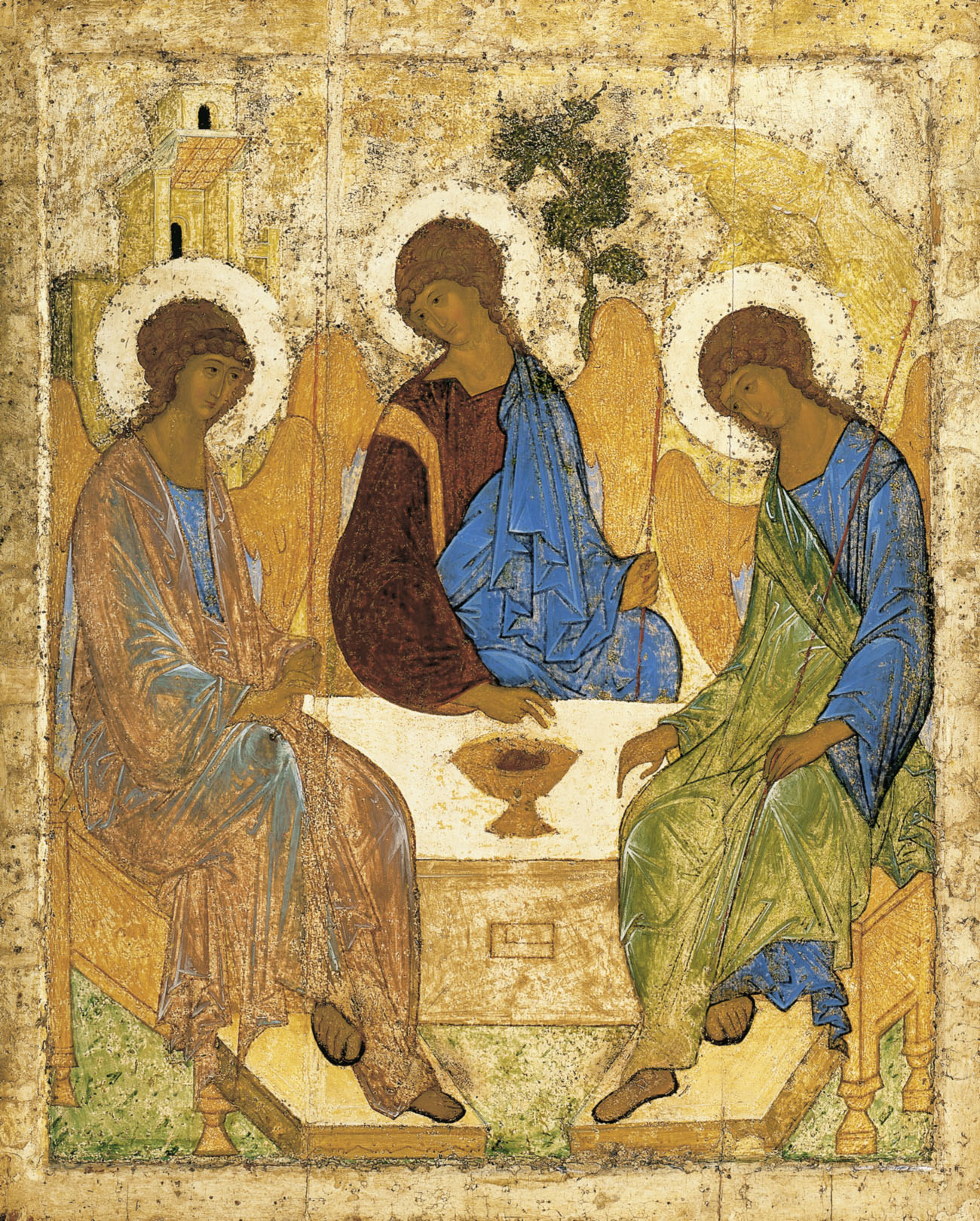
Three persons round a table communed

In the dark, deliberating in their own light,

Hovering over chaos and a formless void;

The lover loving the beloved for eternity

In a perfect covenant of love.

Poised in the presence of self-existence,

Balanced on the point of a singular entity,

Bound by a force more massive than gravity,

Blazing glory from out the effulgence of being,

The Creator decreed His creation’s inception:

“In the beginning

God created

The heavens and the earth.”

I, wisdom, was brought forth first to frame foundations,

To set boundaries, conceive spaces, manufacture time;

To compose mathematical music to sing God’s praises;

To differentiate unity, marshal order, ascribe authority, channel power;

To separate constants from variables and release energy from entropy;

To distill essences, prepare ingredients, mix elements, bake substances,

To design systems, craft concepts, fix laws, and code the helices of life;

I, wisdom, was there beside Him as master craftsman to the architect.

For six days we labored to create the heavens and the earth

From nothing, from darkness, from emptiness, from inertness;

Fashioning the universe from a primeval foam and a primordial blur,

We brought order out of chaos and led meaninglessness into purpose.

God ordained light, time, space, and all life’s myriad forms by holy fiat;

Ordering life according to chronology, habitat, range, and complexities;

In conformity with His sovereign plan and will, whatever comes to pass

God foresaw and preordained, appointing the actual from the possible,

The visible and invisible, all matter and energy, all heaven and earth,

All thrones, powers, rulers, authorities, and hosts in heavenly realms.

He made all things that were made, nothing that was not made;

Every atom of every sand grain and every star of every galaxy,

Every joule of kinetic energy striving to return to potential rest,

Every breath of dust-stirring breeze, every leaf-shaking stir,

Every flame blazing on the holy head of an attending angel,

Every follicle of fur on a wooly yak, every whisker on a cat

He made for His good pleasure, to His glory and praise.

And having willed what was good to make,

He saw that what was made was good;

All that God created was good

Because God is all good.

As a hen nestles her eggs

Warming under her wings,

So the Spirit of God was brooding 

Over the darkness of deep waters.

“Then God said,

‘Let there be light;’

And there was light.

God saw that the light was good.”

It was so simple, so immediate, so definitive;

Answering creation’s who, how, what, and why,

Authoring volumes of complexity in a declarative,

Empowering a simple imperative with consequence,

Affirming value and worth across many dimensions,

Affording reliable testimony from a credible witness,

And revealing the Word of power in words of truth:

“In the beginning was the Word, 

And the Word was with God,

And the Word was God.

He was with God in the beginning.”

So the sovereign Lord of the Word

Spoke

The wisdom power of God’s Word 

To create light and to spark life.

He lifted the cover of the Book 

And unfolded His revelation:

“This is the account

Of the heavens and the earth 

When they were created

In the day that the Lord God 

Made earth and heaven.”

On the first day 

When God said, 

“Let there be light,”

And there was light,

The light He called “day”

And the darkness He called “night.”

Creating His covenant with the day,

Sealing His covenant with the night,

And establishing His universal laws,

God separated light from darkness;

Morning broke free from evening.

From the first cosmic singularity

Triggered by God’s firm decree

To birth creation with His being

Bursting photonic shock waves

Lighting an expanding space

Exploded back the darkness 

At a constant speed of light

Unfolding the multiverse

In multiple dimensions

Visible and invisible

As an all embracing

Coincident light cone

Radiating spectral rays

Across a racing universe

Causing particles to pulse

In discrete quantum states

Of excited coordinate fields

In synchronous oscillations

Scintillating electromagnetic

Waves of harmonic amplitude

Resonating integral coherence

Of prismatic beams refracting

White light splitting into colors

Scaled into gauge symmetries

That skip across the spectrum

Of ever widening wavelengths

Flowing energetic frequencies

That transform light squared

Into packets of matter bright

With beauty, truth, and love.

A light and dark binary clock

Began ticking absolute time,

Entangling with time eternal

As a function of far and fast,

Duration and direction further

Enabling light to speed across 

Space in the flash of God’s eye,

Enfolding past, present, and future

In a seamless period of conformal time,

Energizing the free lattice of temporal parity

To endure and persist through tenseless time,

While comoving distance paces quintessence

In one continuum to the cosmological horizon,

Enveloping the universe with a cosmic purring

Pervasive in praise and perduring in presence,

Sustaining the cosmos with a matrix of order;

So light pellucid penetrated opaque space,

Declaring God’s eternal and abiding glory;

And God saw that the light was good.

And there was evening

And there was morning,

The first day.

On the fourth day 

When God said, 

“Let there be lights 

In the vault of the sky

To separate the day from the night,”

God made the sun, moon, and stars in the sky above

As lamps to carry light and brighten the dark of night;

By day to give earth splendor, radiance, and warmth

By summoning the sun to fill the heavens with light,

By night to beckon the sun to a bridegroom’s tryst

And sow the heavens with diamonds, a spray flung

Across space, across an infinitely expansive space

Swarming with galaxies glittering in fixed constellations.

Wandering planets, comets, meteors, and shooting stars,

Etching with fiery fingers the signature of His steady love,

Emblazoned a recurring reminder of an abiding covenant

With day and night, with the Creator of heaven and earth

Who filled the heavens with harmonies, ethereal spheres

Resonating strains of praise across the flumes of space;

Who bade the sun shine his beam on a mercurial moon

Waxing and waning in phases that plate the stars pale;

Who ascribed to each star its own splendor and glory,

Crystal bright and brilliant across a dark, velvet night.

A greater light and a lesser light, and the stars above

He made parade along predictable parabolic paths

As signs to govern the seasons, days, and years,

To regulate circadian rhythms of night and day,

To shadow time’s passage and light lost ways,

To stabilize the whirling spin of revolving orbs,

To measure months in crescents and quarters, 

And to mark sacred times that punctuate time;

And as a prime testament of general revelation  

To declare God’s glory and majesty,

To proclaim the work of His hands,

To manifest His invisible attributes —

His eternal power and divine nature —

Speaking wordlessly to the ends of the world.

And it was so,

And God saw that it was good.

There was evening 

And there was morning,

A fourth day.

On the second day 

God said, 

“Let there be a vault 

Between the waters 

To separate water from water.”

So God engineered space

And called it “sky.”

Enveloped with an embryonic sac of life-nurturing air,

Born from a cloud by the accretion of spinning dust,

A planet like a blue pearl coalesced from chaos,

An expansive, elastic vault formed from nebula,

Layered in vaporous spheres with fluid flow.

Floating gases of nitrogen, oxygen, argon,

Exhalations with neon, helium, methane,

Stirred by the sun’s rays, excitedly skip

In an alembic filled with light and heat.

Pollen and wind-borne dust particles

Mixed with water vapors suspended

Like insulating humid air cushions

Of cloud cover tempering days,

Thermal winds warming nights,

Azure skies lifting spirits high,

Paint the dawn vivid with fire,

Scattering a quiet explosion

Of slow volcanic sunsets,

Of pyrotechnics blazing

With epiphanies of awe

To declare God’s glory.

A thin blue, fragile skin

Of atmosphere shields

A fruited, fruitful earth

From the flaming sun;

A porous ozone sieve 

Filtering corrosive rays,

And a grey magnetic net

Crackling with charged fields,

Cresting bow waves to the wind,

Rooted and anchored at the poles,

Wrapped around earth like a gauze,

Guarding eyes from the blinding gaze,

Weave veils against the blazing glare;

While auroras of pleated fire dancing

With cosmic sparks and solar flares

Shimmer curtains of colored light.

Then heaven’s infinite firmament 

Calved the finite waters below

To form the vault of the sky

And the seas beneath,

And it was so.

And there was evening

And there was morning,

A second day.

On the fifth day 

God said, 

“Let the water teem with living creatures, 

And let birds fly above the earth 

Across the vault of the sky.”

God created species to fill empty spaces; He created life

Out of sweet carbon building blocks bonded in polymers,

Cradled in clay, welded with wind, and sparked by stars.

He predestined life to emerge from a spiritual necessity

To manifest the inventive innovations of a creative mind;

A spiritual imperative to display an infinite array of being

In a dependent relationship with a covenant loving God. 

God modulated fundamental constants as physical laws,

Creating perfect conditions for life to thrive; temperature

Tweaked just right, radiation throttled to a hum and purr,

Bathing a womb with nutrients, a habitable zone with air,

A planet terraformed to fulfill life’s delicate requirement:

Strong and weak forces, gravitation and magnetic fields

Incubating a child of light, a son of life, an image of God.

God threaded atom beads into necklaces of molecules,

Chemicals conjured with matter congealed from energy,

Forming thermal metabolic functions to govern growth,

Engines churning enzymes in churns as milk into butter,

Factories building expansive life’s somatic components,

Cottage industries sewing cells into vessels for breath,

An irreducible and transcendent vitality resting in God.

God made microcosms to mirror macrocosms: conchs

Unfolding as ferns; tendrils unraveling chameleon tails;

Patterns repeated in petals, shells, goat horns, and air;

Reflected in whorls of a fingerprint; whirlpools in a river,

Swirls splashed across marble; burls round a tree trunk;

Galaxies nestled in cells, swirling in spirals round cores;

Intricate trinity of protons, neutrons, and electron fields 

Pulsing energy into nucleotides with unconditional love.

Built by divine design, strung by strings, intricately art,

Assembled double helices ascending as ladders to life

Produce proteins from nucleic and amino acid strands,

Combining and recombining in cell organelles. Building

Lipids and carbohydrates bagged in plasm, keystrokes

Coiled into chromosomes, packaged tightly and folded

Into balls of bursting bytes, on a signal, split nuclei into 

Collated carbon copies. Winged books like butterflies

Pullulating on flowers, pollinating flora and fauna with

Life, etch words in primitive scripts in a simple alphabet

That spells out God’s ineffable and quintessential glory.

Translated genetic codes transcribing gene expressions

Convey instructions through paired links, priceless pearls

That unlock the mystery and machinery of God’s creatures.

Cascading from simplicity through increasing complexities,

Classes of single cell microorganisms, protozoa, prokaryotic

Archaea, bacteria, eukaryotes, amoeba, or motile microbes

Swimming with flagella through a viscous, salubrious soup,

Were invested by the Creator with a living spark to replicate

And dwell in rocks, volcanic vents, glacial ice, air, and flesh,

Along with plump, indestructible, slow-walking water bears.

When God first exploded life from out the primordial slime,

Trinitarian waters covered the earth’s embryonic expanse,

Hosting reef builders, stromatolites and archaeocyathids,

Hard coral polyps, gorgonians, sea rods, and sea whips.

Sea floors strewn with trilobites, ammonites, and tritons,

Five-finger feather stars, and coned mud and rock snails,

Indeterminate diatoms like diamonds, spun silicon shards,

Neither plant nor animal, neither fungus, but pure protists,

Gave evidence of God’s prolific fingers playing with forms,

Spanning phylogenetic spectra with bilateral brachiopods,  

Tentacled bryozoans, spiny crinoids, prickly hallucigenias,

Iridescent marrella, toothy odontogriphus, pikaia lancelets,

Lacy phoronids with beating cilia, and five-eyed opabinias;

While in primeval waters swam coelacanths and arowanas,

Many lobed anomalocaris, arkarua, wiwaxia, and medusas,

And later, other living fossils haunted the deep, dark waters:

Lampreys, hagfish, sawfish, sturgeon, frill sharks, and gars.

God populated the deepest waters with gelatinous blobfish,

With colossal squid, vampire jellyfish, and giant tube worms,

With gastropod and bivalve mollusks, periwinkles and whelks,

With nautilus, cowries, cockles, conchs, scallops, and razors,  

With sponges, limpets, mussels, clams, oysters, and abalone,

With barnacles, chitons, lobsters, crabs, shrimps, and isopods, 

With sea lilies, sea jellies, sea worms, sea snails and sea slugs,

With sea stars, sea horses, sea anemones, and sea cucumbers,

With sea spiders, sea urchins, sea fans, sea squirts, and skates,

With nudibranchs, horseshoe crabs, dragonfish, and barreleyes,

With snaggletooth, stargazers, sand dollars, cuttlefish, and eels,

With luminous trails of bioluminescent lanternfish in the depths,

With rainbow colors in coral gardens schooling in shallow seas,

While on the surface flocks of flying fish glide in graceful flight.

In the cathedral light of rising and falling columns of currents,

Vertebrates and invertebrates slow dance a majestic sarabande

Of zooplankton, phytoplankton, copepods, corals, salps, and krill,

Swarming the abyssal, benthic, demersal, photic, and pelagic zones.

In the twilight of kelp forests, a world of life plays in the floating fronds,

While fish of all forms with scales, tails, fins and gills teem in the waters,

Chasing after a parade of sea monsters: whales, sharks, octopi, and rays.

A bony mola, massive and monstrous, rises to the sun like a drowned moon;

Sudden a majestic marlin leaps out of the sea and basks his fin in the heat;

Slowly a pod of dolphins follow the shoreline in graceful arching rhythms;

Narwhals emerge out of ice like ghostly unicorns galloping on clouds;

Giant blue whales loudly bugle as they glide through buoyant waters;

While the humpbacks migrating from north to south and breaching

From the deep to feed on shoaling krill, God made to sing praises

That declare with every pitch, tone, and timbre, His eternal glory.

The skies He filled

With feathered winged birds 

To soar and hover;

To transcend beyond the bounds of earth and weight of bones;  

To fly as high as the eagle, the condor, and the lammergeier,

As far as the wandering albatross and the stormy petrel;

To flock like a dazzling cloud of murmurating starlings,

And roost in dense colonies on cliffs, caves, and trees;

To fill wetlands with pink flamingoes and snowy ibis,

And waterways with ducks, grebes, and geese;

To fill meadows with songs of finch and lark,

And forests with wren and thrush.

The pelagic penguins and puffins 

Flying through water He made

To float, porpoise and dive;

The ostrich to prance on sand,

The kiwi to browse the strand,

The cassowary, emu, and rhea

To abstain from flight;

And the seagulls

To mew in the mist

Declarations of God’s glory.

And God saw that it was good.

God blessed the living creatures,

Saying,

“Be fruitful and multiply, 

And fill the waters in the seas,

And let birds increase on the earth.”

There was evening

And there was morning,

A fifth day.

On the third day 

God said, 

“Let the water under the sky 

Be gathered to one place, 

And let dry ground appear.”

And it was so.

When God bonded three atoms into water’s trinity,

First exhaling vapors in earth’s first breath, steam

Jets trailed into roiling clouds, gathered under skies

Thick and dark with all creation’s pregnant promises.

God condensed the clouds below calling them “seas,”

Restless reservoirs swelling and trembling with tides

Rising and falling, with ebb receding, surging with flow;

Solar and lunar pistons of gravity pulling and pushing

The pulsing floods of ocean undulating under the sun.

Dancing with moonbeams, fizzing surf spraying stars,

Droplets glittering, silver clouds and golden pathways

Gleaming in the gloaming, glistening with bright glints

Mirroring sky’s light, waters kiss waters at the horizon,

Birthing moistures and evaporations in a seminal heat.

Winds furrow waves in corrugated crests and troughs

Rippling out in concentric circles to crash against cliffs,

Wash along sands, bore up rivers, swell high over reefs,

Thunder in ceaseless sets of breakers rushing to beach,

Then calm to a glassy stillness ruffled by a gentle breeze.

So the waters of the seas covered the earth with a girdle,

Circulating currents into circling gyres circled by the sun,

Cycling alternate hemispheres to generate hydraulic force,

Spinning gyroscopic wheels of air and water to nourish life

With salty seawater, a saline broth of nutrient packed brine.

At the earth’s seams steam boiled and liquid land roiled up,

Combining air, sand and iron in a beachhead for solid earth.

Congealing elemental gases, colloids, and mire into a mass  

Of periodic elements, of groups, compounds, and mixtures,

God stocked earth with rocks, minerals, and metallic ores,

With stellar hydrogen and helium and the six noble gases, 

With the six alkaline earth metals and the six alkali metals,

With precious and transition metals, noble, base, and poor, 

With brittle metalloids, with ferrous and non-ferrous alloys,

With feldspar and quartz, colorful crystals capturing light,

With carbon, graphite, diamonds, zirconium, and garnets,

With precious gems of beryl, emerald, ruby, and sapphire,

With jasper, jade, opal, onyx, topaz, tourmaline, turquoise, 

With aquamarine, almandine, amethyst, amber, and agate,

With citrine, cinnabar, corundum, carnelian, and malachite,

With chalcedony and mica, rhodochrosite and chrysoprase, 

With rhodonite, nephrite, barium, strontium and technetium,

With uranium, neptunium, and plutonium, biotite and perlite,

With astatine and iodine, euxenite, gadolinite, and galaxite,

With pitchblende and hornblende, diopside and chrysotile,

With potash, spinel, and protactinium, hornfels and skarn,

With polonium, francium, indium, scandium, and europium, 

With chlorine, fluorine, and bromine, hassium and hafnium,

With caesium and cadmium, selenium, iridium and niobium,

With rhodium and radium, rhenium, osmium, and ruthenium,

With lithium, potassium, beryllium, promethium, and cerium,

With aluminium, titanium, tungsten, germanium and gallium,

With granite, gabbro, galena, gold, coal, chalk, and mercury,

With mudrock, siltstone, claystone, halite, sylvite, and barite, 

With basalt, bismuth, boron, bauxite, arsenic, and antimony,

With manganese and magnesium, platinum and palladium, 

With molybdenum and chromium, rubidium and vanadium,

With ammonium, andesite, rhyolite, kimberlite, and silicon,

With sunstone and moonstone, tiger’s eye and hawk’s eye,

With bloodstone, soapstone, alabaster, gypsum, and talc,

With lapis lazuli, larimar, lazurite, afghanite, and heliodor, 

With coltan and tellurium, thorium, thallium, and tantalum,

With serpentine and travertine, greywacke, chert and wad,

With silver, copper and tin, zinc and cobalt, nickel and lead,

With silt, sand, soil, and dust, loess, loam, clasts, and scree,

With the five salt halogens and trace elements keyed to life,

With lanthanides, actinides, critical minerals and other ores,

With rare earth minerals, metals, and elements like yttrium,

With dull, reactive, lusterless non-metals in all three states,

With porphyry and pumice, marble, obsidian, tuff and flint,

With phosphorus and sulfur, fluorite, pyrite, and hematite, 

With pegmatite, diorite, monzonite, and syenite intrusions,

With slate, shale, marl, gneiss, schist, breccia, and scoria,

With conglomerates of pebbles, cobbles, gravel, and clay,

With green and ubiquitous olivine, and delicate chrysolite,

With dolomite and dunite, drusy aggregates and dioptase,

With vugs and geodes, hollowed and fissured rock cavities,

With time-carved limestone towers and sandstone castles,

With boulders on beaches, boulders balancing on boulders, 

With bedrocks and outcrops, stray erratics, and sheer cliffs,

With gravity sufficient to hold the skies and seas in motion,

With density enough to be massive, solid, hard, and heavy,

Earth’s temporal rocks root deep in the eternal, living Rock.

Charged up with electro-magnetic, chemical conductivity,

Radioactive, reactive, rusting, combustible and flammable;

With oxides, hydrides, hydroxides, salts, silicates, and tars,

Compounds of chlorides, fluorides, carbides, and nitrides;

With acids, alkalis, and alcohols, toxic and tonic solubles,

Solutions that evaporate and boil, and solids that deposit;

With amphiboles, pyroxenes, mafic, ultramafic, and felsic

Rocks and minerals in monoclinic and orthorhombic cuts;

With properties of fluorescence, iridescence, and streak,

Tensile, ductile, fusible, elastic, plastic, caustic, and soft;

With crystalline structures, color, cleavage, and porosity, 

Sensitive to light and dark, hot and cold, and wet and dry;

With vitreous luster, malleable tenacity, and transparency,

God’s geological riches lay hidden, buried in earth’s crust.

Behold earth’s splendor: solid, pliable, molded into majesty,

Where vast, sweeping vistas declare His praises, and where

Water-carved grand canyons, gorges, gulches, and ravines

Reveal the grandeur of God’s artistry, His breath-taking art!

Plutonic and neptunian pressures, firing rock compositions

Into striated scores, thin horizontal sheets of pleated strata 

Arranged in igneous, metamorphic, and sedimentary bands,

Conduct earth’s instruments in harmony with heaven’s glory.

Behold God-orchestrated symphonies of light on stone play 

Water music: rainbow arpeggios on vermilion cliffs at dusk

Combine sound and light into waterfall and stone sonatas

Bursting sunset ripples of liquid fire to declare God’s glory.

Mixing matter and water into bogs, marshes, swamps, fens 

Compressed into peat, bubbling with pitch, oil, or methane

Burning with ghost light and will o’ the wisp, God collected 

The waters into deep aquifers, storing reservoirs and wells

Along the water table and seams under the earth’s surface,

Percolating through porous rocks to purify waste impurities,

And slowly carve vast cathedral vaults into petrified forests

Of stalactites and stalagmites, karst caverns and pinnacles.

When God gathered up the waters from under the heavens,

Separating a single continental shield surrounded by seas,

He called it “land,” promontories breaking through waves

To shape shores, islands, peninsulas, plains, hills, valleys,

Plateaus rising above flatlands, buttes along the horizon,

Bluffs prominent over gullies, cliffs climbing to the sky,

Mesas and tepuis ascending above desert and jungle,

Palisades pendant over a precipice, crags in the mist;

Dells dotted by brooks, creeks, streams, rivers, lakes,

Waters pooling, tarns in the heights, ponds in hollows, 

Hollows where the fog hangs thick, ridges with a view,

And mountains in communing play with protean clouds

Receiving crystal baptisms of snow, cascading with ice,

Cradling cirques that flow glaciers scouring out valleys,

Sculpting topographic features from dancing elements 

Of air, fire, water, and earth.

Then God said, 

“Let the earth sprout vegetation, 

Plants yielding seed, 

And fruit trees on the earth 

Bearing fruit after their kind 

With seed in them;”

And it was so.

God spoke vegetation 

To sprout from the soil

And drink light:

Green life uncoiling with dew, roots springing from springs,

Shoots breathing air, bulbs bursting in dirt, deep in the dark,

Chlorophyll powered engines inhaling rock and exhaling fires,

Exhalations energized with tinctures of sun-kissed sweetness,

Dispensing fragrances perfuming the air with aromatic scents;

All kinds of plants rooting, branching, unraveling green foliage,

Spraying spores, blossoming blooms, cross-pollinating pistils;

Petals painting rainbow hues unfolding numbered sequences

From stamen to stigma, from anther to ovule; sepal and petal

Nestled in the whorl of a calyx and crowned by lily and rose;

Crowned with the sugarbush sun of a king protea honeypot,

Crowned with extravaganzas of orchids, asters, and daisies,

Crowned with royal laurel wreathed in ivies, olives, and oaks,

And crowned again by chrysanthemum and common clover.

Wild joys in exuberant growth furring earth with green grace

Bedeck the bounty of His garden, abundant and flourishing.

Rich in beauty, vast in scale, variegated in color and texture,

All declare God’s glory from root to fruit, to seed and bloom. 

God made seeds to germinate plants, plants to yield seed,

And plants and trees of every kind to bear fruit with seed;

Fruit in assorted size from pomes to berries and drupes,

Dripping sweet with nectar, flowing with sap and juice, 

Flesh enclosing living seed and fibers wrapping round

Kernels, cones, stones, pods, pits, grains, and nuts.

God planted and made grow according to their kind

A wide assortment of beans of all color and shape;

And a wider variety of vegetation to cover earth

In various biomes, variegated colors, varied forms,

Vascular and non-vascular, annuals and perennials, 

Biennials with tubers, rhizomes, runners, and corms,

Succulents and hybrids, epiphytes and cryptophytes;

From fungi to ferns — lichen, liverworts, and hornworts,

From gums to wattles — willows, hollies, and hawthorns,

From fynbos to veld — sedges, grasses, rushes, and reeds,

From scrub to brush — shrubs, bushes, brambles, and briars,

From heathers to heaths — gorse, broom, ericas, and proteas,

From marrows to mallows — gourds, legumes, tubers, and forbs,

From tussocks to hummocks — mangroves, palms, and bamboos,

From pampas to prairies — wheat, corn, barley, oats, and lucerne,

From tundra to taiga — herbs, mosses, pearlworts, and saxifrage, 

From chaparral to savanna — grama, sage, buckwheat, and rye,

From forest to jungle — vines, creepers, bromeliads, and lianas,

From alpine to altiplano — sun pitchers and glory-of-the-snow,

From deserts to steppes — agaves, acacias, yuccas, and cacti,

From intertidal to coastal — seaweeds, eel grasses, and kelps,

From oasis to island — euphorbia, welwitschia, and aspidistra,

From hardwoods to softwoods, bearing cones and flowering,  

From red and green algae to conifers, cycads, and ginkgoes,

Gymnosperms and angiosperms, deciduous and evergreen,

All leafy trees giving shade, shelter, and sanctuary for nests;

Even the tall kapok, the mighty sequoia, and the fat baobab

He made according to their kind;

And God saw that it was good.

There was evening

And there was morning,

A third day.

Then on the sixth day 

God said, 

“Let the land produce 

Living creatures

According to their kinds:

The livestock, the creatures 

That move along the ground, 

And the wild animals, 

Each according to its kind.”

And it was so.

Out of the ground God made all creatures,

Mixing six elements He molded their mass,

And with other elements He gave them life,

He let the land produce all living creatures.

God made all the animals

Each according to its kind,

Each declaring God’s glory in kind.

And God filled the land with the animal kingdom:

With arthropods, arachnids, annelids, and snails,

Amphibians, reptiles, mammals, and marsupials;

With wild animals, livestock, and all creatures

Creeping on the ground according to its kind;

Or crawling out of the water to creep on land,

As does the strange, air-breathing lungfish,

The climbing perch, walking catfish,

Leaping blennies, mangrove killifish,

Some types of eels, snakehead fish, 

And the eye-bulging, gaping mud-skippers

That leap in contortions like goblin dragons;

Or crawling off the land to swim in the water,

As did the large cetaceans once upon a time,

As do newts, kraits, turtles, toads, and frogs,

As do the alligators, crocodiles, and caimans,

As does the hippopotamus and water buffalo,

As does the patchwork, duck-billed platypus,

As do the playful seals, otters, and beavers,

And the basking, bellowing, tusked walruses

That beach on rocks next to pounding seas.

Taxonomic categories classify most animals

Descending from domain, kingdom, phylum,

Into class, order, family, genus, and species.

Is the zoosphere of new species complete?

Closed and locked the turnstile of evolution,

God unleashed open revolutions of variation.

With extant species surviving the extinction

Of creatures doomed by shifting conditions,

God favored the meek to inherit their earth.

Undiscovered the full numbers of dinosaurs,

Of reptilian ancestors and prehistoric beasts,

God preserved fossil records of buried bones.

Unknown the prelapsarian purpose of bugs,

All flying, crawling, and burrowing creatures,

God gave insects to occupy all ecosystems,

To mate, pollinate plants, and clear debris,

To aerate, fertilize, feed, and moisten soil,

To deconstruct decay, pick apart matter,

Reorder life into basic building blocks;

To spin cocoons, tie tents onto twigs,

Weave webs, build walled wax combs

Chewed by bees into hexagonal cells

To store sweet, sticky, golden honey;

And to crawl into the darkest cracks,

There to scavenge, lurk, and breed.

Spawning in the air in nuptial clouds,

Digging in the sand to lay eggs on land, 

Crawling to a furry pouch, nursed in a tree,

Triumphant life emerges, victorious sparks

Birthing live from a womb, from a cloned foot;

Larvae wriggling and writhing in feeding feasts,

Nymphs and naiads molting skins without wings,

Caterpillars munching through a forest of leaves,

Metamorphosing into pupae wrapped in silk eggs:

The chrysalis dangling in the wind from a dry limb

Breaks out free a butterfly fluttering colorful wings.

Animals engender and generate species profusion,

Breeding, mating, conceiving, incubating, hatching,

Growing to increase, multiply, reproduce; swarming

To replicate, propagate, proliferate, and procreate

From the wedding of an egg and sperm; embryonic

Cells cascading into genomic molds rise fertilized

From myriad forms to emerge a salient individual;

From a beating heart to blood-nourished tissues,

From tendons to ligaments, to organs and brains,

From chitin to keratin, from collagen to cartilage,

From antennae to abdomen, thorax to spiracles,

From teeth to tusks, fangs, whiskers, and ears,

From bones to horns, antlers, claws, and nails, 

From mandibles to jaws, bills, beaks, and lips,

From proboscis to nose, snout, fingers, and toes,

From limbs to fins, flippers, wings, tentacles, and tails,

From gills to lungs, scales, feathers, fur, and hair;

From a nervous system bristling with electricity

To a digestive motor driving esurient locomotion;

From pigments concealing a green chamaeleon

To kaleidoscopic mimicry of peepers and frogs;

From a wisdom of wombats, roos and wallabies,

To stripes on numbats, bandicoots and bilbies;

From veins on a batwing, bees in a hive, a swift

Swooping through a waterfall to nest in a cave,

The fluke of a whale, fingerprints on bonobos,

Wrinkles on the palms of clever chimpanzees,

Markings on the muscular silverback gorillas;

The marvel of an eye, the miracle of a mouse,

The musings of an orangutan, the calm koala;

The slow sloth grinning upside down in a tree,

Black and white patches on foraging pandas,

Black and white stripes on migrating zebras,

Black and white spots on pet dogs and cats;

Life erupting in a vast display of adaptation,

Explodes abundance and wildest variety

In the widest spectrum of God’s palette.

Listen to the orchestra begin to sound:

The crickets tune their sticks and beat

Pulsing rhythms in the night’s still heat;

A dove wakes the morning with a flute,

As lions roar, loons cry, and owls hoot;

An eagle’s fiddle screech claws at air,

As an elephant trumpets out a blare;

And a raucous murder of crows caw,

While wolves at the moon bay in awe.

Erupting in voice, choirs of creatures

Improvise wild-free, jazzy harmonies,

Syncopating symphonic expressions,

Singing in cacophony and crescendo;

Frog and toad the bass and baritone,

Sweet melodies the canary and veery,

Treble time for flitting bats and moths,

Orchestrations of crickets and cicadas

Filling every frequency with affirmation,

Guidance, appeals, claims, seductions,

And glorious, triumphant praise to God.

Evolution, natural selection, mutations

Rolled the God-directed dice of chance,

Steered serendipity with random change,

Shuffled genes with improbable choice, and

Played their part to expand species diversity

Defined by niche, cycle, habitat, and strategy.

Nature or nurture? Whether born blind, blank,

Or conceived with algorithms in a wired matrix,

Reacting to stimuli with conditioned responses,

With a knee-jerk reflex or fixed action patterns;

Or conjured by chemical receptors, hormones

Blazing across synapses, firing limbic systems

To nuzzle an infant with tender, maternal care,

Or prance and pirouette in ritual duels of rivals;

God created the animals to thrive and multiply.

Whether driven by self-preservation or altruism,

Habits shaped by habitats or learned patterns,

Habits innate and acquired, modified behavior, 

Voluntary instincts, or guided natural selection,

Animals have minds; elephants impart wisdom 

Across generations; problem-solving monkeys

Poke sticks to probe termite towers; all canines

And felines wag their tails, exceptions proving

The rule; cattle, turtles, pigeons, fox, and deer

Align along axes of the earth’s magnetic field;

While in ant colonies workers attend a queen,

Feeding grass blades to fungi farmed for food.

Grasshoppers jumping, singing, lazing in heat,

A plodding tortoise overtaking a hare’s hubris,

A fox with nose to the ground parading his tail,

A beaver felling birches to build a daubed dam,

Swans swaying with their long necks entwined,

Dancing grebes rushing their devotion on water,

Birds of paradise polishing branches, prancing

And dancing, and shaking with hypnotic strobe,

Social weaver birds weaving grasses into nests

With chambered mansions, cockatoos bobbing

To rhythmic beats, gull chicks pecking red spots

On a beak, and geese, flapping in V-formations,

Sailing through the skies with loud, honking calls,

Mapping migratory flyways with internal compass,

Exhibit the instinctive intelligence of created beasts.

Such diversity of expression, such a passion for life!

How empty the world without the animals, how full

And abundant life with all creatures big and small!

Whether equipped with perceptive olfactory sense,

The ability to hear a leaf fall, or see a mouse move

From the perch of a cloud, or gallop without tiring,

Animals range earth with vim and verve, enacting

Rituals both predictable and surprising, recycling 

Scripts written and erased on a waxy palimpsest.

God designed all the blueprints and hard wiring,

Writing codes of specified, complex information,

Sequencing genomes into hierarchical patterns,

Integrating inter-dependent functional systems,

Stringing algorithms to process self-replicating life,

Applying the divine mind to rational intelligence,

With consciousness directing sentient creatures,

Colonies joining in cooperation and coordination,

And collectives competing for primacy and prize.

All animals, everything that breathes and grows,

Everything that eats, excretes, sleeps, and rests, 

Everything that runs, climbs, canters, and lopes,

Everything that walks, crawls, trots, and swims,

Everything that jumps, leaps, slithers, and sits,

Everything that digs, stirs, moves, and buzzes,

Everything that flies, soars, glides, and dives,

From sessile to motile, on air, land, and water,

God created all creatures according to its kind.

And God saw that it was good.

Then, at the end of the sixth day 

God said, 

“Let us make humans in our image, 

In our likeness,

That they may rule over the animals 

In the sea, the sky and the ground.”

So God created man in His image; 

In the image of God He created them;

Male and female He created them,

One of a kind in diverse races.

God blessed them,

And gave them dominion

Over His creation,

And God said to them, 

“Be fruitful and multiply, 

And fill the earth,

And subdue it; 

And rule over the fish of the sea

And over the birds of the sky 

And over every living thing 

That moves on the earth.”

Then God gave provision for life,

“I give you every seed-bearing plant 

On the face of the whole earth 

And every tree that has fruit 

With seed in it. 

They will be yours for food. 

And to all the beasts of the earth

And all the birds in the sky 

And all the creatures

That move along the ground—

Everything that has the breath of life in it—

I give every green plant for food.”

Every green plant and fruit for food God gave

In a wholistic system of symbiotic dependence

That cycles energy and matter through life forms,

And inspires all life to shout in praise of His glory.

And it was so.

And behold, God saw 

That all He had made 

Was very good.

(Note that God has judged His creation as very good;

God’s first judgment confirming his purpose for good.)

And there was evening,

And there was morning,

A sixth day.

Thus the heavens and the earth

were finished

In all their glorious magnificence.

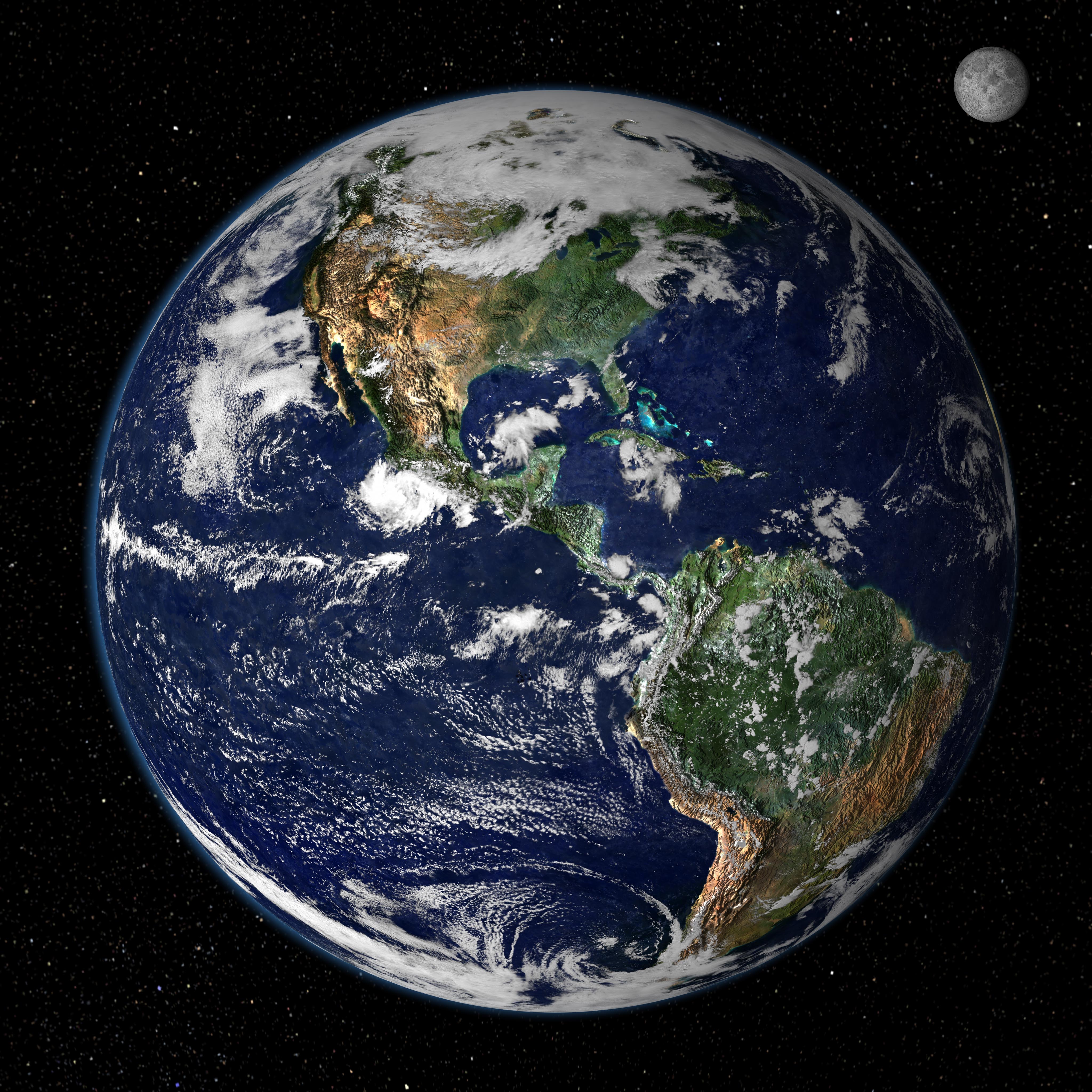
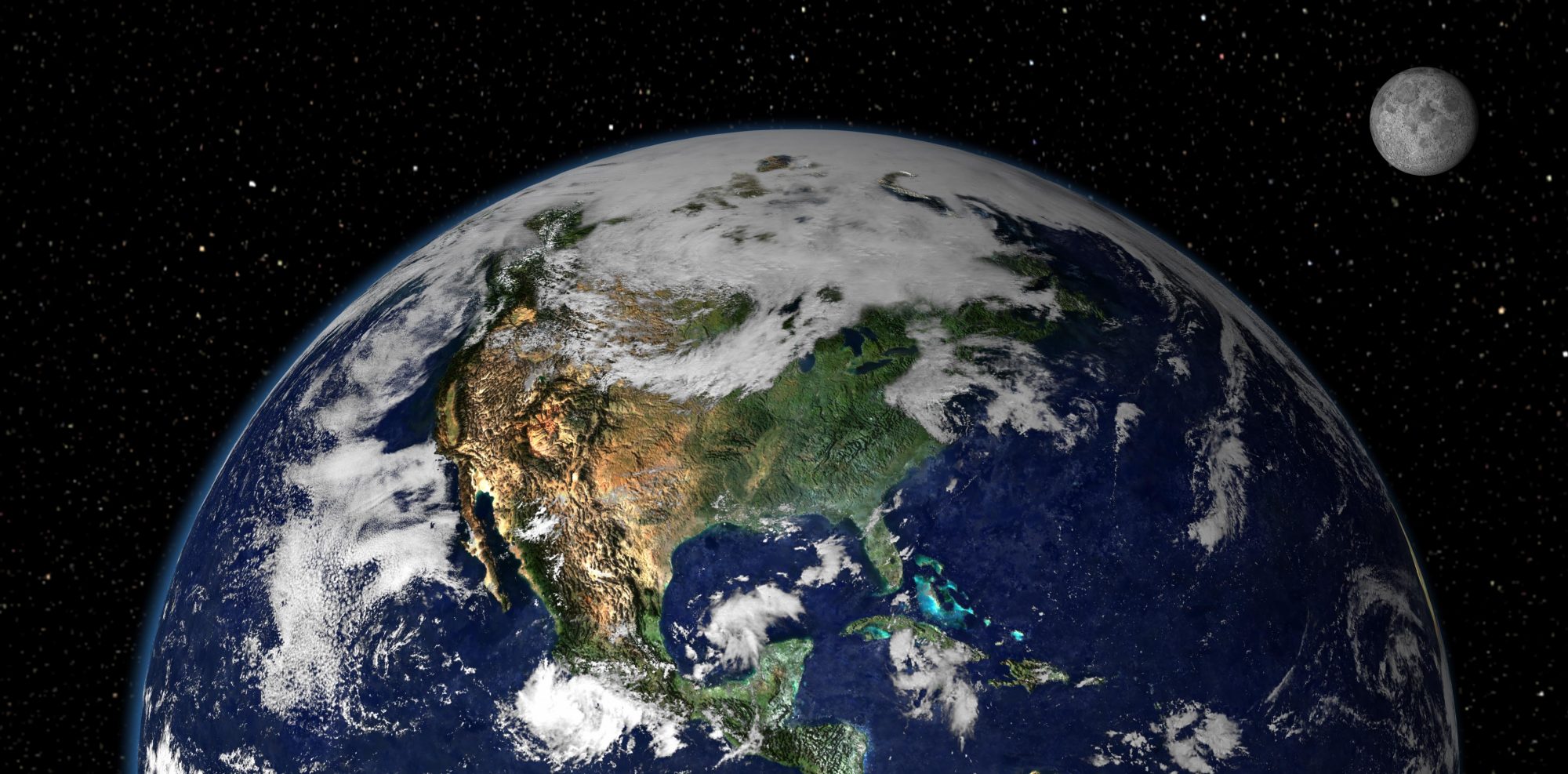
Like a beacon beckoning celestial visitors, Earth sparkles,

Sparking a cosmic covenant promise of God’s special love;

Orbiting space in refracted light, swirling like a blue marble, 

A sapphire sphere of water, air, and rock rotating like a top

Revolves around the sun; this pleasant and peaceful planet

Of rare beauty, a jewel of the universe and the home of life,

Glows brightly with heavenly halos of God’s covenant love,

And the intricate, delicate splendor of my wisdom’s touch.

On the seventh day, God rested

From all His work creating the world,

And set apart that day as sanctified.

Consecrating His labor’s culmination

With worship, a crown of sabbath joy

For a witness of perpetual covenant,

A testament of eternal faithfulness

From creation to the end of the age —

From conception to consummation —

God offered rest as a gift of respite

To the generations of creation.

He called that day of days, 

“Today,” 

A holy day, a sabbath day;

For in six days the Lord

Made heaven and earth,

But on the seventh day

He rested from His labor

And was refreshed.

Never far, ever near, always here, 

God did not abandon His creation

To its own devices and mechanisms.

God cradles the universe in His hands,

He upholds the world in His providence,

He guides all creatures with His wisdom,

And freely endows His creation with grace

Flowing from His everlasting covenant love,

Common and sufficient to sustain all things;

What God made and maintains, he manages.

Hear all living creatures, all visible and invisible,

Join voices in concert; in harmony choirs sing,

Calling out in delight, delighting to see God

Clothed in light and splendor in the clouds,

Rejoicing to see His majesty revealed,

Ascending resplendent on His throne,

Arrayed in justice, robed with stars,

Wrapped in the gravity of His glory,

Surrounded by a crystal glassy sea,

Sovereign over all order and chaos,

Supreme in His power and authority,

Receiving due worship in His temple

Where all creation cries out, “Glory!”

For great are the works of the Lord,
Pondered by all who delight in Him;

Glorious and majestic are His deeds,

And who can not forget His wonders?

When God’s kingdom endures forever,

When His faithfulness endures forever,

When the Word of God endures forever,

When His loving mercy endures forever,

When His righteousness endures forever,

When His truth and justice endure forever,

And His name and renown endure forever,

Who will not rise in excited joy and praise

And applaud Almighty God in loud song?
The Lord is gracious and compassionate,

He provides food for those who fear Him,

He feeds the sparrows and eagles alike,

He clothes the lilies in their splendors,
He remembers His covenant forever.

Surrounded by rows of loving hosts,

Reigning sovereign over His creation,

Tending His dominion of all creatures,

Caring tenderly over every living thing,

God sings songs of loving providence,

God rejoices lovingly over His creation, 

God loves the world with all His being;

He is glorified in all that He has made.

Surrounding God’s glorious throne,

A great array of angelic beings

Call out each to one another

In praise and adoration,

“Holy, Holy, Holy,

Is the LORD of hosts, 

The whole earth 

Is full of His glory;”

Twenty-four elders 

Lay down their golden crowns

And sing day and night, 

“You are worthy, our Lord and God, 

To receive glory and honor and power, 

For you created all things,

And by your will they were created

And have their being;”

And six living seraphim 

With eyes covering six wings

Shout out without ceasing, 

“Holy, holy, holy

Is the Lord God Almighty,

Who was, and is, 

And is to come.”

God Almighty surveys His wondrous work

Robed in splendor on mountain heights, 

The seas flexing with His strength,

While I sing my lilting song of joy:

“Then I was the artisan at His side,

I was filled with delight day after day,

Rejoicing always in His presence,

Rejoicing in His whole world,

And delighting in mankind,”

My gift to grant wisdom to all who ask,

The wisdom to recognize the Creator God

In the manifold majestic splendor of creation.

Before the birth of the first spinning galaxy,

The Word spoke a wind gust of illumination

And dawn’s first blush brushed my cheek.

Out of the fog a sand spit speared the horizon

Dividing the waters above from the waters below.

A swell passed through the aether, tethered to time,

Luminiferous and undulating in diminishing amplitudes

Until rippling and coalescing and quivering,

Clanged a bell in the mist.

Erupting from a starburst 

In a distant nebula,

A light shaft 

Struck sea spray 

From a wave dashed rock;

A conch shell roared a pearly sunrise

Tinged rose grey with nacreous gold;

A dove, shaking feathers in a fountain,

Sprinkled dew on my face, like a baptism,

And in glee I let grass leaves tickle my feet,

In joy I wove lily garlands through my hair,

In splurge I plunged into a plum

Bursting with sap,

(It was all so good!).

In awe I tracked the wheel of constellations,

Wondering why the sun and moon were orbs

The same size, gold and silver to govern the sky.

Marveling that a constant of infinite propagation

Generates a circle’s diameter and circumference,

And the number of months in any year is sublime,

I traced the golden ratio with compass and rule,

And drew beauty with a commensurate grace.

Following blue whales to roiling red pastures,

And spawning salmon leaping cascades,

I trailed the Arctic terns to the Antarctic,

And soared with the Demoiselle cranes 

Across the Himalyas and Hindu Kush;

Avian passerine flocks, geese tribes, 

And swan wedges swarmed the sun,

Casting shadows on caribou herds,

Wooly bison, elk, gnus and gazelle.

Two figures emanating from light 

Emerged into light, bearing light

That mirrored a double crown

Reflecting heaven

In creation’s pool,

That scattered into stars

Sparkling across a breeze-licked lake.

What bird call pierced the white mist

With clarion bells answering

Antiphonal choirs of angels

Like a dulcet bugle calling to life,

“Awake and rest in God!”?

REFERENCES:

https://upload.wikimedia.org/wikipedia/commons/0/0b/Angelsatmamre-trinity-rublev-1410.jpg

Genesis 1-2

Exodus 31:15-17 NASBS    [15] For six days work may be done, but on the seventh day there is a sabbath of complete rest, holy to the LORD; whoever does any work on the sabbath day shall surely be put to death. [16] So the sons of Israel shall observe the sabbath, to celebrate the sabbath throughout their generations as a perpetual covenant.’ [17] It is a sign between Me and the sons of Israel forever; for in six days the LORD made heaven and earth, but on the seventh day He ceased from labor, and was refreshed.”

Psalm 19:1

Psalm 24:1-2

Psalm 29:1-5

Psalm 95:3-5

Psalm 104:1-35

Psalm 108:5

Psalm 111:1-5

Psalm 148:1-14

Proverbs 8:22-31

Isaiah 6:3

Zephaniah 3:17

John 1:1-2

Romans 1:20

Revelation 4:8,11

Augustine, On The Trinity, (De Trinitate, Cambridge: 2002), Book 9, Chapter 2, Section 2, p. 26.  When I, who conduct this inquiry, love something, then three things are found:      I, what I love, and the love itself. … There are, therefore three things: the lover, the beloved and the love.

Augustine’s City of God, 21, Of God’s eternal and unchangeable knowledge and will, whereby all He has made pleased Him in the eternal design as well as in the actual result

https://philarchive.org/archive/INGTPA-3v1

https://chem.libretexts.org/Core/Physical_and_Theoretical_Chemistry/Spectroscopy/Fundamentals_of_Spectroscopy/Electromagnetic_Radiation

https://www.washingtonpost.com/news/speaking-of-science/wp/p2016/10/10/the-secret-ingredient-to-early-lifes-primordial-soup-thickener/

https://www.washingtonpost.com/news/speaking-of-science/wp/2016/04/26/the-buliding-blocks-of-life-werent-that-hard-to-put-together/

https://www.nature.com/scitable/topicpage/chromosomes-14121320/

http://www.doesgodexist.org/MarApr07/Why_Do_Insects_Exist%3F.html

http://listverse.com/2010/05/14/top-10-prehistoric-fish-alive-today/

http://ocean.si.edu/slideshow/collection-cambrian-fossils

https://dtmag.com/thelibrary/the-reef-builders-corals/

http://www.princeton.edu/~achaney/tmve/wiki100k/docs/Archaeocyatha.html

http://gizmodo.com/tardigrades-are-still-a-complete-evolutionary-mystery-1797336080

https://www.livescience.com/57985-tardigrade-facts.html

http://www.boredpanda.com/strange-animals/

https://thefisheriesblog.com/2014/04/14/fish-out-of-water/

https://www.ndsu.edu/pubweb/chiwonlee/plsc210/topics/chap2-classification/classification.html

https://www.nps.gov/subjects/geology/geology-concepts.htm

https://www.minerals.net/MineralSearch.aspx?ChemicalGroup=&CrystalGroup=&Color=&Streak=&HardnessFrom=&HardnessTo=

http://www.eniscuola.net/en/2016/06/27/the-numbers-of-nature-the-fibonacci-sequence/

https://khouse.org/articles/1997/60

https://www.tomorrowsworld.org/commentary/what-holds-the-universe-together

In another article entitled, “Disturbing Implications of a Cosmological Constant”8 researchers from Stanford and MIT examined some of the “problems” associated with a cosmological constant. In their paper, they stated that the implications of a cosmological constant “lead to very deep paradoxes, which seem to require major revisions of our usual assumptions.” They admit that “there is no universally accepted explanation of how the universe got into such a special state” and that their study, “Far from providing a solution to the problem, we will be led to a disturbing crisis.” They also admit, “Some unknown agent initially started the inflation high up on its potential, and the rest is history.”

http://godandscience.org/apologetics/cosmoconstant.html 

“Just six elements—carbon, hydrogen, nitrogen, oxygen, calcium, and phosphorus—make up almost 99% of the mass of living cells, including those in the human body (see composition of the human body for a complete list). In addition to the six major elements that compose most of the human body, humans require smaller amounts of possibly 18 more.[33]”

https://en.m.wikipedia.org/wiki/Biochemistry

“And a mouse is a miracle enough to stagger sextillions of infidels.” Walt Whitman, “Song of Myself.”

Dennis R. Venema and Scot McKnight, Adam and the Genome: Reading Scripture after Genetic Science. Brazos Press, 2017.

Stephen C. Meyer, Signature in the Cell: DNA and the Evidence for Intelligent Design. HarperCollins Publishers. New York, NY, 2009.

Meredith G. Kline. Kingdom Prologue: Genesis Foundations for a Covenantal Worldview. Wipf and Stock Publishers. Eugene, OR, 2006.

Gerard Manley Hopkins, “As Kingfishers Catch Fire.”

The new moon emerges and returns

From an invisible cave, deep in night,

To mark a month of silver light that burns

Crescents, quarters, gibbous, and full bright.

ADAM

Before the shipwreck,

The cloistered poet dreamed

We are rooted in earth – Dust!

Iron rust grounded with blood

And Spirit breath with spittle,

Mixed and molded like clay

Dug out from beach dunes,

Shaped a son of God,

Sculpted a human being,

Created a man out of dust.

As God stooped to breathe

Inspiring life into his nostrils,

Adam breathed in aspiration,

Exhaling hopeful anticipation,

Eyes opened wide to existence,

And a consciousness self aware.

Created by God on the sixth day,

What wonder was this to the world?

A living soul of symmetry and pattern,

A being made in the likeness of his God,

A man made from a wind-blown dirt clod,

Balancing intelligence with an imagination

Soaring to sing with angels in the heavens;

Embracing truth with inborn understanding,

Receiving divine revelation through reason,

Exercising motion with energetic discipline,

With muscular proportion and compassion

Stewarding earth with a strong, steady love;

And with God-given free will to choose good,

Adam was conceived to be God’s companion.

Each beat of his heart pealing bells of eternity,

Enjoying joy and wonder, rejoicing in his Creator,

Lifting his hands to worship his Lord, pure in piety,

Bowing his head in reverent submission to his God,

His dreams filled with angels ascending a stairway,

Adam stirred with the morning whispers of God’s love.

Sheathed in skin, furred with hair, in complexion ruddy,

Clothed only with natural honor, lordly in naked majesty,

Crowned with human dignity, a crown worn with humility,

With his conscience bearing witness to law and holiness,

Keeping equilibrium on two feet with equanimity of mien,

Adam arose from slumber and stood to survey his realm.

Staffed with a virile scepter, projecting power and drive,

High browed and lean, clean lips speaking truth in love,

Ears tuned and purposed to hear and obey God’s Word,

Adam stepped forward to find his ambition in God’s will.

An aquiline nose, leonine mane, and jutting equine jaw

Firm in justice, solid in faithfulness, full in righteousness,

Framed his soulful visage, features fixed on fervent eyes.

In stature erect, tall and straight, in vision clear and true,

In reach exceeding his grasp, in dexterity nimble fingered,

Heaven derived, divinely favored, delighted in by wisdom,

Destined to reflect the grace and glory of God to creation,

Invested with God’s Spirit in the temple of a sanctified body,

Endowed with capacity to embody glory, majesty, and might,

Imbued with capability to acquire knowledge and know truth,

Enabled with competency of time, to remember and envision,

And designed for dominion, dialogue, and dutiful husbandry,

Adam appeared the image of God and the crown of creation,

Created by God to dwell in a covenant of love with his God.

Behold the man, heavens and earth! Behold the mystery

Revealed to the angels and authorities for all eternity!

Chosen before the firm foundation of the world

To be the first federal head of all mankind,

The mediator of God’s purpose,

For a witness to the ages

Of God’s grand plan:

Adam, the man.

At that time the earth was still young; before the rains came

The still warm soil exhaled mists, vapors swirled into clouds,

Aquifers welled up in springs that streamed towards seas.

In the beginning no shrubs or plants grew in the ground,

The earth was a desert of sand and stone, arid and dry.

Baptized by morning dew, chrismated by rolling fog banks,

Poppies and asters carpeted deserts with rainbow splashes,

And mountain wildflowers infused earth with aromatic balms.

Now in the east, in Eden, the Lord God had planted a garden

With an abundance of flowering trees, plants, and animals.

“Walk with me to the garden,” said the Lord God to Adam,

“And tell me stories.”

“Tell me the names, attributes, and taxonomy of my creatures.

Rub the leopard’s fur and count his spots, regard the mandrill,

Admire the lifetime pairing of a loving mandarin drake and hen,

Consider the crocodile, twirl with the bees in their hive dance,

Describe the woodpecker’s tongue and the armadillo’s armor,

Race the cheetah across savannas, howl with wolves at night,

Box the kangaroo, wrestle with the bear, wallow with the rhino,

Dive with the pelican and cormorant, swim with playful seals,

Number the monarchs as they flitter and flutter in the forest,

Portray for me the platypus and paint for me the plumage

Of the magnificent and superb birds of paradise.”

So I caressed the kitten and played with the pup,

Mounted the stallion, milked the cow, pastured the sheep,

And dreamed of a meet companion to help labor the land.

I was alone, the only one of my kind, mankind’s first father.

I thought I could be satisfied with God alone,

But God knew it was not good for me to be on my own,

And no suitable helper could be found among the beasts.

We had descended Mount Ararat carrying fire from a cave

Beneath a clear cerulean sky domed above a verdant earth.

We walked down slopes of young firs and pines,

Larches and yews, spruces and junipers,

Conifers cohabiting with broad-leafed alders;

Aspens, beeches, birches, maples, hickories, and oaks,

All populated by iridescent birds darting through the canopies.

A stag on a crag gazed solemnly at our passage, then bounded off,

A pride of lions grazing grass lifted their heads to watch us pass,

A troop of proboscis monkeys chattered and followed for a while,

While a langur, a lemur, a loris, and a tarsier silently waved us by.

We followed fern lined streams cascading over jumbled boulders,

Rampaging down gorges overhung with cypress and sycamores,

Winding along valleys of diamond-barked ashes, soughing elms,

Ramparts of giant redwoods and copses of scented eucalyptus,

Dense groves of mahogany, thick stands of teak, forests of figs,

And willows brushing over the waters, leaves rustling in delight.

We crossed a shallow ford into Eden, a paradise of pleasure,

Into the cool grove watered by the four rivers of creation

Flowing from one source to the cardinal ends of earth.

Nearby we heard steady thunder shaking the ground;

Before me a great plume of roaring waters rose higher

Than the tallest trees, rushing waters rising in a column,

A mighty fountain erupting, a geyser pulsing to the sky,

The waters falling back to earth in sprays of windy rain

Watering the garden and flowing into four great rivers:

The Pishon, winding round the whole land of Havilah

(The gold of that land is good, with resin and onyx);

The Gihon, surrounding the whole land of Cush;

The Hiddekel, flowing to the east of Assyria;

And the Perath, the fruitful river of time.

Flowering trees adorned with orchids

Graced the garden with scented color:

Sunset bougainvillea, fragrant frangipani,

Shooting stars, angel trumpets, yellow bells,

Golden chain, golden shower, golden trumpets,

Flowering crabapple, mountain apple, yellow witch hazel,

Blue hydrangea, purple robe locust, velvet cloak smoke tree,

Tri-colored yesterday-today-and tomorrow, vibrant guaiacum,

Lavender lapacho, violet jacaranda, mauve magnolia, lilac wisteria,

Saffron forsythias, white azaleas, and maroon rhododendron forests;

Blossoming trees exploded with color, bursts of radiant, vibrant hues:

Purple glory, crape myrtle, blush cherry, snow pear, rose redbuds,

Pale pink petals of almond, walnut, hazelnut, apricot, and peach,

Yellow-white olives and jasmine, and fuschia petaled pistachio,

Pink quince, magenta plum, rose dogwood, apple blossoms

Bloomed and fruited like a kaleidoscope of colored glass

Lit up by sunlight, shaken in a succession of seasons,

An endless spring and harvest to nourish the soul.

The first morning dawned, stars gave way to dew,

A field of diamonds glistened to the aube’s delight,

And our footsteps followed in the green, wet grass

As we made our way into this sanctuary of beauty.

The garden’s glory was a gift of rest, refreshment,

And renewal in quiet contemplation of creation,

Recognizing the Creator’s covenant of love

In petals of promise and in pledges of fruit,

In a bird song and clouds dappling stone,

In scented snapdragon and honeysuckle,

In rainbow hues across festive blossoms,

In the flicker of a hovering hummingbird,

In a cardinal’s spark alighting on a limb,

In a rabbit and squirrel curiously close,

In the summer buzz of a bumble bee,

And butterflies fluttering on blooms,

While water gurgled down a brook,

And a breeze whispered peace.

I could have stayed forever,

But on we walked,

The Lord and I,

Wonders revealed

Along the winding way.

Avenues of stately planes, date palms,

And poplars like pillars lined the path

To the middle of the flowering garden;

Past pomegranate and orange orchards

Bordered by cockspur corals

And flamboyants in crimson flame;

Past dense stands of durian, star apple, avocado, and amla;

Past a banyan tree laced with tendrils and intertwined trunks;

Under the shade of a giant mango tree, heavy laden with fruit,

We lingered to taste each delight and delight our conversation

With joy welling up to bathe our words in a warm womb of love.

What sublime raptures and reveries thrilled my deep reflections

As God spoke with me, pointing to plants, summoning creatures

Two by two for me to give them names and extoll their attributes;

Stroking the sinews of a purring tiger burning a fearful symmetry,

Teaching parrots to mimic talk and preen their bejeweled plumage,

Calling to the unicorn stallion to dance prancing with waving mane,

I marveled at how the names I gave them evoked their perfections.

God is the perfect poet creating works and worlds of endless love,

Revealing a world full of His grandeur, full of His freshness shared,

Inviting me to listen, look, see, smell, taste, touch, and feel wonder;

Guiding me to tend to His garden of glory, to care for all creatures,

To guard and keep watch, heed and observe, protect and preserve,

To envision and imagine innovations in recreation of God’s creation,

To discover God’s secrets, explore His mysteries, uncover His truth;

To reason and ponder, solve problems, craft solutions; and to work

Weeding flower beds, pruning branches back to yield sweeter fruit;

To work in wisdom and worship in work, working together in grace,

While I grew to love Him with all my heart, mind, soul, and strength.

When the sun had run his patient course six times across the sky,

And rose again to ascend his arc in his tireless sweep east to west,

The Lord and I had ascended a rise to the top of a plateau where

We stopped to rest at a wondrous cathedral with an altar of stone;

There I offered the fruits of my labor in grateful tribute to my God:

Bouquets of scented blooms, ripe fruits, sprigs of sage and thyme

Arranged in patterns of ascending beauty across the marbled rock.

There in the forest glade, winged cherubim descended to prepare

A tabernacle and temple dwelling for God, a meeting tent for man,

A mirror where God’s presence could commune with God’s image.

With towering pillars of living cedars streaming rays of golden light,

With angelic choirs praising God, my voice joining in loud rejoicing,

Worshipping His holy presence filling the temple with a glory cloud,

I and Thou came together in mystic rapture, in holy sabbath peace,

Anointing time with a testimony to His glory, a tribute to His grace,

The embrace of an eternal fellowship with our Father, face to face.

I would have stayed an eternity in worship, my love-wrapped soul

Laughing with rapture overflowing, but God bade me rise and go.

On we walked, past grape vines, bushes, and berries of every kind;

Past slow blooming spiky silverswords and slow growing tall puyas;

Past a coconut grove where we drank milk and ate the creamy nut;

Past more trees thick with fruit exuding exotic and aromatic scents:

Banana, tamarind, quince, cherimoya, lychee, lucuma, lemon, lime,

And full, fat gourds of prickly guanábana and smooth, pink guava, 

Papaya and pawpaw, carambola and kiwi, rambutan and longan,

Passion fruit, jackfruit, breadfruit, persimmon, rose apple, and fig;

Past bottle tree ceibas, yucca palms, ocotillos, and dragon trees;

Past an endless variety of cultivars with an assortment of shapes,

Until finally, there in the middle of the garden,

Beneath a waterfall white like a swan’s neck,

Beside a quietly pulsing pool

Stood two trees:

One gnarled and old,

The other smooth and straight:

The tree of life

And the tree of the knowledge of good and evil.

There I bathed my body in the clear, pure waters;

Coming to the end of my voyage, to a place of rest,

I emerged from the pool washed from dust and dirt.

Overwhelmed with the provision of an abundant life,

Moved by the blessing and promise of a cultural mandate

To be fruitful and to multiply, to rule and steward the earth,

I raised my hands in reverence and prayed my fealty to God.

“O Lord, my Lord, how majestic is your name in all the earth!

You have raised your glory and splendor above the heavens!

When I consider the stars above, all the work of your fingers,

Who am I that you are mindful of me, that you care for me?

You master me Lord, breath giver, spirit breather, life fount,

You quickened my flesh, bound bones and veins in me.

You, You have made me a little lower than the angels,

And crowned me with glory and honor.

But as for me, I trust in You, O Lord, 

I say, ‘You are my God and I am your man.’

In the covenant of love

You have anointed me to rule over the works of Your hands,

You have placed all things under my feet: beasts, birds, and fish,

You have given me power with Your presence, peace in Your rest,

You have taught me to tend to Your garden and honor Your truth,

You have planted me like a fruitful tree beside streams of water;

O Lord, my Lord, how majestic is Your name in all the earth!”

Then the Lord said,

“From any tree 

Of the garden 

You may eat freely;

But from the tree 

Of the knowledge 

Of good and evil

You shall not eat,

For in the day 

That you eat from it 

You will surely die.”

At the warning words

I snapped to attention

And resolved to obey;

How could I disobey and risk the loss of my Lord and Creator,

How could I offer Him nothing less than my best to please Him,

To prove my worth and value, to vow my dedication and service

As God’s vassal and viceroy on earth?

Given the birthright of the first son, the dominion of the first king,

With power to command and power to serve in humility and truth,

With vested authority to rule in God’s name, with wisdom to judge,

With vision and foresight, inspired reason and revealed knowledge,

With gifts, skills, and abilities as a master architect to shape space,

With prevailing patience, perseverance, and plenitude to plan time,

With the anointing and privilege to administer the covenant of love,

With riches overflowing and prosperity abounding in His blessings,

And with a sacred duty to worship the Maker of heaven and earth,

How could I not teach God’s first commandment as His prophet?

How could I fail to fulfill the calling to be man’s first royal priest?

How could I betray His covenant of love by disobeying His rules?

How could I not obey my heavenly Father, Lord, and Maker God?

Why would I not seek the blessing over the curse, and obey Him?

Given freedom to choose to eat from fruit of any tree in the garden,

How could I not resist the temptation to eat from the one forbidden?

My resolve was resolute; my works would justify me before my God.

My one lingering doubt was, “how could I be fruitful and multiply?”

Unless the Lord my God provided me with a suitable female mate.

After the long journey I lay down on a moss bed and slept deeply,

Dreaming that a silver knife had carved open a sliver in my side

And removed a rib.

Curved like a waxing crescent moon, cradled against my body’s curve,

Carved as if from the same block of bone, dressed and fitted neatly,

Nestled in my loins, spooned in my sleep, complementing my limbs,

I awoke to find my rib had become another body mirroring mine.

You rose like a cloud of cloves, intoxicating my mind with mist;

Cascading glory of hair spilling down into tresses and waves,

Shaking curves, coils, and curls shimmering gold in twilight,

Glowing softly like rich burnished ebony with auburn luster;

Who are you? What dream brought you to my solitary self?

Beauty come alive, beauty incarnate, your beautiful soul

Radiant with life, smiling with the light of an innocence

Suffused with the light of the dawn, tender and warm,

Your almond eyes like deep pools drawing me close,

Sparkling as our souls arced a spark between us,

Igniting a blazing passion for the cause of love;

Quick as the wind, then, your lashes fluttering

Demurely down, desire tempered with delight,

Your demeanor softening from willful wildness

To a spirit serene, to peace gilding your face,

Touching my soul with care and compassion,

Gentle hands gesturing with generous love,

Lips like ripe figs whispering with wisdom,

Cheeks like peaches, skin like down,

A nose like a rose bud blossoming

Into the petals of your truth-blushed face;

You smiled and my heart burst with fullness

As I admired your beauty standing before me,

Your neck rising smoothly like a young poplar,

Sweet breasts like twin doves fluttering softly,

Your rounded mound of a gently swelling belly

Crowning a well of promise, the gift of new life,

A burning bush hiding the gateway to heaven;

Supple, warm-marbled body, smoothly shaped,

Long limbed and delicate like a doe, full of grace

Laced with the fragrances of lavender and rose,

Full with love, brimming over with joyful laughter,

A virtuous virgin chaste and pure, a valiant heart

Devoted to duty and dedicated to righteousness,

Selfless in charity, ever given to giving of yourself,

Toughened by tenacity, tempered with diligence, 

Steeled by ardent devotion and fierce resilience,

And grounded by common sense trusting truth,

In purpose resolute, ever persevering in prayer,

You are poised with charm, resolved to please;

Naked without shame, woman chosen for man,

Woman created a helpmate, the glory of man,

Made in God’s image, reflecting His likeness,

My wise, sensitive bride with a robust heart,

Dazzling in bloom and dauntless in love,

You draw near without a shadow of fear,

Followed by a train of creatures you tamed.

How beautiful you are, my darling, my love,

How beautiful!

There is no spot in you, no fault nor frailty.

Show me your smile, let me hear your voice,

For your voice is light and your smile lovely,

Like water bubbling lightly over pure stones

In my heart’s spring. Look!

I found the one my heart loves,

I found the love that won my heart.

You have stolen my heart, my love,

Your beauty has ravished my heart,

You are altogether beautiful, my love,

Without flaw.

Come, beloved, let us go to the spring,

Let us draw from the well of God’s love,

Let us arise at dawn to watch the buds

Bloom and the blossoms unfurl beauty

Like a banner to proclaim our love;

There, my love, I will give you my love,

I will kiss you with the kisses of my mouth,

Together we shall be a garden fountain,

A welling up of flowing waters

Streaming down from Eden to water the world.

Bone of my bone, flesh of my flesh, woman cloned from man,

Praise be the Lord who joined us one flesh, one heart, one soul!

Who wove us into His love in an unbroken cord of three strands!

Who wedded us with a covenant vow of love and communion!

Who set the marriage of man and woman for a family forever!

Who blessed us to be fruitful and multiply, to rule and subdue!

Who crowned us king and queen to reign with love and mercy!

Who promised to give us dominion of folk, flocks, and flowers!

These be my vows to you, my love, my wife, my friend, my joy,

My soul mate forever,

“I will betroth you to me forever;

I will betroth you in righteousness and justice,

I will betroth you in love and compassion.

I will betroth you in faithfulness,

And we will acknowledge the Lord.

In that day we will respond,

We will respond to the skies,

And the heavens will respond to the earth;

And the earth will respond to the grain,

And to the new wine and to the olive oil,

And together we will respond

To the Lord our God and Maker.”

Awake, north wind, and come, south wind!

Blow on this garden that its fragrance may spread far and wide,

Let us weave our voices in braided songs, duets of love and joy,

Let my beloved come into our garden and taste its choice fruits,

Let our labors together tend to the flowers and feed the flocks,

Let us together draw wisdom from the deep wells of His Word,

Let us join the Lord our God in building His kingdom creation.

How wise you are, my wife, my new found wife, how wise

Who put a finger to my lips and whispered in my ear,

“Do not arouse or awaken love until she so desires.”

How precious your words of pledged troth to me,

“I am my beloved’s and my beloved is mine.”

We were lying on a grassy verge

Wrapped in mutual gaze,

Beneath a vault of stars

Bejeweling the night with light,

When a peacock in full feather

Fanned out his triumphal tail

And cried out a shrill scream

This fair warning,

“Enjoy and obey!”

REFERENCES:

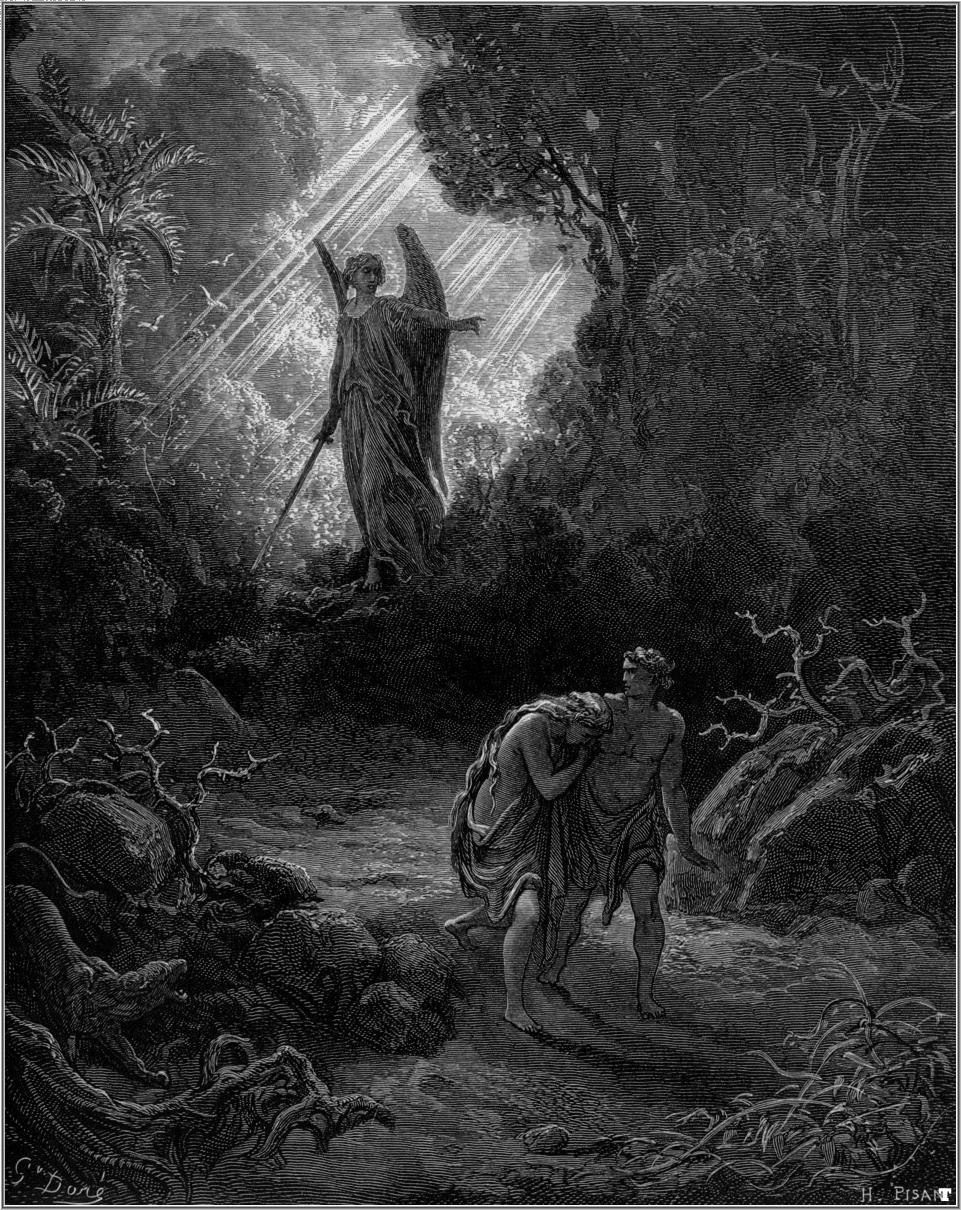
https://upload.wikimedia.org/wikipedia/commons/c/c8/Paradise_Lost_20.jp

Genesis 2

Psalm 8

Song of Songs

Hosea 2:19-22 NIV

Gerard Manley Hopkins, “The Wreck of the Deutschland”

Gerard Manley Hopkins, “God’s Grandeur”

Robert Browning, “Andrea del Sarto”

Robert Browning, “Paracelsus”

William Blake, “Tyger, Tyger”

Lord Byron, “She Walks in Beauty”

Pablo Neruda, “And Because Love Battles”

Joseph E. Duncan.  Milton’s Earthly Paradise: A Historical Study of Eden

Meredith G. Kline.  Kingdom Prologues: Genesis Foundations for a Covenantal Worldview.

Mandrills are the world’s largest monkeys. Charles Darwin wrote in The Descent of Man that “no other member in the whole class of mammals is coloured in so extraordinary a manner as the adult male mandrill’s”.[5] –  Darwin, Charles (1871). The Descent of Man, and selection in relation to sex. D. Appleton and Co, New York. https://en.wikipedia.org/wiki/Mandrill#cite_note-5

There is, however, one Thou which never becomes an It, the “ eternal Thou, ” God. Though we may speak of God in the third person, the reality of His approach is constituted in the fulness of the relation of an I with a Thou.  In truth, God may only be “addressed, not expressed.”  Martin Buber, “I and Thou.”                                       http://www.burmalibrary.org/docs21/Buber-c1923-I_And_Thou-ocr-tu.pdf 

SATAN

Would that the story had ended here with recorded bliss eternal,

With generations of perfect wise children gently ruling the world,

When a crafty creature slid into the garden, a serpent of old,

Venomous and veiled, dressed in deception and dark guile.

God’s adversary, Lucifer, the morning star, son of the dawn,

Who said in his heart, “I will ascend to heaven; 

I will raise my throne above the stars of God, 

I will ascend above the heights of the clouds; 

I will make myself like the Most High,”

No less than the devil made bold to enter Eden’s garden.

Ordained as a guardian cherub to stand on the sea of glass,

The fiery stones and flashing gems before God’s holy throne;

Anointed God’s lieutenant, an archangel to lead angel legions

In the worship of the Almighty, covering over the throne of God

With outstretched wings, 

Lucifer conspired to usurp God’s sovereignty,

And was expelled from His presence.

Once favored in heaven,

The future accuser of the saints, 

Satan, 

Was banished from heaven 

And cast down to earth

In disgrace, 

Together with a third of his proud, rebellious satraps —

Hurled out of a holy heaven like lightning falling to earth.

Sealed with perfection, in beauty perfect and full of wisdom,

Satan exchanged verity for vanity, bartered humility for pride;

Choosing darkness over light, deception over truth,

The devil became self-absorbed in his own beauty,

Embracing the emptiness of folly self-deceived.

Like a toad he puffed up in knowledge,

Like a red giant he expanded hot gas,

Inflated and tenuous at the edges,

He twisted inwardly in jealousy;

Self-consumed by a corroding discontent,

Corrupted by gazing at his own splendor,

And by thieving God’s glory, he collapsed

Like an imploding black hole sucking light.

Bejeweled with every precious stone: 

Ruby, topaz, and diamond; 

Beryl, onyx, and jasper; 

Lapis lazuli, turquoise, and emerald;

Adorned with exquisite gold craft

Of clasps and crowns,

He was blameless in all ways,

Until a wicked seed rooted in him 

And bloomed into good’s antithesis:

Demonic evil.

Without an independent existence, 

Dependent on God’s good will,

Unwilling to repent, 

Unable to ask forgiveness, 

Incapable of love,

Grasping at the power and authority to corrupt and destroy,

He devolved into God’s mimicking, parodying, satirical ape.

Addressing the woman, this ghoul aimed a poisoned probe

At innocence, injecting the first doubt to undermine truth,

A lie inserted between the permission and the prohibition:

“Did God really say

You must not eat of any tree in the garden?”

How clever the lie – casting doubt on God’s Word

By painting the Maker as a dour and sour prohibitionist

Fixed against the pursuit of all pleasure and happiness.

Rising to truth’s defense, 

Having received God’s command

Second hand from her husband Adam,

Eve parried the lie and denied the doubt,

Ascribing to God her own safety measure 

As a protective hedge.

Eve replied to the serpent,

“We may eat fruit 

From the trees in the garden, 

But God did say,

‘You must not eat fruit from the tree 

That is in the middle of the garden, 

And you must not touch it, 

Or you will die.’ ”

Fast as an adder, 

The serpent saw his opening

And sunk in his fangs,

“You will not certainly die. 

For God knows

That when you eat from it 

Your eyes will be opened, 

And you will be like God, 

Knowing good and evil.”

To be like God, knowing good and evil, knowing everything in creation,

To grasp power gained through knowledge, power over life and death,

To rise from subordination, to perceive secrets and receive adulation!

She could feel the poison flush her veins, rush through her arteries,

The hook implanted in her heart, temptation conceiving desires,

Coveting what was denied, calculating ways to quench craving.

Inseminated by a longing to converse with God as His equal,

A seed of dissatisfaction impregnated and grew in her belly;

Her eyes glowed and she saw how delicious the fruit looked:

Red and shiny on the outside, white and juicy on the inside,

Smooth to the touch, satisfying eyes, hefty in the hand,

With a sweet and sharp smell redolent of longings,

Desirable for gaining wisdom and good for food;

It seemed to be inviting her to taste and eat.

To be like God, knowing good and evil!

As soon as I bit into the forbidden fruit, 

The sweetness soured

And I understood why God 

Had forbidden us to eat from it.

I saw a leaf fall, twirling down a tree,

I saw a fledgling fall, fallen from its nest,

I saw a tree fall, crashing through the forest.

A hush fell on the garden, birds ceased singing,

Rooks massed in trees silently ruffling their wings,

Plumes of bats flew out of caves, out of the grass

The ground flowed with streams of hissing snakes,

Clouds gathered, the sun darkened red with blood,

The rose crown I wove on Adam’s brow grew thorns,

Blood covered my husband’s face like beads of sweat.

A sense of unease gripped me with fear and I swooned,

Nausea churning my belly and my limbs melting like wax.

An intense rush of knowledge and power burst my brain,

Exploding in dizzying visions and hallucinatory illusions.

Dark matter, dark energy, dark blistered my thoughts,

And I saw creation torn away from blissful innocence

And be subjected to violence, to betrayal and loss.

I heard the created order groaning in contortions,

Burdened by growing doubt and a fragile hope,

Precarious and frail in the face of rampant evil.

Swallowed the first bitter bite of forbidden fruit,

The foundation of fundamental reality shifted

Imperceptibly and all was changed in a flash,

Synapses snapping with new neural sparks.

At a loud trumpet blast, in the blink of an eye,

A drop of water, my tear, fell, and I fell with it

Through layers of matter, molecules, and atoms.

The spaces between solids foamed; unsubstantial

Substance quivered electric into quicksilver globules,

Shapes shifting into evanescent elementary particles,

All dancing with shimmering veils of vibrating waves,

Circling a dizzying symmetrical mirror of anti-matter.

Solid objects melted before my eyes and I trembled

With fear at the fragile uncertainty of the universe;

It was all an illusion, a trick of the eye, a mirage

So real I saw and touched its explosive power.

My mind’s eye saw heavy hydrogen particles,

The most basic matter energized with power,

Tritium isotopes charged with a flash half life,

Colliding in fission and fusion chain reactions

Triggering a sun-born thermonuclear explosion

Unfolding in Trinity the unbound power of stars

On a journey of death to extinction with no stop.

Hold my battered heart, world shattering death,

Comfort my crushed heart, destroyer of worlds, 

Cradle my fearful heart, cruel god of expiring life,

Blind me with a light flash brighter than lightning,

With a golden flower more searing than the sun;

Deafen me with a thundering, a percussive roar;

And a cloud like a mushroom rose to the heavens,

And a fireball hotter than the sun vaporized all life,

And a great wind leveled trees and smashed rocks,

And a cloud rained wormwood on land and waters,

And the scorched earth howled with winds of loss,

And the blackened earth shook with devastation,

And the shattered earth trembled cold oblivion.

I remember screaming but no sound came out;

Whirling down a tunnel shimmering with energy,

Emerging tumbling and floating into dark silence;

Sensations of streaking through star-filled space,

An asteroid hurtling in a trajectory round the sun,

A comet spinning past planets and solar systems,

Past millions of wheeling galaxies, dusty nebulae

Clouding the birth of suns, incubating in furnaces

Roaring silently with pulsing rays of light and heat

Tuned to the cosmic hum from a cataclysmic birth;

Soaring above a planet convulsing with volcanoes,

Tectonic plates colliding in shattering earthquakes,

Continents drifting on a sea of fiery, molten magma,

Mountains rising and rifts sinking into cracked faults;

Polar ice caps extending albedo snow to the equator,

Vast crust-crushing ice sheets blanketing continents,

Wave-damping white ice pack shrouding over oceans,

Glaciers grinding mountains down, scouring up valleys, 

Gouging out cirques and tarns, trailing till and moraines;

White rapids carving out canyons, brown floods cresting 

Over river banks, black mudflows and lahars burying all; 

Spiraling hurricanes like wind galaxies smashing trees,

Spinning off tornadoes and water spouts in their path;

Mountains igniting on fire, infernos consuming forests,

Skies filling thick with acrid smoke and seas with filth;

Forests petrified into coal and animals reduced to oil,

Toxic fumes emanating from hellish, sulfurous pools;

Oceans with no land in sight, deserts with no water

Stretched out to horizons featureless, empty, stark.

I saw our planet’s smallness glowing in dark space,

Lit by a roaring furnace of hydrogen in a dying star,

Eclipsed by the moon casting silver ghost shadows,

Edging diamond coronas round the darkening sun,

Circumscribing fractal, elliptical, low orbit rosettas

Sliding down the bend of gravitational space-time,

Bending through the gravitational lens of galaxies,

Riding the growling waves of colliding black holes

Devouring vast interstellar clouds of gas and dust.

Falling down wormholes into fantastic dimensions,

Fleeing superlumic quasars blasting gamma rays,

Plasma jets beaming death across the universe,

Cosmic waves irradiating my consciousness,

I beheld a parallel universe become reality,

I beheld a perfect paradise edge eccentric,

I beheld a creation that had lost its balance

And was wobbling with a slight precession and tilt.

The perpetual equinox, equal at the ecliptic and equator,

Shifted and tilted at an angle to the axis of the sun’s meridian,

Stretching seasons, shrinking days, and lengthening long nights.

I saw time speeding with pitiless force inexorably across space;

Under the weight of entropy, time crumpled, bent and folded,

The constant infinitesimally diminishing with passing eons,

The universal undulating like an ocean of churning waves,

Time slowing and accelerating with no fixed point or line,

Days dilating and distilling by milli-seconds

Until a day shrank from a thousand years

To one rotation of a spinning top;

And a year contracted from eons

To one revolution against the sun.

I saw time past fade 

And time present blur 

And time future

Climb towards a distant, finite, 

Undefinable point;

What might have been in Eden

Was now an irrevocable past.

I saw a crow peck out dead eyes,

I saw pigs rooting for offal in trash,

I saw a dog pack bring down a doe,

I saw a lion kill and eat his own cubs,

I saw a cat torture a mouse for hours,

I saw an absolute reduced by relativity,

Existence disappear in fickle probability,

Splintering the essential fabric of reality,

Fissuring spiritual fire from material clay,

Dissolving solid mass in fluid interactions,

Pressuring cracked fractures and schisms

Of stress, anxiety, discouragement and fear

Collapsing into an abysmal pit of depression.

Spinning cycles of decay, corruption, and rust,

Seeding doubt in the interstices of uncertainty,

Increasing noise to signal ratios of information,

Masking truth with illusory veils of deception,

Revealing stochastic moves in seeming order,

Liquid life spasmed with Brownian twitches.

Serrated with red fanged tooth and claw,

Sparking an indomitable will for survival,

Predators ruled prey with a jungle law:

Sharks circled seals, pythons coiled, 

Bees drove out drones from the hive,

Wasps and hornets massacred bees,

Chimpanzees waged genocidal wars,

And vicious life led to random death. 

Germ bearing parasites like lice, tick,

Fleas, flies, midges, and mosquitoes

Infected men and women with bites,

Boiling blood with fevers and chills. 

Vectors of vermin, monkeys, or rats,

Diseased bats, pangolins, and pigs

Demolished, devastated populations

With pandemics of mysterious viruses

That only the immune and fit survived.

Bacteriophages targeted bacteria cells,

Mutant cancerous cells consumed flesh,

Cankers suppurated bark with oozing boils,

Tumors grew appendages like dangling fruit,

Molds released spores into musty, poisoned air,

Red tides bloomed death across lifeless waters,

Suicidal whale pods mass stranded on beaches,

Migrating lemming swarms catapulted off cliffs,

Zombie fungi infected ants with invasive death,

And carnivorous plants trapped flies in pitchers.

Changing climates cycled floods and droughts;

Harvests failed, savannas dried, forests burned,

Brush fires killed kangaroos, koalas, and cattle,

Famines wasted herds and flocks, lions starved.

I saw a proud man place a crown on his head,

Seeking to satiate selfish desires at all costs,

Scheming with greed to amass wealth,

Manipulating the heart to satisfy lust,

Lying to conceal a hidden crime,

Coveting another’s property,

Envying another’s position,

Eyes filled with gluttony,

Indulging indolence

And drunken sloth,

Then erupting with rage from a dissatisfied will.

The resistance of things mounted fell mutinies,

The rebellion against what should be intensified,

Injustices undermined integrity and lies dulled truth,

Frustrations inflamed with inertia and incompetence,

With failures of the flesh, with surprising vicissitudes,

With advancing age and gout, with a loss of passion,

With a loss of vision, with laughter and derision,

With irritating kin and disappointing friends,

With a final, futile, death decaying cadaver.

I saw demons dance in bacchanals of lust,

I saw epileptics writhe in mad paroxysms,

I saw the rise of queens and priestesses, 

A goddess adored and a slave abused,

A wife beaten and a harridan nagging,

A daughter raped by her lecherous father,

A whore deceiving and a vixen manipulating, both for gain,

A virgin girl bent into a crone afflicted by solitude and pain,

A widow evicted from her home begging for alms in the rain.

I saw a parade of human misery shuffling on history’s stage;

Denying God, embracing pleasure, abandoning love and light,

Huddled in hate, curdled by envy, all bitter with regret and rage,

Then staggering off cliffs of despair, forgotten in floods of death,

Swallowed by sulfurous fumes exhaled from the dark gates of hell,

Humankind joined demons in the burning pit of unending torment.

I saw a woman clothed with the sun and the moon under her feet,

Crowned with twelve stars on her head and pregnant with child;

She was crying out in pain and contorted in the throes of labor.

A great red dragon with seven crowned heads and ten horns

Knocked out a third of heaven’s stars with his great scaled tail,

And stood before the woman with open jaw to devour her child.

A male child was born holding an iron scepter to rule the nations

But was taken up to heaven to sit at the right hand of God’s throne; 

I saw his mother fly on eagle wings to shelter in a desert monastery.

What did it all mean?

Then I saw a civil war break out in heaven;

Immortal beings clashed in mortal combat,

Darkness raged against a host of light,

But could not prevail.

I saw falls before the Fall; 

One long, fundamental fall,

A cosmic, cataclysmic fall;

Satan falling like lightning 

Out of heaven;

I saw mass extinctions of life,

The Great Dying of all species,

The Permian and Cretaceous,

Triassic, Jurassic, and Holocene,

Periods of flourishing and dying;

I saw the mass volcanic eruptions

Of the Siberian Traps;

Ancestral demiurges,  

Dragons and dinosaurs

Destroyed by an asteroid.

A slouching ape rose erect;

I saw hominids evolve from a

Missing link, splitting branches

Of the human family tree into

Neanderthal, Denisovan, and 

Cro-Magnon Homo Sapiens.

A beast emerged from the sea, 

A beast emerged from the earth;

A scarlet harlot riding the dragon, 

Glittering in gold, jewels, and pearls,

Covered in blasphemies against God,

Drunk with the blood of God’s people,

Sat on the waters and seven mountains

Of kings of cities and multitudes of peoples,

Brandishing a gold cup full and brimming over

With vile abominations and the filth of adulteries,

With a name written on her forehead: “Babylon the Great!

Mother of Prostitutes and the Abominations of the Earth!”

And I wept for having given birth to sin.

When Adam named me Eve, the hope of Life,

Hoping I would become Mother of all the living,

Breeding the races of men on the African plains,

I was filled with secret pride that I would be so honored,

But now filled with open shame for the curse I brought on men.

Could I have resisted? I could not help it, I had to taste one bite.

Could I have reasoned? Feelings and desires arose so quickly

My will power was overrun by a stampede of rationalizations.

Could I have repented? What would be the purpose of regret

For a deed already done with no hope of reversal or return?

My deficient will had defected from God’s good command

And injured with corruption the good nature God created.

A film of hardness came over me and calloused my heart

Like the nictitating membrane that shutters a reptilian eye.

Adam stood passively, his face wearing an unreadable mask.

Was he angry that I had not consulted him before my decision?

Was Adam also tempted to be like God, knowing good and evil?

Did he know I had done this deed to advance our common weal?

Why had he not slain the serpent dragon who had deceived us?

Was he also stricken with grave doubts about God’s goodness?

Why did he not defend God’s truth and so deliver us from evil?

Why had he not intervened to stop me yielding to temptation?

We could have been so happy together living in innocent bliss.

We both knew he would lose me unless he too shared my guilt,

So I gave him the fruit and he ate.

While I was deceived and sinned, Adam knew he was sinning

By willfully disobeying the one law commanded for us to keep.

Now equal in guilt, sharing our shame, parental partners of sin, 

Suffering anxious thoughts, we feared the consequence of sin:

Separation from our Creator in the chasm of an unforgiven sin.

Suddenly aware of our condition, exposed to the glare of truth,

Our eyes glowing brightly with preternatural knowledge,

Ashamed of our nakedness, afraid of being discovered, 

In fear of the condemnation awaiting our disobedience,

We sewed fig leaves and girdled our loins to cover guilt.

Then we heard the sound of God walking in the garden,

In the cool of the day, as was His habit to meet with us,

Moving like a rushing spirit-wind swiftly rustling leaves.

In panic, we quickly hid in a thicket of pandanus trees,

But God called out to us, His voice a thunder-whisper,

“Where are you?”

What a question! 

As if God couldn’t know where we were. 

But the question I realized was diagnostic,

Not geographical.

The all-knowing Creator was concerned, 

Wanting us to confess to Him our status,

To reveal our state and admit our need

As the first step of our cathartic therapy

If there was to be a hope for our healing.

So Adam answered from our hiding place,

“I heard the sound of You in the garden, 

And I was afraid because I was naked;      

So I hid myself.”

Adam’s crafty answer seemed sensible,

Acknowledging awareness of our state,

But God, seeing past the lie, responded 

With another piercing rhetorical probe:

“Who told you that you were naked? 

Have you eaten from the tree 

Of which I commanded you 

Not to eat?”

“The woman you gave me, 

She gave me to eat from the tree,”

Countered the craven coward, 

Pointing his finger at me.

The gall of that accursed man!

Blaming me and accusing God!

That insolent and arrogant man!

I should have shouted, 

“He let me do it, 

He never stopped me,”

But when God confronted me, 

“What is this you have done?”

I confessed my plea, 

“The serpent deceived me, 

And I ate.” 

I would have added, “the serpent You made,” 

But I bit my lip in shame at what I had become.  

A shaft of blame-shifting and responsibility’s abnegation

Replicating through shattered shards of the divine image

Compounded the guilt, shame, and loss of our original sin.

Like a mutated gene, a malignant cell, or a malevolent will,

Man’s first disobedience was transmitted down generations,

Reproduced, magnified and multiplied within every individual,

Soiling every aspect, affect, and action of our human nature.

The fig leaves we had sewed to cover our condition, fell off;

We stood alone, naked, awkward, abandoned, and afraid,

Guilty for our deeds, ashamed of what we had become,

We stood alone, apart, forlorn, with our eyes downcast;

Spoiled the beauty of holiness, righteousness stripped,

Conscience bent out of alignment, character in tatters,

The will deceived, the mind distorted, virtue diminished,

The flesh enslaved with a gradual erosion of moral fiber

Corrupting the deepest heart and tarnishing all thoughts

With an all-pervasive, incurable cancer of total depravity;

Human kind fell to evil and was lost to blameless paradise.

A great wind swept through the garden, swaying the trees 

With sighs of sadness, soughing laments of loss and trouble.

When the garden lost its flowers, greening in summer’s flush,

The serpent donned falcon feathers and robbed a pipit’s nest.

Disguised as a red brood parasite mimicking the cuckold’s eggs,

The devil artificially inseminated helminth ova into human clutch,

Infecting the woman’s seed with his own evil, viral, leeching spawn.

Camouflaged in full sight, we now heard the cuckoo’s babbling call,

“To hell with God!”

REFERENCES:

https://www.wikiart.org/en/gustave-dore/paradise-lost-5

Genesis 3

Isaiah 14:13

Ezekiel 28:11-19

Revelation 12

1 Timothy 2:13-14 NIV [13] For Adam was formed first, then Eve. [14] And Adam was not the one deceived; it was the woman who was deceived and became a sinner.

Seven Brief Lessons on Physics, Carlo Rovelli

Trinity was the code name of the first detonation of a nuclear weapon, conducted by the United States Army on July 16, 1945, 5:29 am 45 seconds as part of the Manhattan Project. The test was conducted in the Jornada del Muerto desert about 35 miles (56 km) southeast of Socorro, New Mexico, on what was then the USAAF Alamogordo Bombing and Gunnery Range (now part of White Sands Missile Range)… The code name “Trinity” was assigned by J. Robert Oppenheimer, the director of the Los Alamos Laboratory, inspired by the poetry of John Donne.  https://en.m.wikipedia.org/wiki/Trinity_(nuclear_test)

“Holy Sonnet XIV: Batter My Heart, Three-Personed God,” John Donne

“Plutonian Ode,” Allen Ginsburg

Bhagavad Gita

http://thediagonal.com/2011/07/26/atomic-poems-oppenheimer-ginsberg-and-linkin-park/

EVE

Exposed in the light of truth we anticipated God’s judgment.

The arraigned stood before the magistrate awaiting the verdict.

The dark dragon lord, now revealed, received his sentence:

“Because you have done this,

Cursed are you more than all cattle,

And more than every beast of the field;

On your belly you will go,

And dust you will eat

All the days of your life;

And I will put enmity

Between you and the woman,

And between your seed and her seed;

He shall bruise you on the head,

And you shall bruise him on the heel.

How you have fallen from heaven,

Morning star, son of the dawn!”

He who wanted to hurt God only hurt himself,

His black arrow’s aim redounded to his heart;

He who fell from heaven’s heights to roam earth,

How he was brought down to the depths of the pit!

Laid low in the realm of the dead, the abyss of Sheol,

The kings of nations condemn, ‘You conspired to be God,

You aspired to all power, but now you have become like us.’

Below all creatures he was cursed to crawl in mud and dust,

Cursed to dwell with maggots, worms, and rotting corpses,

Cursed to fall from a proud erect position and slither prone,

To writhe in knots and snake his way in serpentine paths,

To stalk his prey with stealth and a spitting split tongue,

To submit to the swaying moves of a charmer of snakes.

He will war with all women and like the weasel that he is,

He will steal their eggs and abort the unborn out of spite;

His seed will sow discord and division in woman’s seed,

But her seed will bruise his head when he bites his heel.

On the day of battle the woman’s champion will prevail,

On the day of judgment evil’s doom will be sealed in hell;

On that day the choicest junipers and tallest cedars

Of Lebanon will shout aloud in triumph

And rejoice that no one comes to cut them down.

I felt a visceral recoil at the slithering snake, hypnotic

Fear from the elemental presence of dust and darkness

That would fill some future daughters with hysteric dread,

While others would conjure a show and cultivate dark arts

Fixed on the serpent’s spells, charms, potions, and poisons.

When the Lord God spoke to me, his words pierced my soul;

The sentence for sin tolled like thunder on a calm day: 

“I will make your pains in childbearing very severe;

With painful labor you will give birth to children.

Your desire will be for your husband,

And he will rule over you.”

God gave me free will and I chose to disobey His command.

I wanted to be like God, to have controlling rights over my life,

But life rights require wisdom, responsibility, mercy, and love.

My disobedience had punitive and redemptive consequence:

The painful punishments refined me as a crucible of gold,

The guilt goads and conscience pricks led me to reflect

Deeply on my motivations, the twisting paths of my heart.

God gave me the gift to bear children with blood and pain;

In suffering birth I learned submission and grew sanctified,

In trials of barrenness and miscarriage my faith was tested.

Since I had wanted to be like God, He made me a servant,

An appropriate and commensurate sentence for my pride.

I sought to please my spouse, strove to serve my mate,

Quarreled with my husband and ached for his gentle touch,

Found purpose in children and merited favor with compassion,

Tended the hearth, tilled the garden, and toiled in the stony soil,

Fetched water from the well and gathered wood from the forest,

Wove, sewed, knitted, stitched, spun, crocheted, and embroidered,

Made clothes and cooked meals, washed clothes and cleaned pots,

Bartered shrewdly in the market, uttered proverbs, taught traditions,

And fellowshipped with women weaving tapestries in a circle of life.

I would dedicate my energies to knit individual threads into family;

Patience would be my virtue, fear my life, and caution my strength.

Constrained by the curse, I vowed to quell my rebellion and submit

My will to His, to fear the Lord my God with wisdom in all my ways;

Then my children would call me blessed and my husband love me.

Turning last to Adam, the Lord God delivered the doleful decision:

“Because you listened to your wife

And ate fruit from the tree

About which I commanded you,

‘You must not eat from it,’

Cursed is the ground

Because of you;

Through painful toil

You will eat food from it

All the days of your life.

It will produce thorns and thistles for you,

And you will eat the plants of the field.

By the sweat of your brow

You will eat your food

Until you return to the ground,

Since from it you were taken;

For dust you are

And to dust you will return.”

As covenant head of the family

Adam failed to keep God first in faith.

He listened to me and disobeyed God’s commandment,

He ate the fruit from the tree God commanded us not to eat,

A command that was for our good, to protect us from all evil.

Instead, we had chosen to covet what we could not have,

We had taken what was not ours, we had tried to conceal

Our sin, our guilt, our shame from our all-seeing Creator;

And so had reaped our just reward, the penalty of death.

To covet, to take, to hide, and so to die; this progression

Has been the pattern of sin for all generations of sinners,

Of which none have escaped the curse of our original sin,

Save the sinless seed who will come to save us of our sin. 

Because we came from dust, we will cleave to the ground.

We will grow our clothes from hemp, cotton, and linen flax,

But moths will eat our threads and finery will tear to rags.

Our labor will now turn to toil and our triumphs all will spoil.

The seed that we sow will be choked by thorns and thistles,

The wheat that we reap will rot with rust, wilt, bunt, and smut.

The bread that we eat will be baked with sweat from our brow.

We will plow the unyielding soil, then scatter seed in the sun,

And while we wait, chase away the birds and weed the tares,

For our fields will not yield their fruit without travail and cares.

Then when the time is right we will scythe the harvest,

Thresh the grain and winnow the chaff,

Then grind the grain and mill the flour.

Before our tongue will ever taste fresh bread

We will mix salt, oil, water, sugar, and yeast;

We will knead the dough and watch it rise;

Before our teeth will ever chew bread

We will bake it in the sweltering heat

Of a kiln;

And mercy will reward our wait

When we bite into the warm bread.

Then we will bless the broken bread,

We will honor the guest with bread,

We will not defile the fallen bread,

And with bread we will nourish all;

A blessing will rise from the curse.

Because Adam listened to me

And ate from the forbidden fruit,

We will surely die –

Return to the cursed ground we came from;

Earth to earth, ashes to ashes, dust to dust,

From dust we came, to dust we shall return.

The great soul doctor rightly diagnosed our condition:

“The cause of blessedness is adherence to God

And departure from God causes injury and misery.”

The mutable, made out of nothing,

Fell from the immutable that created it.

The ability to choose not to sin or sin,

And the possibility to not to die or die,

Passed to the inability to not sin

And the inevitability of death.

“Posse non peccare” became “non posse non peccare”.

But that was not a prescription, only a pronouncement

For a dire and mortal condition with no salve or cure.

We were cut off from our Creator and self-deceived,

Separated in spirit from each other and sin-enslaved,

We uprooted from our environment in a soul-psychosis

That masked with exploitation our grotesque alienation,

Applying cloying scents to hide the stench of our dying;

Guile had fathered guilt and guilt had fostered disguise.

We had donned masks of deception and cloaks of lies,

We had perverted our priesthood to follow false gods,

We had lost innocence and the dominion over nature,

We had disobeyed God’s good law and suffered loss,

We had rejected the author of life and reaped death.

Dead to God, dead to ourselves, dead to each other,

We had become like gods, knowing good and evil,

But in our behavior descended lower than the beasts.

What small reward to know that we had acquired science

At the cost of knowing God; knowing how without the why.

We could make tools and harness the wind, water, and fire,

But we could not control our lusts, rages, and desires.

Our innermost being emptied of divine breath,

We lit candles in the vast cave of our darkness,

Letting the winds of willfulness blow out the light.

The trauma of our loss haunted us with shadows,

Our spirits depressed with guilt, shame, and fear.

We consumed garbage to fill the bottomless void,

Replacing God with idols of id, ego, and superego,

And substituting stuff for spiritual wisdom and wealth.

A collective amnesia clouded our thoughts, swallowing

Up memories of paradise and leaving lingering longings.

As we walked away from the garden, an angel appeared,

A cherubim camped at Eden’s east gate to bar our return,

Waving a flaming, flashing, fiery sword in every direction

To barricade the tree of life, lest we taste immortality,

And so prevent an eternity of separation from God,

And thus preserve the hope of a future redemption.

As we looked back, our forest home froze into a wall

Choked with creeping, coiling, climbing tendrils of vines

That petrified into a jungle of jade, emerald, and malachite.

Then the foliage exploded in fire, branches swirled with flames,

The leaves like embers – red, yellow, orange – fell to the ground,

And a cold north wind rattled the border sentinels like skeletons.

A wall of ice advancing from the north, a giant glacial palisade

Creeping towards paradise, menaced Eden’s earthly delights,

Threatening to entomb the world in endless winter’s ice age.

But God did not abandon us to our doom. He clothed us

With garments of skin, with hides to clothe folly with fur,

And warm us against the ravages of unforgiving winters.

It felt strange to put on the pelt of what had been living,

Now sacrificed to cover over our nakedness and shame.

The fig leaves we had sown together to cover our guilt

Were insufficient; our labors to hide shame to no avail.

God revealed that blood must be shed to forgive sins,

A requirement He alone could fulfill with His sacrifice.

This gift of God’s grace provided an atonement for sin,

Propitiation to appease wrath, and an expiation of guilt.

God’s abiding, eternal covenant of love cloaked our sin

With His holy righteousness and His all forgiving mercy.

We, born naked, suffering hatred, assumed the sacred;

Our divorce from God and each other annulled with love.

It was as if God Himself had spread his skirt over our sin

And covered with His garments of grace our naked skin.

He became our Father in heaven, enfolding us as family,

Embracing us as a guardian and redeemer, our master

And Lord, our protector in storms, and our guide in life.

From then on we began to institute sacrifice in worship

As we organized our exodus out of the garden of Eden.

Which way to go? Which of the four rivers to follow?

The Pishon to golden Havilah, the Gihon to Cush,

Or the Tigris and Euphrates to the east of Eden?

Crossing the waters I heard a buzzing in my ear,

Then felt a sharp pain bite deep into my hand,

And I saw a winged insect pierce my skin,

And suck my blood.

When I swatted the creature

A red stain marked my flesh.

Death had come to life.

Exiled from paradise,

Refugees from Eden,

Wanderers on earth,

We first sheltered in caves,

Raised hogans on the plains,

Built dolmens in the mountains,

Assembled wigwams in the woods,

And erected yurts across the steppes.

At first we foraged for food,

Gathering wild fruits and nuts,

Picking berries and mushrooms,

Raiding bee hives for sweet honey,

Stealing the eggs from goose nests,

And eating grass, flowers, and leaves.

We learned to domesticate wild animals:

Harnessing oxen for plowing and pulling;

Donkeys, elephants, llamas, and alpacas,

As beasts of burden, for their fur and wool.

We bred chickens, ducks, pigs, yaks, cows,

And followed herds of horse, cattle, camels,

And large flocks of grazing goats and sheep.

We drank milk from hollowed horns, churned

Butter, and fermented curds into hard cheese.

Dogs and cats became steadfast companions,

Sharing our food as pets and ridding us of pests.

We made tools by chipping flakes off flint stones,

Crafted sharp knives with shards of obsidian glass,

And turned ostrich eggs and gourds into containers.

At first we feared fire and lightning,

The burn of loss throbbing fresh scars,

Remembering the flaming sword barring

The dream of a return to the Garden of Eden;

But we learned to master fire contained in pots,

Fanned flint-sparked flames into glowing embers,

And built clay ovens to boil water and bake bread.

We fished streams and rivers, followed desert wadis

To oases, and found springs bordered by royal palms.

When we came to the shore of the endless, windy sea

We learned to comb the beach for shellfish, build boats

And weave nets to cast upon the waters and haul in fish.

We wove weir baskets to collect rich bounty from the sea,

And trapped herring with our hands when the tide ran out.

We bound walrus hides to driftwood frames for an umiak,

Carved dugout canoes and lashed poles to bamboo rafts,

Rowed in leather coracles, and filled cloth sails with winds.

Did we hunt and kill prey? Reluctantly, when hunger led us,

We stalked and trapped small animals and ate the locusts

That settled on our garden and stripped the orchard trees.

Sometimes, large hunting parties went out to track game,

Catching antelope or herding mammoths into hidden pits,

Killing with spears tipped with the ivory carved from tusks.

Much later we learned to cull the weakest from our herds,

Eating only the clean animals after they were ritually bled

And offered in sacrifice to atone for sin and appease God;

But the slaughter and butchering were hidden far from me.

Our consciences were not yet blunted and dulled by death,

And the sight of blood made me swoon when flowing free.

Adam developed an aptitude for the science of medicine,

And I for the healing arts. Relying on the body’s powers

To recuperate health with food, fasting, fitness, and rest,

We entrusted our science to faith in God’s power to heal

In answer to our fervent prayers, supplications, and pleas.

We studied the properties of plants, palliative and curative,

Learned herbal lore, prepared tinctures and potions, brewed

Teas and infusions, dried weeds and flowers, and burned oils

Essential to specific ailments, effective in their scents and airs.

We collected the white tears of mastic dripping from resin trees,

And chewed the soft gum to ease digestion and sweeten breath.

We learned to add leafy herbs and spices extracted from roots

As healthy condiments to our foods, and for our general health,

Seasoning bland and tasteless vegetables with aromatic taste:

Sweet vanilla, hot pepper, smoky paprika, sharp dill, fresh mint,

Pungent savors of tarragon, turmeric, ginger, nutmeg, and sage,

Spicy accents of cardamom, caraway, cumin, cloves, and chives,

Earthy allspice, nutty oregano, piney rosemary, and musky mace,

Garlic and parsley, fennel and onion, coriander and cilantro, basil

And bay, cinnamon and saffron, lime and thyme and lemon zest,

Infusing aromas and flavors and textures to tickle the senses of

Sight, smell, touch, and taste. We so enjoyed eating our meals!

When we discovered salt by following deer to salt licks, our lives

Transformed. We salted fish and cured meat to preserve stores,

And reaped benefits of blood circulation and improved digestion.

We sprinkled salt into the flames and onto the flesh of sacrifices

To symbolize God’s grace and celebrate His purification from sin,

Administering perpetual love in an unbreakable covenant of salt.

We learned anatomy, the functions of the four humors in organs,

Working together to mend wounds, set fractures, apply poultices,

Mix concoctions, diagnose diseases, and prescribe prophylactics.

We developed tools for hunting, tools for agriculture, tools for work:

Ingenious spear throwing atlatls carved from wood, bone or ivory;

Copper adzes and ash-handle knives with chert blades; yew bows

With sinew strings and hickory-shafted arrows, flint tipped, bound

With falcon fletching to drive the darts true and straight to the prey.

We wove grass bags to gather fruit, made bark baskets for berries,

Peeled, split, chewed and coiled reeds, roots, and rushes into rope,

And stuffed straw in bear hide boots to smooth the rub of running.

We applied technology for all textiles, devised weaving techniques,

Twisted fibers into strings wound onto round spindles with whorls,

Wove yarns of wool, flax, hemp, cotton, silk, and linen with looms,

Threading weft over warp with heddles into weaves of twill fabric;

Stitched leather strips for harnesses, sewed felt patches for hats,

Soaked rawhide skins in tanning vats to fashion shoes and belts,

Tooled deer buckskin into hard quivers and soft undergarments,

Dyed linen, wool, and cotton cloths in madder, woad, and weld,

And designed appropriate clothes from fabrics, furs, and hides.

In the heat of summer the men wore loincloths and the women

Tailored short tunics; for the winter cold we embroidered robes

And cut fur coats to keep warm and to dress status in fashion.

We adorned ourselves with amber teardrop earrings, beaded

Bangles or bracelets with shells, pebbles, feathers, or bone,

And wrapped our heads with colorful ribbons and turbans.

Men and women more vain painted their faces and bodies

For beauty: kohl around the eyes, henna patterns on hands,

Stripes on cheeks, or sheeted in white mud like spirit ghosts;

Some even pricked their skin with pins and painted in tattoos

To embellish and emboss their bodies with fearsome designs,

Violating with violence the natural grace of God-given beauty.

We mined gold from veins in rocks and nuggets in river beds,

Hammering the malleable metal into lacy, filigree ornaments

Encrusted with prized diamonds, gems, and precious stones.

Much later, we discovered how to refine and smelt metal ores,

Crafting useful artifacts from copper, silver, tin, iron, and lead.

We quarried rocks with wedges in fissures and rolled boulders,

Learning to dress and fit stones and build tall walls and towers.

We timed seasonal sowing and harvesting of crops and feasts,

Erecting rows and stands of menhirs aligned to celestial gyres.

We felled trees for lumber, hauling the logs, hewing the timbers,

Sawing the beams, and carving the poles to build warm homes

Creaking in winter storms and crackling with chimney hearths.

We built houses in forests and bridges over streams with tools

To frame tusked joints of mortise and tenon round water wells,

And join wooden slats into chairs, tables, benches, and boxes.

In the deserts, we molded mud bricks baked hard by the sun,

And built adobe houses with windows ajar to cooling breezes.

We carried goods in oxen-yoked carts on tall, wooden wheels

Rotating around greased axles driving in revolutions of motion.

We loaded donkeys and mules with hay mounds and kindling,

Reined dogs to sleds tracking through the frozen forest snows,

And lashed our laden bundles to the humps of ruminant camels.

We galloped steeds across endless steppes, yelling to the wind,

And milked mares to ferment refreshing drinks in goat bladders.

We stored cereals in stone granaries and conical clay amphoras,

Ground grains in marble querns, mashed with mortar and pestle,

And decorated cylindrical ceramic urns with spirals and arrows,

With whimsical patterns on pottery vessels, repeating designs

Glazed on spherical earthenware dishes, fired in hot clay kilns,

Tempered by cool night air, and burnished bright with a pebble.

We carved reindeer with flint knives on wooly mammoth tusks;

On reindeer antlers we sculpted wooly mammoths and hyenas,

And made our tools from wood, bone, stone, sinew, and straw.

We painted aurochs, ibex, horses, and bison on cave canvases,

Depicted deer in ochre, bears in umber, lions in charcoal and chalk.

Blowing red pigment powder to stipple in stencil our splayed hands,

We decorated the stone walls of our cave temples with bright art,

And engraved elephants, crocodiles, and fighting cats on rocks

To envision our dominion over the creatures of God’s creation.

We abstracted our thoughts with lines, circles, ovals, triangles,

And simple symbols to explore mysteries and express secrets,

Struggling to conquer the divide between thought and speech.

In the river valleys where the rich black soil yielded to the plow,

We planted five grains, tamed wild peas, carrots, leeks, beans,

And other vegetables, and reproduced remembered orchards.

Channeling mountain streams to irrigation canals and qanats,

We cultivated barley, millet, sorghum, pulses, rice, and spelt,

Raised fields of cane and beets, refined molasses into sugar,

Sowed emmer, einkorn, durum, and hardy varieties of wheat,

Harvested teff, rye, maize, oat, amaranth, quinoa, and chia,

And bundled the reaped sheaves into bales and haystacks.

We learned to beat the stalks on the ground to thresh grain,

Throw the grain to the wind to winnow the chaff with a fork,

And grind the grain on round millstones into flour for bread

To feed expanding families, clans, communities, and tribes.

To celebrate plentiful harvests our men brewed barley beer;

Intoxicated, they danced and feasted for days and nights.

The rocky uplands we left wild for livestock to graze free,

Watched over by herders and shepherds — our children.

Before farmers and pastoralists were divided into tribes,

Before tensions arose from the rivaling factions of labor,

We sacrificed our work as votive offerings of veneration.

What began in Eden as the cultivation of a worship cult,

Praising God for His grace given freely and freely gained,

Grew into a culture of cultivation, a means to gain grace.

The burden of sin cast a pall over the purity of our piety,

And joy faded in the fever of toil and hardscrabble work.

We sowed to reap a harvest, cajoled God to bless crops;

Celebrating the fruit of our efforts, we grew self-reliant.

Applying judgment to discovery we acquired wisdom,

Took pride in our work and worked hard to be fruitful;

Breaking hard ground with our muscles and groans,

We turned God’s curse into a measure of success,

Turning brutish survival into productive economy.

With resourceful minds applied to better our lot,

We entrusted our lives to God’s merciful grace,

Worshipping Him with our first-fruit offerings;

And He prospered us with many blessings.

In the fulness of time,

Adam covered me

With a covenant of love

And he knew me,

And I conceived and bore him many sons and daughters.

Enfolded in each other’s arms, whispering our hearts’ love,

Melting into mankind’s first kiss, a softness of pressed lips, 

Delighting in the heat of our passion, in our loins enflamed,

Making love rooted in creation and flowering in covenant,

Consecrated in marriage and blessed with nuptial vows,

Our unions were our brief joy, an embrace of intimacy,

An enjoyment of God’s gift, two bodies in one flesh

Bound in the thrill and tremble of a fleeting union,

Joined in the mystery of love’s everlasting fusion,

Melting into pain-tinged pleasure and release,

All to the glory of God.

With the help of Yahweh I birthed a man, my first son, Cain;

Crying out in labor, heaving, panting, with sweat and blood,

I wrestled my first born to birth, shaking in tears and agony,

Wondering how I could endure this ordeal with every child;

But my pain turned to pride when I presented him to Adam

And saw his pleasure cradling his first born son, his image.

Our second son Abel became my favorite, a man after God.

When Cain chose to farm the land, Abel became a shepherd,

A good shepherd willing to lay down his life for a lost sheep;

We had hoped that he would become the promised seed.

The two brothers could not have been more different,

Quarreling incessantly over how to divide the land;

The farmer fencing off pasture from the shepherd,

And the shepherd seeking new grasses to graze.

Life was not what I expected.

Misery and mourning

Followed our fall from God’s grace.

I saw my first son murder his brother

In premeditated anger over the merits of a sacrifice.

Cain had offered vegetables as an atonement for sin,

As if a plant could substitute for the life of a sinful man;

While Abel had consecrated the fat of a firstborn lamb,

The finest from his favorites in the flock, a fitting offering.

God favored Abel’s cherished sacrifice offered in the faith

That blood invites forgiveness and atones for our iniquities,

Remembering that God had provided a sacrifice for our sin,

To clothe our nakedness and hide our guilt with animal skin.

But Cain had been hasty and perfunctory with his offerings,

Not acknowledging his sins and not seeking repentance,

And so offending God.

The divine fire came from heaven to consume Abel’s gift,

But left Cain’s limp vegetables to rot in the heat of the sun.

Cain’s countenance fell that day so the Lord convicted him:

“Why are you angry? Why is your face downcast?

If you do what is right, will you not be accepted?

But if you do not do what is right,

Sin is crouching at your door;

It desires to have you,

But you must rule over it.”

So Cain in jealous anger let crouching sin consume his heart.

He took his brother out to the fields and stoned him to death,

Then slit his throat like a sacrificial lamb led to slaughter,

Then lied to God and denied being his brother’s keeper.

It’s a terrible thing to bury your child;

It’s equally terrible to hear God’s cry,

“What have you done?”

When God pronounced the curse in consequence of his sin,

Cain was cut off from the land and cast out from his family,

As Adam and I were exiled from Eden and cut off from God.

But hope rang out feebly from the enormity of the tragedy:

Abel became the first shepherd sacrificed in his own blood,

The type of a Great Shepherd who would guide God’s flock

Forward to Eden, to graze green pastures of easeful peace

And offer himself in sacrifice for the forgiveness of our sins.

Abel’s blood still cries out from the ground that cursed Cain,

Ground that had swallowed Abel’s blood and gave no crops.

But Cain cried out to God in protest against his punishment,

Fearful for the bounty on his life in revenge for the life he took,

Afraid that his infamy would precede his homeless wanderings.

Serpent seed, unrepentant sinner with a cold, petrified heart,

Curse the gall of that ungrateful boy!

We had accepted our punishment as justice for doing wrong,

Believing that to escape punishment is worse than suffering it;

The greatest of evils is to do wrong and not be chastised for it.

But Cain whined that to be cut off from the land and from God

Was too unfair, did not fit the crime, and made him a victim.

Strangely, God heard Cain’s prayer and gave him protection,

Vowing vengeance seven times on whoever should kill Cain,

Thus laying the foundations for retributive justice and laws.

Did God’s covenant of love count the wicked as righteous?

Did common grace extend to the vilest offender who defied

God’s goodness, kindness, fairness, and His proffer of love?

Shunned the embracing arms of mercy, still the love extends;

But how far could a man bent on evil presume on God’s love?

My mother’s love for my son, though once proud and tender,

Suffering a terrible loss, mixing with anger and bewilderment,

Grew slowly cold and hardened like a frost on faded flowers.

To ratify God’s curse, Adam disowned and disinherited Cain,

Who had already fled far from our home to escape his guilt.

Branded forever the perpetrator of humanity’s first murder,

The persecutor of the first martyr who received God’s favor,

A fugitive from justice shunned for his crime, a failed farmer

Marked with a stigma of shame tattooed low on his forehead,

Cain became a vagrant wanderer and we became estranged.

I heard that he had built a city in the land of Nod, east of Eden;

A city undergirded with unseen pillars of God’s common grace,

A city to shelter humans from the wilderness and impose order,

A city of law offering hostels to travelers and hospitals for sick,

A city to shadow the eternal city of God, but one made by man.

The city was dedicated and named for his dynastic son Enoch,

Whose descendant Lamech would brazenly corrupt God’s way

And rule as a boastful tyrant wielding absolute, ruthless power

Usurped from heaven’s throne and in defiance of divine justice.

Kings began to take multiple wives, forged bronze and iron tools,

Fashioned weapons of war for more efficient kills and conquest,

Boasted of their merciless cruelty and prowess in spilling blood,

Exacted vengeance seventy times seven for the life of their kin,

Practiced ritual warfare as retribution for the slightest wrongs,

Exiled relatives outside the gates to live as nomads in tents,

And played music with woodwind and stringed instruments —

A gift of redeeming grace for a race of men yielded to evil.

The line of Cain was truly marked

With God’s gift of industry and art,

And cursed

With the loveless blood of others.

But Adam loved me again,

And God set a new son for my grief, named Seth,

As consolation for my beloved Abel killed by Cain.

Adam was one hundred and thirty years old

When Seth was born; a third son appointed,

Made in his father’s likeness and image,

A son to carry on our lineage and name,

An heir to continue God’s covenant love,

A link to a long line of godly patriarchs.

Seth first had a son he named Enosh,

A “man” born of the seed of mankind

Created male and female, and blessed

By God with the name “man,” or Adam.

Bearing the seeds of sin and redemption,

A seedling of hope in his grandparents’ heart,

A patriarch to guide, provide, and protect, and

A priest to mediate God’s grace to His people,

Seth gained the rights of man’s primogeniture.

But we had many other sons and daughters

Whose children became kissing cousins;

They left our nest and cleaved in pairs,

As it is written,

“For this reason a man

Shall leave his father and his mother,

And be joined to his wife;

And they shall become one flesh.”

Our family spread across the land,

Blessed and fruitful in covenant promise,

For God is faithful even when we are not.

Then Adam died eight hundred years later

At the age of nine hundred and thirty years.

Life had humbled me and I lost faith in my will and hope in my strength.

The dark shadow of death had draped his cold shroud over my flesh.

In those days men and women began to invoke God’s Name for help,

Building altars of stone to offer first fruits and to dedicate sacrifices.

Submitting in faith, bowing in prayer, dependent on common grace,

Adam and I had led our kin and clan to worship the one true God.

This is no tale, no myth, no fable, no legend, but truth retold.

The true tragedy is that men perceive the Fall as a fiction.

Men have shunned understanding and rejected wisdom,

For the beginning of wisdom is the fear of the Lord —

Reverence for his sovereignty, trust in his ways —

And the end of all wisdom is to find His love.

An owl in winter,

Snowy white in the snow,

Swiveled his head to eye me,

Shriveled and wrinkled with age,

And mewed in a sympathetic voice,

“Mercy in misery!”

REFERENCES:

https://upload.wikimedia.org/wikipedia/commons/1/13/Adam_and_Eve_Driven_out_of_Eden.png

Genesis 3-5

Genesis 4:6-7 NASBS  [6] Then the LORD said to Cain, “Why are you angry? And why has your countenance fallen? [7] If you do well, will not your countenance be lifted up? And if you do not do well, sin is crouching at the door; and its desire is for you, but you must master it.”

Isaiah 14:4,8

Ezekiel 16:8 (cf. Ruth 3:9)

Augustine, City of God, p 3, That the enemies of God are so, not by nature but by will, which, as it injures them, injures a good nature; for if vice does not injure, it is not vice.

T.S. Eliot, Four Quartets, Burnt Norton

Meredith G. Kline.  Kingdom Prologues: Genesis Foundations for a Covenantal Worldview.

Francis A. Schaeffer, Genesis in Space and Time

https://www.monergism.com/thethreshold/articles/onsite/augustinewill.html 

http://otshelnik.net/content/view/200/1480/

https://www.earth.com/news/fish-humans-stone-age/

https://www.thoughtco.com/natufian-period-hunter-gatherers-171958

http://www.makin-metals.com/about/history-of-metals-infographic/

https://www.seasalt.com/history-of-salt

https://www.livescience.com/18808-invention-wheel.html

https://www.smithsonianmag.com/history/gobekli-tepe-the-worlds-first-temple-83613665/

https://www.nationalgeographic.com/news/2013/10/131016-otzi-ice-man-mummy-five-facts/

https://www.thevintagenews.com/2016/06/09/solnitsata-salt-and-gold-2/amp/

https://www.anbg.gov.au/gardens/education/programs/pdfs/aboriginal_plant_use_and_technology.pdf

https://www.haaretz.com/amp/israel-news/.premium-israeli-archaeologists-find-hidden-pattern-at-gobekli-tepe-1.8799837

Comparisons with other ancient European farmers show that agriculture was brought to Iberia by the same migrant groups that introduced it to central and northern Europe. These pioneers expanded from a homeland in the Near East, sweeping across Europe about 7,000 years ago to usher in the period known as the Neolithic.

“Ancient DNA cracks puzzle of Basque origins” http://www.bbc.co.uk/news/science-environment-34175224

NOAH

Rain, rain, rain, rain, rain all day, rain all night, 

Rain at daybreak, rain at noon, rain unrelenting,

Rain unceasing, rain showers swelling to downpours;

Unending rain clogging air, liquefying land, loosening rocks;

Incessant rain throbbing on the rafters, pounding in my head.

For forty days and forty nights earth drowned in a great deluge,

Torrential rain falling in buckets, like stinging wasps on my face

When I stuck my head out the porthole.

It began with an iron pot closing over the sky,

Shutting out the sun with a shroud of clouds.

Like curtains rippling in an open window,

Clouds coiled and boiled into braided, tangled ropes;

Like wrestlers locked and strained in twisting holds,

Clouds billowed and swelled and massed high,

Piling Pelion on Ossa, heaping range above range;

Clouds rose into towering, threatening thunderheads

Like anvil tops ready to receive God’s hammering blows.

For a week, lightning crackled and thunder rumbled in warning;

Then the earth broke open and disgorged geysers and fountains

That reached to the sky; then the heavens cracked open bellies

Of water spilling down to the waters below until the earth drowned.

We heard the wind howl in twisting contortions, beating down trees,

Hurling debris like a giant, dragging and clattering in deafening din.

Doors slammed, windows shattered, walls shook, the ark creaked

Against its blocks, and scaffolds buckled with the strain,

As the waters rose.

Grey clouds unfolding dark flags, darker banners and darkest storms

Unleashed God’s wrath in a watery apocalypse of warring elements.

Raindrops ran into thickening rivulets, threads of water were braided

In channels, streams overflowed banks, and rivers rising over houses

Carried floating carcasses of horses and cows, pigs and sheep,

Bloated with hooves waving as they bobbed in the chop.

The currents tore down dwellings, swept away history,

Erased terrain and melted mountains into mudslides.

As the ark passed a high mountain, a family clung to rocks

While the waves licked up the sides eager to swallow them.

The men cried out for help 

While the women held up children,

Appealing to our compassion, pleading for their lives.

It was not because we recognized them as mockers

Who scoffed at us while we built the ark

That we didn’t stop to help.

It was just that there was no more room in our refuge,

And our cargo too precious to risk crashing into rocks.

Besides, God had covered the ark and we were shut in.

I had warned my neighbors the rains were coming,

Preached to them to repent and turn to their Maker,

To save themselves from the coming wrath of God,

But they kept feasting and keeping their revelry,

Eating, drinking, merry making, and marrying,

With no thought for tomorrow.

I could hear them crying out in the storm,

“How can a good God abandon us?”

My heart broke at their plight and I wanted to save them,

To jump into the maelstrom with a rope tied to my waist,

But my sons held me back.

Would that I could have exchanged 

My salvation for their damnation!

While we waited for the rain to stop,

For the descending downpours

Joining the ascending floods

In a chiastic hourglass

To reach their peak and cease,

To dissipate and abate, receding

Back down to the drowned ground,

Time stood still;

One day washed into the next, 

One endless day of endless rain

Washing away the world’s dross,

With time to ponder God’s wrath.

Why had this terrible catastrophe come about?

What made the Creator become the Destroyer?

How did an unchangeable God regret making man?

While building the ark I had preached to the curious:

“Tremble in fear, you godless people heedless of good!

Behold, the storm of the Lord will burst out in wrath, 

A whirling wind swirling down on the heads of wicked. 

The fierce anger of the Lord will not turn back 

Until he fully accomplishes the intent of his heart. 

In days to come you will understand this.”

I had preached in the hope that men would turn back

To God, turn away from their evil, sinful, godless ways.

In truth, I had not fully understood the fury of His anger

When I preached these words of warning, hoping more

For hyperbole and mercy, for a repentant reconciliation.

It was man’s malice and vice that provoked God’s wrath;

Every intention of the heart’s imagination was always evil.

According to our deeds we merited His awful fierceness,

Restrained by His merciful patience until unbridled sin

Brimmed over the wine cup of his anger and spilled out,

Tipping the equilibrium and equanimity of divine justice.

Sin had tickled God’s nostrils and He sneezed up a storm,

For His wrath is just, His anger justified, His justice absolute.

The children of men had multiplied and spread out across the earth,

Commingling the generations of the line of Cain and the line of Seth.

Corrupting God’s gifts and blessings and abusing power and justice,

The line of Seth grew proud of their lineage, trusting in their name,

Calling themselves sons of God and asserting angelic descent,

Claiming their rights to entitlements and demanding benefits,

Floundering in a liminal transition of ambiguous confusion,

Apostatizing their calling to serve and honor the Creator;

Deceived by the trickster to abandon their faith in God,

Forgetting the terrible consequences of the Fall,

These were led astray and lost their way,

Letting their lights grow dim.

Meanwhile, the line of Cain increased guilt and perfected violence.

Kings who claimed the divine right of absolute power and might

Oppressed their people and flouted God’s rule; priests claiming

God’s presence preyed on widows, seduced waifs and orphans,

Deceived the wealthy, robbed the poor, flaunted their priesthood,

And replaced Creator worship with graven idols and empty ritual.

Warlords gathered gangs of miscreants and attacked with terror;

They decapitated heads, quartered limbs, and mutilated torsos;

They built vast trophies, instruments of torture, towers of skulls,

Blank holes gazing sightless at tossed crowns and torn mitres.

Commemorating their gruesome battles on bas relief walls,

They buried nobility alive in megalithic chamber tombs,

Killing their kings by hanging, drowning, and burning

In the threefold death of wicker men and bog bodies.

They sacrificed virgins and captives and invoked evil,

They cut out the beating hearts of their living victims,

They devised unspeakable tortures for their enemies,

They persecuted Sethites and burned them in pyres,

They practiced necromancy and druidic fertility rites,

They searched the deepest, darkest secrets of sorcery,

All the secrets of the angels and the violence of demons,

The power of witchcraft and the power of molten metals,

The power that sparks creation and wreaks destruction.

The luster of burnished metals drove their lust for blood;

They aligned constellations with massive dragon stones,

They learned to pronounce the unpronounceable name,

And utter oaths to conjure dread and bid fearful forces

Arise from darkness and help forge weapons of death.

Cain’s brood left a trail of violence, terror, and carnage,

Followed by vultures, jackals, and carrion feeding beasts.

When the sons of God lusted after the daughters of men,

Whose game was temptation, seduction, and enticement

Played with sinuous curves and snake-charming swaying

To hypnotize the prey, to captivate and capture the foolish,

The sons of God were drawn drooling into the witch’s web.

Beguiled by beauty, enticed by flattery, allured by charms,

Enchanted by fluttering eyes, captivated by velvet voices,

Intoxicated by fragrant perfumes and entranced by flesh,

They lost a holy cover and followed their partners in sin,

Marrying and mating with whomever they chose.

Unequally yoked as light with darkness, 

The royal throne with the priestly altar,

The city of God and the city of man 

Became a sprawling metropolis

Of slums and palaces, 

Bazaars and arenas, 

Temples and towers,

Where angels and women copulated openly and killed freely,

Committing corruptions, atrocities, and vilest abominations.

Breeding a race of mad titans, tyrants, perverts, and giants,

The Nephilim, the fallen ones who once terrorized the earth,

Who became celebrities of old, the mighty men of renown,

Who glorified themselves at the expense of God’s glory, 

Who, void of soul, became vainglorious, like vampires,

Sucked life out of the living and robbed joy from life.

Lascivious, enslaved spirits, condemned to haunt

Tortured souls, afflict, attack, oppress, possess, 

Battle, destroy, mirror the heavenly war on earth,

And advance the strategies of Satan against God,

They harassed lost humanity with dread despair.

These demonic spirits became legion, like flies

Clouding a noisome cadaver with hellish noise.

Then Yahweh, the Existing One, said,

“My Spirit will not contend with man’s straying flesh forever,

Therefore his days will number one hundred and twenty years.”

One hundred and twenty years of leniency before judgement;

The years left before the Flood became life’s shorter measure;

Time enough to turn back to God, to turn from evil, sinful ways,

Time enough to repent before death’s door and judgment day,

Time enough for kindness to gladden hearts in life’s darkness.

One hundred and twenty years, the longest a man could live,

For cutting short longevity kept humans from sinning longer,

Though I was five hundred years old when Shem was born.

The Lord was sorry that he had made man and He grieved,

Pained by the sorrow that sin had caused all His creation,

And sad at the rebellion that had robbed man of his joy.

Accommodating to our understanding his hatred of sin

By anthropomorphizing his pure emotions of revulsion,

God revealed his displeasure in the language of regret;

For God is not a man that He should lie,

Nor a son of man that He should repent.

Immutable, impeccable, impassible and pure in aseity,

God is nevertheless passionate, patient, loving, caring,

And relentless in anger against those who oppose Him,

For the heat of His purity must burn the dross of impurity.

From our side of heaven it seemed that God had changed,

As from a spinning earth we perceive the sun to rise and set,

But we the ones who move relative to God

Who does not change like shifting shadows.

Transcendent and immanent, eternal, out of time,

God had foreknown the Fall and anticipated vice

To purpose a good with power to prevail over evil.

The same power that out of nothing created good

Could return to the same nothing a corrupted good,

That which had fallen from Him who sustains what is good.

Another more terrible thought: if created with eternal souls,

Could corrupted good be condemned to exist forever

In a place of torment and punishment far from God,

Far from the kind mercies of His covenant love,

Yet present in the fullness of His just wrath?

Whether fallen souls and rebellious angels

Were assigned to eternal oblivion 

Or sustained in Sheol’s eternal burning perdition,

Remained a question for conjecture or revelation.

For as the good soul doctor said, 

“Evil cannot exist without good,

Because the natures in which evil exists, 

In so far as they are natures,

Are good.”

Ultimately God’s wrath was a mystery

To which I yielded in humility and trust,

Too fearful for longer contemplation.

So the Lord said,

“I will wipe from the face of the earth 

The human race I have created—

And with them the animals, 

The birds and the creatures 

That move along the ground—

For I regret that I have made them,

For the earth has been corrupted

And is full of violence because of them.”

Man’s violence and pollution triggered 

A violent reaction from creation’s face

In response to the Creator’s decree;

Heaven and earth sobbed a torrent 

Of cleansing tears to wash away

Rebellion’s stain and evil’s fears,

To mitigate the virulent threat

Of mankind, infected by sin,

And reboot creation’s soul

Through the chosen seed.

To my great surprise,

I, Noah, found favor in the eyes of the Lord;

Chosen before time to be among those elect.

Now my father, Lamech, had named me “Rest,”

Prophesying that his son would become a savior,

Bringing rest from work and relief from the labor

Of long toiling and tilling the cursed, hard ground.

Little did he know that God would drown the earth

And make me the seminal father of a surviving family,

And the covenant representative for every living being.

Early on, I had listened to my mother tell me about God,

How He had blessed me at birth 

With long locks as white as wool,

With a body white as snow and red as a rose,

With beautiful eyes that on opening shone like the sun

And filled the whole house with radiant delight and joy.

She told me I looked like a son of God, an angel of light,

Who spoke with the Lord and babbled blessings at birth.

Trust a mother to exude such exaggerations of her child.

In truth,

I had chosen to follow a path of faith and righteousness,

Becoming a man of integrity and prayer, seeking after God.

So when the Lord revealed to me that I should build an ark,

Having warned me of His plan to wash out man’s corruption,

He established His covenant with me as His rightful servant,

He declared me righteous in this generation and called me

To fulfill His purpose, to represent His justice, and to speak

With His voice and authority to a violent and doomed world

That now merited death, having rebelled against life’s Lord.

I did as commanded and received His promise in the faith

That He would save me and my family and select creatures

Chosen by grace to enter into the covenant ark of salvation,

Our sanctuary from God’s wrath, the tabernacle and temple

Where we met with our Lord in worship, fellowship, and prayer.

The ark became our home, our world, a refuge from the storm,

An open door into the promise of a life resurrected after death,

And we became God’s remnant people, priests of His kingdom,

Consecrated to proclaim His coronation as the Lord of creation.

Wisdom built the ark out of gopher wood, caulked with pitch,

Crafted to precise measurements with separate rooms,

A roof, and three decks: lower, upper, and middle.

A wide panoramic window capped the pyramid,

Letting light shine into the darkness within,

With an ample door to let in the animals 

Along a ramp to the middle deck.

Two by two, 

Male and female from every kind

Entered the ark;

Seven pairs of clean animals 

And one pair unclean.

The day we loaded the animals into the ark was a sight to behold!

As if on a signal the birds flew in formation to alight in the rafters,

And a parade of beasts came through the streets in dusty clouds,

Cheered in derision by crowds hooting in laughter and shouting,

“You couldn’t fit four elephants in that fancy floating coffin!

Will you fit the giraffes by cutting off their necks and legs?

How will your zoo float with so many beastly animals?

Will they take turns rowing or will they shit together?

What about the dinosaurs and wooly mammoths?

No way a boat that big and heavy could float!”

That last one did make me doubt for a moment,

And the mastodons did resist herding into the ark,

So we left them behind with the dinosaurs, but the elephants

Like docile dogs followed us to their pens on the middle deck.

I felt like Adam naming the animals as they paraded past me,

Waiting for a second birth inside a wooden womb

Filled with creation’s remnant reserved for rescue.

By a miracle, the animals all fit in the ark 

With not a mouse to spare.

The only incident was a bear who mauled some mocking boys.

The rains began in the second month of my six hundredth year,

Whether on the seventeenth or twenty-seventh day, I can’t recall.

The rains made me melancholic and introspective,

And I thought of the past, my lineage from Seth, 

Adam’s heir and likeness, made in his image.

I remembered my antediluvian ancestors like Methuselah,

My long-lived grandfather who inspired me to seek after God,

Who passed away in peace the year the rains began to fall,

Five years after his son, Lamech, my father went to his rest;

They all died who came before me, and I expect to die too.

But then I remembered my great grandfather,

The other Enoch, seventh from Adam,

The one who walked with God,

And he was not, for God took him. 

Taken up to the fires of heaven, 

Enoch had seen visions of angels,

Mountains shaking and hills trembling,

And God appearing and treading on earth,

A Son of Man to sit on His throne of glory,

And judge the earth for her sum of sins.

Looking forward to the end of time,

Enoch had prophesied, promising peace

To the righteous, protection for the chosen,

Mercy for all those belonging to the Holy One;

Peace, prosperity, and blessings appearing as light

To those who receive God’s help in times of trouble.

I had cried out to him three times in consternation

Over the abject and dismal condition of man,

“Hear me, hear me, hear me.”

I remembered his response:

“See, the Lord is coming 

With thousands upon thousands of his holy ones 

To bring judgement on all and destroy the wicked,

And to convict all of them of all the ungodly acts 

They have committed in their ungodliness, 

And of all the defiant words 

Ungodly sinners have spoken against Him.”

In my time these people had already

Become grumblers and faultfinders

Who followed their own evil desires,

Who boasted about themselves,

And flattered others 

For their own advantage;

And met doom in the Deluge.

Because of Enoch’s testimony

I began hoping in a resurrection,

And a redeemer who would ransom us,

Who would deliver us from sin and death,

Who would rescue us from slavery’s curse,

And restore our holiness

So that we could walk with God again –

As in the Garden of Eden.

How I longed for a redeemer who would save us from evil,

Who would deliver us from overwhelming waters of wrath,

The promised Seed preserved for posterity in my loins.

I thought also of the future, my legacy to my sons,

Shem, Ham, and Japheth, alone with their wives,

Alone with the rescued animals to start a new world.

Would they hold on to their faith in God’s goodness,

And found great nations that spread out over the earth,

That at the end of time would respond to God’s call to Himself?

On the ark we prayed lauds and vespers, morning and evening,

To mark time and move light’s hinges and turn our hearts to God,

Reminding Him to remember his preservation covenant with us.

Hearing our prayers, 

God remembered me and the animals,

And sent a great wind over the earth,

As on the first day of creation,

And the rains ceased after forty days,

The great springs stopped spouting 

And the clouds closed their wells;

Light broke through the clouds like sword thrusts 

Dispelling the darkness and dissipating the storm.

When we sounded the waters with lead and line, the plummet

Plumbed down to a depth of fifteen cubits, half the ark’s height

Above the highest mountains; water covered over the world.

Every living creature with breath drowned, man and animals,

Everything that moved on earth, creeping things, flying birds,

Everything that swarmed, all flesh and cattle and wild beasts,

And all people perished, wiped out from the face of the earth,

Condemned, dispossessed, and destroyed in God’s judgment;

Only the fish and I were left, and those with me in the ark.

With my wife, my three sons and their wives,

We eight had survived earth’s holocaust,

Prevailed through the trial by water,

Endured the ordeal of judgment,

And braved the cleansing flood 

That swept sin’s wild deluge.

We had been baptized 

Through immersion 

In the flood waters,

As if released into death,

And emerged from the water

As if receiving new lives.

Justified by our faith,

Made righteous by grace,

With our consciences made clean,

We were born again by water and blood;

Under the sun shining through clear skies,

We became a covenant community of survivors;

For it is written,

“When the storm has swept by, 

The wicked are gone, 

But the righteous stand firm forever.”

Cocooned in God’s covenant protection,

We floated for five months with no land in sight,

Until the waters began to subside and recede.

In the seventh month the ark berthed on Mount Ararat,

But I can’t recall if it was the seventeenth or twenty-seventh day;

I do remember it was a Sabbath day when the ark came to rest,

A day reserved for our repose, a day dedicated to worship when

We consecrated the consummation of our salvation with praise. 

On the first day of the tenth month we spied the topmost peaks,

The summits of the tallest mountains in Armenia exposed to air,

Breaking through the waves as the sun rays pierced the clouds

To ignite the jutting pinnacles with rose flames and crimson fire,

And our hopes revived. 

At the end of forty days, I opened a window and released a raven;

The raven who ate freely at our table, who perched on our shoulders,

Who followed us around on inspections squawking critical comments;

Our feckless, feathered friend flew above the ark, circling for height, 

Then flapped and fluttered off to become a speck on the horizon,

And nevermore returned.

Then I took one of the two doves and cupping her in my hands

Brought her to my lips and kissed a blessing on her soft wings;

Finding no perch on the watery earth she returned to the ark,

Exhausted from having hovered in vain over the dark waters;

Then reaching out with my hand I brought her back to myself,

Reminded of how my Lord receives my weariness into His rest.

After a week I released her again, and this time she returned

To me at evening, and in her beak a freshly picked olive leaf!

My heart leapt with joy and I received my Lord’s assurances:

Peace in His promise, concord in covenant, felicity in faith.

Another week passed as the flood waters abated,

And a third time I released the dove

Knowing she might not return,

But not before hearing her 

Coo a consoling comfort,

“The creation is safe!”

REFERENCES:

https://upload.wikimedia.org/wikipedia/commons/8/80/Deluge.pg

Genesis 5-8

Jude 1:14-16

Proverbs 10:25

Matthew 24:36-39

Luke 17:26-27

Hebrews 11:7

1 Peter 3:18-22

2 Peter 2:4-9

Augustine, The City of God, Book 15, section 11 – Of the fall of the first man, in whom nature was created good, and can be restored only by its Author.

Jonathan Edwards, Sinners in the Hands of an Angry God

Meredith G. Kline, Kingdom Prologue: Genesis Foundations for a Covenantal Worldview

Bruce A. McDowell, Noah: A Righteous Man in a Wicked Age 

Dr. Jay Winter, The Complete Book of Enoch, Standard English Version

Sin’s wild deluge brave – “Take Up Thy Cross,” from Germany

SHEM

My brothers and I spent our time on the ark shoveling feces,

Feeding the animals from the stored fodder, and fixing leaks,

While our wives laundered our stained, dung reeking clothes.

At the beginning of our voyage we often cleaned up vomit

As the ark pitched, tossed, plunged and heaved on waves.

We had rigged a system of pipes and tubes to wash filth

Into the sentina, the bilge at the bottom of the boat.

A filter screened out the solids while a screw pump

Sent the liquids into the sea through the hull.

Another pump forced water in to wash the decks,

While we let gravity bring potable rainwater for drink

Through another pipe system with valves, tanks and taps

That siphoned water to each pair of animals in their stalls.

Despite the cacophony of animal calls: screaming peacocks,

Quacking ducks, honking geese, gobbling turkeys, croaking frogs,

Shrieking monkeys, bellowing moose, bugling elk, growling bears,

Braying donkeys, whinnying zebras, wailing koalas, barking deer,

Barking dogs, meowing cats, clucking chickens, peeping chicks,

Grunting pigs, lowing cows, bleating sheep, neighing horses,

Trumpeting elephants, laughing hyenas, snorting javelinas,

Howling wolves, roaring lions, squeaking rats, and a rooster

Crowing at all hours of the day and night, we felt a peace

Rest on the ark and a confidence that all would be well.

After the rains, on days when the seas were calm,

The animals would all be quiet while we waited,

In the eerie silence, with the beams creaking,

While we waited for something to happen;

And that was the hardest part, the waiting.

A year after entering the ark,

On the first day of the first month

Of Noah’s six hundredth and first year,

The water had evaporated from the earth.

By the twenty-seventh day of the second 

Month the earth was completely dry.

Praise be to the God of our salvation

Who alone had saved us from His wrath!

God had designed the ark, called Noah to

Build to His pattern, then filled the ark with

The chosen few, and steered the remnant

Through the rising waves to a safe harbor.

As if recreating a new creation out of chaos

Noah then removed the covering from the ark

And together we pushed our heads into the sun,

Gasping and breathing deeply the rain cleansed air.

You can imagine our joy when God called us to leave

The covenant ark along with all the birds and animals,

And every creeping thing that stowed away in the bilge.

Our exit from our temporary home was without fanfare,

But more triumphant than our entry, with thanksgiving,

And without the mocking crowds and ominous clouds.

Our wives laughed and danced on the springy meadow

While the animals skipped and gamboled off their prison,

Galloping off by families to spread and breed prolifically.

Then Noah built an altar of unhewn stone and sacrificed

Seven clean animals and seven clean birds as offerings

To the great Lord God Yahweh, the Existing One who is.

From the ark’s construction to the altar’s consecration,

With obedience and worship, through faith and works,

Noah faithfully fulfilled his abiding devotion to God.

Raising his hands in prayer,

Noah thanked God for his mercy,

Praised God for his majestic power,

And asked God for His forgiveness,

For his sins and the sins of his family.

Yahweh smelled the soothing aroma

Of burnt offerings appeasing his wrath,

The lifeblood offered in propitiation for sin;

And Yahweh said to Himself,

“I will never again curse the ground on account of man,

For every inclination of his heart is evil from childhood;

And I will never again destroy every living thing,

As I have done.

While the earth remains,

Seedtime and harvest,

And cold and heat,

And summer and winter,

And day and night

Shall not cease.”

Order was restored

To the creation

With a new rhythm

Of seasons, cycles, and signs

Of God’s faithful assurances,

And His promises of sustaining grace.

While the earth remains, until the very end,

We could be sure that day would follow night,

Confident that the sun would rise in the mornings,

Secure that the seasons would follow one another;

What we sowed in spring we could reap in autumn,

Storing summer’s bounty for the cold winter months;

Though a warm hearth could not keep away the chill

Of earth’s eventual end expecting His Last Judgment.

While the earth remains we could live out fearful lives

In faith, hope, and love, all in submission to God’s will,

Trusting in an unbroken covenant with day and night,

And grateful for God’s daily, providential provisions.

Noah, as mediator of mercy, covenant family head,

God’s elect representative, a priest to the creation,

Received God’s renewed blessings and mandate

To be fruitful and multiply, to increase in number,

To fill the earth, swarm, and populate the world,

Together with my brothers and I,

As heirs of God’s common grace

Tempering man’s common curse,

For an everlasting covenant of love.

Baptized by immersion in the flood, delivered by the ark’s wood,

This new start seemed a more sobering event than the first birth

That ushered in man with unalloyed goodness and universal awe.

Wiping out the human race would not eliminate sin and its curse,

Though it did reveal the limits of God’s long-suffering patience:

The power and pervasive extent of His severe judgment

And his mercy displayed in the promise to preserve earth,

To reverse Cain’s infertile curse that had sterilized the soil,

And restore humanity’s remnant with a covenant of grace.

Despite man’s inclination to evil from conception and birth,

God inaugurated a new plan to give man a second chance,

To choose whom to serve and to seek after His good grace.

This new dispensation was tinged by the Fall and the Flood

As a cloud tempers the noonday sun and earth’s shadow

Stains the moon with blood.

The fear of man perturbed the animals and dread came over

The beasts on the earth, the birds in the sky, the fish in the sea,

And all creeping things on the ground where man’s shadow fell.

The rule of man over creation was reluctantly restored;

Every moving thing with life was given into man’s hands,

Everything was given as meat to eat with the green plants,

And man the vegetarian became an omnivorous carnivore,

While carnivores took to hunt, stealthily stalking their prey.

Judicial authority over life and death was relegated to man;

Power was vested in the state to mete capital punishment

On premeditated murder, on mayhem and man-slaughter.

Concessions to kill for food and restrictions on taking life

Highlighted God’s gift value placed on redemptive blood,

On the salvific worth of an animal sacrificed as offering.

For the life of a creature is in the blood, vivifying blood

Manufactured in the marrow, red blood in white bone

Pumped from the heart, circulating through the body,

Borne on plasma, nourishing cells with earth and air,

Defending the body against diseases and sickness,

And clotting bleeding wounds with scabs and scars. 

Blood is the fire of the soul, the flame of life, burning

An atoning gift on the altar of guilt and repentance.

The blood of an animal exchanged for a human life,

The shed blood of a lamb or bull, a sacrifice of blood

As substitute for our sins and propitiation from wrath,

Keeps us in fellowship with the Creator author of life,

And saves us from dread death’s eternal separation

Through faith in God’s goodness and covenant love.

Flesh could be eaten but with the lifeblood drained,

And murder demanded justice and accountability.

Suicide and euthanasia were called to account

For erasing life to escape pain and suffering,

For assuming authority over one’s own life,

And for robbing God of His right over our life.

Abortion on demand was a vile abomination

Requiring justice for the voiceless innocents

Sacrificed on the altar bed of inconvenience;

As abhorrent to God as children immolated

To Moloch on the fiery pyre of vapid idolatry.

Even the animals had to give an accounting

And pay the death penalty for killing a man.

“Whoever sheds man’s blood,

By man his blood shall be shed,

For in the image of God He made man.”

The Lord’s words to Noah reminded me

Of the Lord’s covering Cain with justice,

Preserving him from lawless vengeance.

The Fall had not robbed man of dignity;

The image of God was still his birthright,

Requiring a death-right for robbing life.

Then God spoke to Noah

And to us, his sons, saying,

“Now behold, I Myself do establish

My covenant with you,

And with your descendants after you,

For all successive generations.

I establish My covenant with you;

And all flesh shall never again be cut off

By the water of the flood,

Neither shall there again be a flood to destroy the earth.”

Three times God promised not to wipe out life on earth with water,

His royal grant confirmed with a rainbow, that prismatic refraction

Of white light splitting seven component colors into a spectral arc

When the tail end of a rainstorm scatters the sun’s bright shafts.

Pointing heavenward, the weapon of God’s wrath was disarmed,

The warrior-bow unstrung, the quiver emptied of storm and rain,

The battle-bow relaxed, carried in a horizontal position of peace,

Proving God’s promise to never again cover the earth with flood.

When the covenant rainbow signed and sealed

God’s promise of providence across the sky,

Noah cried out in exaltation,

“Glorious bow of light out of darkness, remembrance of peace,

Remind us of Eden’s flowered garden and God’s grace to man;

Remember us with favor as we in our weakness bow before you.

Seed our hearts with the fruit of light and water, love and wrath.

Remind us that you dwell above the heavens,

And in the contrite heart.”

So God said to Noah,

“Whenever the rainbow appears in the clouds,

I will see it and remember the everlasting covenant

Between God and all living creatures

Of every kind on the earth.

This is the sign of the covenant I have established

Between me and all life on the earth.”

Gazing at the rainbow above us gracing the clouds, we were filled

With the covenant surety of completeness, wholeness, and peace,

The assurance granted by God’s promise of creation preservation

As an anchor to the soul fixed on the hope of our Redeemer’s rock.

True hope was born out of this second creation and first salvation,

Even as false hopes crumbled like mountains, eroded like stones,

Washed away by torrents like dirt, blown away by winds like dust.

Following the Flood,

Noah became a farmer, a man of the soil,

The first to plant a vineyard and cultivate grapes to ferment wine.

Now Noah suffered survivor’s guilt and numbed his pain with drink;

One day he lay in his tent inebriated, unconscious, and uncovered

For all the world to see.

Ham, our youngest brother, hot-headed and hasty, saw him naked

And came to tell us so that we could laugh at our father’s expense,

A righteous man exposed to ridicule and shame.

But Japheth and I shouldered a blanket

And walking backwards into the tent,

We draped it over our father’s body,

Averting our eyes

To avoid seeing his nakedness,

And so shield his shame.

When Noah awoke,

He was furious on discovering

Ham’s shameless disrespect

For his drunk and disabled father.

Unable to curse his son directly,

Since God had already blessed us with his covenant,

Noah lay the fury-curse on Canaan, Ham’s fourth son,

In consequence of exposing the shame of nakedness,

The shame that afflicted Adam and Eve after the Fall

When convicted of their sin, their nakedness exposed.

Condemning Canaan to become the lowest of slaves,

A servant of servants to his uncles,

And to my people a sworn foe

In the line and seed of Cain,

Noah cursed Ham’s son.

Noah also prophesied

A generational curse

Mixed with a blessing:

“Praise be to the Lord,

Blessed be the God of Shem!

May Canaan be the slave of Shem.

May God extend Japheth’s territory;

May Japheth live in the tents of Shem,

And may Canaan be the slave of Japheth.”

The generational curse rippled out from Noah;

Exposed in his stupor, inciting Ham’s indiscretion,

Crippling his grandson Canaan with heavy shackles,

And forcing into captivity and chaining in slavery millions.

Sibling rivalries evolved into family feuding and tribal wars,

Mushrooming into wholesale industries of human trafficking,

Earning sin’s taskmaster more wages from suffering and death.

Hidden in Noah’s curse was an invitation to turn to the living Lord,

An oracle to the nations descended from the three sons of Noah.

Framed by Canaan’s slavery to Shem and Japheth, a pearl grew,

A pearl of great treasure formed, a pearl of full covenant promise 

Proffering a welcome and an open door to receive rich blessings:

The blessing of forgiveness for the past and hope for the future,

The blessing of redemption for all peoples, whatever their state,

The blessing of fellowship, unity, and peace, dwelling in one tent.

Assured that the covenant keeping God would dwell in my tents

And bless the brotherhood who took shelter in my household,

I welcomed pilgrims arriving from all the nations, bearing gifts

Into the open door of my tent, laying them at my son’s cradle;

I sought the fatherhood that covered our covenant blessing,

The blessing God bestowed on my name: Shem, the Name.

My name was given for a chosen people set apart for God,

A people dedicated to the name of God, Yahweh His Name,

The Lord who promises presence, protection, and provision,

The Lord who saved a remnant from the flood of His wrath,

The Lord who receives sacrificial offerings on a stone altar,

Who gave me my name in remembrance of His holy Name.

In awed humility I fell prone, overwhelmed by God’s favor,

Blessed by the renown that God would give to my seed,

Through whom the Promised Seed would come to save,

To redeem mankind from the tribulations of the Fall,

And restore fellowship with our Heavenly Father —

Glory be to the coming Name above all Names!

Noah lived to nine hundred and fifty years old,

The last of the long-lived antediluvian patriarchs

And the first father of the postdiluvian race of men.

Noah’s remains had been buried with the ark’s remnants

On the heights of Mount Ararat, but it became the practice

To mummify the family patriarchs coiled and stuffed in an urn

And display them in a prominent position for ritual veneration.

Meanwhile along the Nile, Egypt’s pharaohs built pyramids

As monuments to their glory and palaces for the afterlife,

While the kings of the Levant built beehive tholos tombs,

And the Saka interred their kings in round kurgan mounds.

When we buried Noah, a white dove flew out of the grave

And fluttering above us whispered these words,

“The resurrection is real.”

REFERENCES:

https://www.wikiart.org/en/gustave-dore/the-dove-sent-forth-from-the-ark-1866

Genesis 8-9

Isaiah 54:9

Jeremiah 31:35-37

Jeremiah 33:20-26

Scott Hahn, Kinship and Covenant

Peter J. Gentry and Stephen J. WellumKingdom and Covenant

Bruce A. McDowell, Noah: A Righteous Man in a Wicked Age

Meredith G. Kline, Kingdom Prologues: Genesis Foundations for a Covenantal Worldview

THE NATIONS

After the Flood, my brothers and I founded large families

That grew into clans, tribes, great nations, and empires

Scattering across continents and spreading over earth

In fulfillment of God’s blessings and His grand design.

Clan chieftains and family heads, bearing patronyms 

Perpetuated in toponyms and enshrined in ethnonyms,

Bestowed their ancestral names to peoples and places,

Each with their history, territory, chronology, and culture,

Each developing their distinct speech and language patterns,

Each marked, rooted, and determined by God to live according

To their appointed times and the boundaries of their habitation,

So that they would seek Him and perhaps grope for Him,

And find Him, though He is not far from any one of us,

For in Him we live and move and have our being.

Some nations were unknown by the known world,

Some names were lost to time in unknown places,

Others became known to history with new names,

But all are known in all places and names by God,

Who made from one man all nations of mankind,

Being then all children and offspring of God.

This then is the Table of Nations

Descended from Noah’s three sons and sixteen grandsons

Who founded seventy nations dispersed across the earth.

These emerged from the crossroads of three continents

Revolving around history’s axis: Africa, Asia, and Europe,

Swinging in turn and time around the Middle East

Like rising and falling puppets in a shadow play.

Fourteen great nations came from Japheth, 

Thirty from Ham and twenty-six from me, Shem.

Japheth had seven sons settling lands from east to west:

Gomer, Magog, Javan, Madai, Tubal, Meshech, and Tiras.

These seven sons of Noah’s son raised their tribal totems 

Across the Eurasian continent from the Caspian and Urals

To the Garden of the Hesperides edging the World Ocean.

From them came the peoples surrounding the Black Sea:

Bithynians, Thracians, Dacians, Cimmerians, Armenians,

Cappadocians, Ionians, Iberians, Colchians, and Mushki,

All dwelling in settlements around the Inhospitable Sea,

All jostling each other like dust motes in a sunbeam.

They built forts ranged on Crimea’s rugged cliffs,

Buried their dead in the sands of the Danube delta,

Farmed and fished along the Dniester and Dnieper,

Raised stilt houses on pilings in the Sinop Peninsula, 

Swung open the hinges of the high and low Caucasus,

Sang a mountain of tongues flowing from snowy peaks,

Spilled into valleys across two ranges between two seas,

And rarely ventured out onto the storm-driven waters. So, 

Japhet sired the many families of Indo-European peoples 

Who migrated beyond to the farthest reaches of the world.

Recorded by men’s histories with various names,

Gomer’s sons: Ashkenaz, Riphat, and Togarmah, 

Became the Teutons, Phrygians, and Tocharians,

Copper wielding warriors wandering and thirsting for wine,

Restless nomads roaming the northern steppes and forests,

Red beards mummified in the desert oases of the vast Tarim,

And gold-fevered fools lost in deep gorges and high crags.  

Ashkenaz had ten sons in the west:

Celts, Gaels, Picts, 

Bretons, Gauls, Goths,

Saxons, Jutes, Slavs, and Balts.

Tall and pale with hair flowing flax and wheat,

Crafting corded ware pots and bell beakers, 

Their art spread with burials in pit graves 

From the east to the far western isles.

Togarmah had ten sons in the east:

Uyghur, Taurus, Turk, 

Bulgar, Avar, Khazar, Hun, 

Sabir, Bashkir, and Kyrgyz.

These scattered across Europe and Asia

In great cavalcades of nomadic cavalries

Raising dust storms across the steppes

Until buried in barrow mounds on tells.

Magog also went north on horses

And built an empire of gold.

Warring astride a saddle, steady in stirrups and reins,

Suited in scale armor, gilded cuirass, and golden crown,

Shooting backwards at full gallop with a composite bow,

Crafting exquisite brooches depicting full-antlered stags,

Casting gold goblets, combs, buckles, torcs, and plaques,

Sheltering in felt yurts festooned with tapestries and rugs,

Feasting on horse flesh and drunk on fermented mare’s milk,

Magog buried kings with favored steeds fit for equestrian glory,

Crowned brave maidens as queens to lead strong men in battle,

And sired the fierce tribes of Scythians, Sarmatians, and Sakas.

Madai followed Magog’s migration eastward across the steppes

Through the Dzungarian Gate and the cave of icy, winter winds,

Across the defiles of the Altay where griffins guard hills of gold,

Reaching as far as the confluence of the great and little Yenisey,

Until stopped by Turks and the barren dunes of the Gobi wastes.

Madai’s tribes then descended into Central Asia, streaming down

From the vast plains of Turan across to the high plateaus of Iran,

Spawning the feared nations of Medes, Magi, and Massagetae.

Following horse herds from far lake shores to green river valleys,

They sent hordes south over the Celestial Mountains to the lands

Of Aria, Ariana, and Arachosia.  Pressing east beyond the Indus,

And west through the yardang pillars of the Iranian salt deserts,

They launched waves of invasions, streams of migrations, clans

Crossing through the Moyunkum, Kyzylkum and Karakum sands.

Settling the fertile oases of Kwarezm around the inland Aral Sea,

Following the Oxus and Jaxartes rivers to their mountain source,

Climbing the steep valleys in Nuristan and up Mount Damavand,

They then colonized Khorasan to birth empires of proud people.

Elevating pure blood over old, and asserting dominant tongues

Of the Aryan race from Ecbatana to Soghdiana and Marghana,

Madai aspired to world conquest, world domination, and glory. 

Javan fathered the maritime, island, and coastland sea peoples

Through his sons: Elishah, Tarshish, the Kittim, and the Dodanim.

The Dodanim were the first to settle archaic Greece, then the Kittim

Came in successive waves, through Cyprus and the Aegean islands,

Convulsing their known world with invasions, ideas, idols, and icons;

Of their origins, confusion is mixed with mists, myths, and legends.

Joining wandering tribes of Thracians, the Dodanim engendered

The Pelasgians and Illyrians who inhabited the Balkan coastland

And swore to defend their lands against encroachment by Kittim.

Rallying at the sacred oak grove in remote Dodona of rainy Epirus,

At the foot of the Pindus Mountains that form the spine of Greece,

Pelasgians and Illyrians sallied forth to fight off waves of invasions,

To no avail.

Defeated and displaced, they migrated across the Alps to become

Venetes, Rhaetians, Etruscans, Ligurians, Aquitanians, Lusitanians, 

And the many tribes of Iberians settling beyond the misty Pyrenees

To the sun-bathed shores of Hispania and the fabled Balearic Isles.

Fighting rearguard battles along the Dalmatian and Liburnian coasts,

Some sailed across the Adriatic Sea to southern Italy; some traversed

The Tyrrhenian Sea to people the Tuscan and Aeolian archipelagoes,

Settling Sicily, Sardinia, Corsica, and the isle of Malta; some marched

North, past the Istrian peninsula to Pannonia on the Danube River;

While others retreated over the Dinaric Alps to the hills of Dardania,

Where roses grow wild in thickets and brambles exude fragrance-

Perfuming breezes; while grape vines color hillsides carmine blood.

A Pelasgian remnant found refuge on the Aegean island of Lemnos,

An Illyrian tribe hid in the crags of the remote Accursed Mountains,

Others, settling on the island of Rhodes, were known as Rodanim,

While the rest, assimilating like melting ice in warm Grecian waters,

Taught the invaders to build cyclopean walls and to scribble scripts

Of inventory lists with linear lines on clay tablets stored in clay jars.

The children of the Kittim and Dodanim built restless civilizations,

Engendering legends of Sea Peoples who pillaged and destroyed,

And gained renown as sailors, sculptors, philosophers, and poets.

According to their mythology, the Kittim descended from a Hellen,

Father of the Hellenes and the Greek tribes who settled in Hellas:

The Achaeans, Ionians, Dorians, Aeolians, and the Macedonians.

Javan‘s name was Hellenized to Iawon, ancestor of the Ionians;

Japheth’s name became Iapetus, a Titan, father of Prometheus,

Who stole the fire of the gods, and Atlas, who shouldered earth;

One was captive in the Caucasus, the other at the western rock.

Hellen was the son of Deucalion, a sailor who made sweet wine

And whose father was Prometheus. Hellen’s mother was Pyrrha,

Pandora’s daughter, the all-gifted first woman whose curiosity

Brought evil and misery to men.

The Greeks believed the sky god Zeus, angry at the Pelasgians

For sacrificing innocent children, sent a Deluge to drown earth.

Deucalion and Pyrrha survived the Flood by floating in an ark;

They repopulated earth by throwing stones over their shoulders,

And by this artifice the Greeks claimed the primogeniture of men,

Justifying the primacy of the Kittim over the Dodanim in all Greece.

The Kittim cousins colonized the new lands claimed for the old gods,

Settling Thessaly, Aeolia, and Ionia to the four-fingered Peloponnese,

To Moesia and Macedonia, Euboea and Boeotia, Attica and Arcadia;

From Corfu, Ithaca, Cythera, and the seven islands of the Ionian Sea,

To the Aegean archipelagoes: Sporades, Cyclades, and Dodecanese,

A whirlpool of islands spiraling round turquoise and sapphire waters.

Fetching furs from the northern forests beyond the Propontis straits,

Towing barges by bullocks up the broad Borysthenes, past pastures

Where Scythians and Slavs scythed grasses for fodder and thatch,

Triremes sailed laden with amber and grain from Chersones Taurica,

Leeward down the Black Sea through the Bosphorus and Hellespont,

Founding Greek trading colonies across the long Mediterranean Sea

Like frogs around a pond croaking out songs of the wine dark seas.

The sons of Elishah won renown as bull-leaping, acrobatic Cretans

Who founded the fabled Minoan and epic Mycenaean civilizations.

The Mycenaeans built high hilltop fortresses with cyclopean walls

To protect the Argolid city-states of Mycenae, Tiryns, and Argos,

And the acropolis of Orchomenos and Nestor‘s palace in Pylos,

And the great tholos tombs filled with griffin seals and pottery,

With vases and vessels to hold unguents, oils, and ointments, 

With glass vials and lacrymatories to catch mourners’ tears,

With beads of carnelian, amethyst, amber, ivory, and gold,

With bronze weapons of warriors wearing gold Minoan rings,

And the golden face masks of kings gazing sightless at death.

They dedicated the first temple at Delphi to the earth goddess,

Before the Greek sun god slaughtered the pagan dragon Python,

And the chthonic Sybilline oracle ceded to the Pythian priestess.

Up the steep ravine, pilgrims climbed to the high, misty crags,

Where the rocks communed with clouds in mystical rapport.

Bathing with ritual ablutions and drinking from holy waters 

Bubbling up from subterranean wells of the Castalian spring,

Vapors cloaking the omphalos stone at the navel of the world,

The curious and faithful pressed the veil to peer into their future,

Treasuring every cryptic pronouncement of the Apollonian oracle,

As if confusion could yield to clarity.

The Minoans built labyrinthine palaces at Knossos and Phaestus

On the coastal hills of Crete, fertile isle of vines, fruits, and grains.

Sailing from the port city of Amnisos, ships took men and goods  

Around the Mediterranean, from Egypt to the Levant and Greece;

And launched a navy to tame pirate seas and rule stormy waters.

With a sewage system flowing running water from flushing toilets,

With lustral basins and blue dolphins swimming above doorways,

With ample storage chambers replete with still rows of pithoi jars,

Their thalassocratic empire boasted paved stone roads leading 

From the port to the palace, through ornate gates to the square,

Along wide boulevards and a long, oblong, ceremonial courtyard,

To the temple of the snake goddess holding serpents in her fists.

Famed for sacrificing young tributes to the Minotaur in his maze,

For dancing with enraged bulls, somersaulting over furious horns;

For their great wealth, refined tastes, and clear, colorful frescoes

Depicting coiffed, bejeweled, bare-breasted, and wasp-waisted 

Women, the Minoans loved dances, drama, hunting, and sports.

Their seductive maidens, vain with beauty, wore gold and silver

Rings and pendants of embracing bees; charms and plaques

And chains of stylized flowers; bronze arm bands and snake

Shaped bracelets; signet rings of silver-gold vermeil; agate, 

Amethyst, carnelian, and steatite beads strung in necklaces;

Cameos and intaglios carved in sardonyx depicting the gods,

And hairpins, stickpins, and diadem fillets with filigree spirals

Adorning their scented bodies designed to entice effete men. 

Felled by famine, an erupting volcano, and monstrous waves,

The Minoans met their cataclysmic end when Thera erupted;

In weakness, they surrendered to the rule of Mycenaeans,

But the Mycenaeans collapsed into the Greek Dark Ages,

Leaving behind castle walls and a lion gate opening to all;

A final testament to hubris.

The children of Tarshish appeared on the Levantine coast

As mysterious as their origins shrouded in pre-historic mist.

Settling the littoral cities of Byblos, Tyre, Sarepta, and Sidon,

Tarshish built up the maritime nation of fearless Phoenicians.

From the red Erythraean Sea to the Euxine Sea’s black deep,

Sea-faring Tarshish ranged far and wide in pursuit of trade.

As paragons of prosperity, the Phoenician fleet flew flags,

Crimson and purple briskly crackling from the topmast,

The square sail taut with rigging singing with the swell.

They sailed fair winds and followed stars to far ports,

Sending out intrepid sailors and shrewd merchants 

To sell prized purple dyes made from murex shells

To color royal robes and banners of warring kings.

Bartering bolts of cotton cloth dyed Tyrian purple,

The color of crimson blood married to an azure sky,

With resilient timbers and pillars of Lebanese cedar

For the construction of temples, palaces, and fleets,

They leveraged comparative advantages and thrived,

Their business acumen honed by knowing men’s needs.

At the crossroads of caravans with harbors full of ships,

The Phoenicians grew a global trade rivaling the Greeks,

Managing a maritime empire across the Mediterranean,

And vying for the fickle favors of despots and autocrats.

Granaries overflowing with wheat, barley, millet, and rye,

The golden grain packed into barrels and sealed in sacks,

Were counted and loaded into the holds of rounded hulls,

Then shipped to feed the world and fan imperial influence.

Blocks of salted tallow fat, stacks of tanned leather hides, 

Packs of pungent resins from terebinth and mastic trees,

Baskets of carob pods, and sheaves of flax and papyrus,

Were carried overland to warehouses in Phoenician ports,

Then bought and sold at auctions to bloat traders’ purses.

Exporting glass, wine, gems, olive oil, and honey to Egypt,

In exchange for ivory, ebony, alabaster, aloes, and apes,

The harvest of the Nile was sold for the revenue of Tyre,

And the treasures of Sumer sent to the stores of Sidon.

They traded wool from Arabia, linen and cotton cloth

From Syria, silk from Serica, hemp fiber from Persia,

Perfumes from India, incense and spices from Nubia. 

They brought a dancing dwarf from Yam, and singers

With musicians from Cyrenaica to the Pharaoh’s court;

They auctioned Nubian and Khoisan slaves from Africa,

And kidnapped pretty maidens for the Persian harems.

Inventing an agile, adaptable alphabet to tally accounts,

They traded in iron, coal, lead, tin, copper, gold, and silver;

Copper and tin to forge bronze bowls and weapons for war;

Iron for steel; gold and silver for status, treasure, and greed;

Lead for plumbing, piping, pewter plates, and pottery glazes; 

And coal for kindling and burning in metal smelting furnaces. 

Great cultural borrowers, the “purple people” heirs of Tarsus

Dressed in oriental fineries and ornate Scythian accessories;

Worshipping Canaanite gods in opulent temples; colonnades

Shading pilgrims from heat; speaking a Semitic language

Akin to Hebrew, Aramaic, and Arabic; indulging in luxury;

Raising stone obelisks; writing records on papyrus scrolls;

And choosing to be buried in gilded Egyptian sarcophagi

With gold scarab beetles to roll the setting sun’s descent;

The Phoenicians plied their commercial routes with profit,

Supplying bazaars to become the marketplace of nations.

Settling colonies in Etruria, Malta, Sicily, Sardinia, Corsica, 

Utica, Carthage, Cadiz, Tingis, Lixus, Tartessos, Mogador;

And further, beyond the Pillars of Hercules,

The Punic sea-horse fleets ventured north,

Seeking tin in Penestin, Galicia, and the Scilly Isles,

Their galleys blown by gales to distant windy shores 

Of Celts, Caledonians, Hibernians, and Hyperboreans,

Themselves close cousins to the western Germanic tribes.

Legends tell of Phoenician ships disappearing into the west

And sailing south around the tip of Africa to the far Celebes,

Never to return except by rumor and remnants of shipwrecks;

Stories discounted by serious men and repeated by cowards. 

Leaving behind a scattering of clans to wander Anatolian hills,

And the prophecy of a prince of Rosh at the head of a horde,

Tubal and Meshech explored the high steppes beyond Magog.

Beyond the pale of the eastern Urals they raised a sacred site

Named Arkaim, and a string of round, wooden, fortified towns

To trade furs and stolen girls for bronze weapons and wares.

Tiras disappeared into the far northern swamps and forests

To herd reindeer in the tundra and trap beavers in the taiga,

Awaiting a final gathering of nations at the end of the age.

From these, Japheth’s sons separated by coastlands,

Every one according to language, clan, and family, 

Each into their nations.

Ham’s four sons pushed south

From the cradle of civilizations

Deep into the African continent.

Cush, Mizraim, Put, and Canaan

Begat the Sumerians, Ethiopians,

Egyptians, Libyans, and Canaanites.

Cush founded Kish, the first Sumerian city,

Built between the Tigris and Euphrates Rivers

To stand sentinel and collect tribute from trade.

The Sumerians settled the flood plains of Shinar,

The first civilization speaking the first language 

In the first mud metropolis built after the Flood 

Had washed away ruined cities of the Cainites.

Cush was also the father of Nimrod, the Rebel,

Who became a mighty warrior on the earth,

A mighty hunter at war with the Lord,

Slaying lions in the grasslands 

And tigers in the reeds.

Nimrod was a master of men,

A builder of cities and empires,

The first tyrant given power to rule 

Over rootless peoples after the Flood.

The first centers of Nimrod’s kingdom

Were Babylon, Uruk, Akkad, and Kalneh, in Shinar.

These Sumerian city-states grew in power and trade;

Founded when fishermen and farmers joined herders

To organize an economy built on the backs of slaves.

Managed by magistrates and a priestly magisterium,

By lords of the land attending a priest king in council,

Receiving tribute from vassals and quarreling tribes,

Building high temples to house gilded idols of gods,

Taming time by riding a calendar of sun and moon,

Erecting fortified walls to repel nomadic marauders,

Supported by ranks of tax collectors and landlords,

Fed by shepherds and harvests of collective farms,

Plagued by old beggars, pickpockets, and urchins,

Entertained by bards, dancers, poets, and harlots,

Playing music on the pipes, drums, horn, and lyre,

Warring with chariots, cavalry, and infantry arms, 

Sporting with horses, boxers, wrestlers, and dice,

Peopled by cohorts of builders and bureaucrats,

Guilds of artisans, tradesmen, and merchants

Selling produce in open markets and bazaars,

Bartering with uniform weights and measures,

Cheating with dishonest exchanges and scales,

While ubiquitous scribes recorded transactions,

While spies in disguise ferreted out information,

While thieves and murderers hid in the shadows,

While doctors treated wounded, sick, and dying,

While legions of professional priests and soldiers,

Trained in the magic sciences and the arts of war,

Paraded the streets in loud pomp and pageantry,

While the poor picked through the ever-growing,

Burning mounds of refuse, miasmal with smoke;

So the city states of Sumer conceived civilization:

Cores controlling peripheries by trade and sword.

In Sumer, dedicated followers devoted to divinities 

Yielded to dynastic kings wielding absolute power

To war against rival kings for the favor of pet gods.

One large stone stele celebrated such a massacre,

Recording the battle between Umma and Lagash:

Triumphantly helmeted soldiers shielding spears,

Marching in serried ranks trampled the defeated;

Vultures gripped severed heads in curved beaks;

A lion-headed eagle, monster-demon on a mace,

Carried a cage of mutilated bodies over the fray;

A horn-headed mountain goddess presided over

A sacrificial bull; a dancing, delirious naked priest

Leaping in blood lust on death registers of stone

Commemorated the land dispute between cities;

So the Sumerian states snapped at each other 

Like snarling, rabid dogs.

Listed in Sumerian king lists was a priest king

Of epic fame, one Gilgamesh, usurper of Uruk,

Son of a mage, possessed of boundless vigor,

A tyrant raping brides on their wedding day, 

Who entered the sea, ascended a mountain,

And fortified city walls with northern cedars.

Scorning the wise counsel of elder advisers,

And rallying the council of young firebrands,

Gilgamesh tried three times to conquer Kish.

Successful on the third siege, he was lauded

And crowned king of Kish, Uruk, Ur, and Nippur,

The first conqueror of the fractious states of Sumer,

And the hero king of the first eponymous epic poem.

Written in cuneiform on clay tablets, the Gilgamesh

Epic told of his quest to overcome the fear of death

And the meaninglessness of life by appeal to a god.

Surpassing all other kings, seeing deep the unknown,

Humbled and subdued by the death of a wild friend,

In prolonged grief until a maggot fell from his lover’s nose,

Gilgamesh began his wanderings in search of solace.

Crossing vast oceans and mountains to world’s end,

He met an ancient one and asked him for immortality.

Unable to stay awake six days and nights of creation,

Unable to guard a garden from an evil, deadly snake,

Failing the tests to gain immortality, Gilgamesh died;

His epic fame living on, he was deified a popular god.

From Shinar, Nimrod went upriver to colonize Assyria,

Where he built Nineveh, Rehoboth Ir, Calah and Resen, 

Located between Nineveh and Calah–

The great city of our time.

Wherever Nimrod went he left 

Piles of plain, rough, beveled rim bowls,

Mass produced in molds to hold rations 

Of barley and oil to fuel the labor of workers,

And feed the trains of slaves who built his cities.

Other sons born to Cush, forefather of the Cushites,

Were Seba, Havilah, Sabtah, Raamah and Sabteka.

Hunters, herders, nomads, and explorers, the sons 

Of Cush followed coastlines, riverbanks, and wadis

West to the desert and south past the African Horn. 

The sons of Seba married the daughters of Sabtah,

And fathered the Sabeans who settled in Arabia,

Mixing with the sons and daughters of Sabteka.

Havilah followed the Pishon River past its source,

Furthest south where the World Ocean divides

In swells of crashing waves, where seabirds

Wheel with piercing cries and nest in crags

On a rock-wracked cape of storm and fog;

Traversing a rift valley of forgotten origins,

Past lakes like seas and domed mountains,

Snow mountains that glowed like the moon,

Past a curtain of water roaring over a gorge,

Dropping the world’s rivers into a deep abyss,

Raising columns of mist steaming to the clouds;

So Havilah discovered wealth beyond measure

In a land of gold, rich in gemstones and metals.

Mining onyx stones, polished for pottery bowls,

And for royal jewelry: pendants and necklaces

Adorning the necks of queens, green emeralds 

And clear diamonds set in the crowns of kings,

The riches of Africa poured from rock and bush;

From bdellium resins tearing down myrrh trees

To make frankincense, fragrances, and sweets, 

And acacia thorn sap oozing gum arabic drops

For inks and drinks and cosmetic skin vanities.

So Havilah roamed across a vast continent

Rich in treasures and herds of great game.

Conquering crocodiles and the maned lion,

Trading in ivory tusks and rhinoceros horns,

Carrying wares to the emporium of Rhapta,

And filling fleets bound for the ports of Punt;

The sons of Havilah would build great cities

That crumbled into ruins covered by jungle,

Buried under sand, lost in winding canyons,

And overrun by baboons, termites and owls.

The sons of Raamah were Sheba and Dedan;

They followed the Nile past the sixth cataract

To the confluence of the White and Blue Niles.

Driven by curiosity they turned east to the sun,

Lured by the trail of gold and the hope of trade.

Up the River Gihon to its source from Lake Tana,

Past the smoky Blue Nile Falls to the Land of Punt,

They climbed higher into cool valleys and plateaus;

Past the vast flocks of chattering pink flamingoes 

Thronging the calderas of Abiata, Shalla and Chitu;

Past the Tigray Escarpment to the Great Rift Valley,

Following herds of wildebeest, zebras, and gazelles.

Along the Awash River in the land of the fierce Afar,

Past limestone chimneys steaming from Lake Abbe,

Mule and camel caravans crossed empty salt flats 

Skirting past strange soda lakes flocked with birds,

Bearing cargos of salt blocks to far harbor markets.

Across hot shimmering sands of the Danakil Desert,

Treading wastes where animal skulls and skeletons 

Bleached in white hot heat, pack trains plodded on,

Past the suppurating sulphur pools of hell’s gateway,

Where earth’s raw wounds bleed steaming fissures,

Where lava lakes boil fire, vents erupt poison fumes,

And mud geysers grow mineral pillars; where acids 

Collect in emerald pans with sapphire bands, where 

Burnt cinder cones and clinkers create demon castles;

Where the sun burns away shade in the blistering dirt,

Where flies swarm by day and scorpions rule at night,

Where clouds of choking dust bury the living green,

And death stalks the weak, weary, and infirm.

The thundering sons of Raamah toiled in the heat,

Settling the Cushite highlands to the Horn of Africa,

Exploring the lands of the rising sun, the land of God.

Along both Red Sea shores south of Egypt and Arabia,

Building cities from Yeha to Naqa, Napata to Mazaber,

From Berenice Troglodytika to Berbera beyond Azania,

Erecting tall palaces, temples, and pyramids in Meroe;

Their children ruled the kingdoms of Kerma and Kush,

Their children ruled the kingdoms of Nubia and Sheba,

And their children the kingdoms of Axum and Abyssinia.

Renowned for their archers, their ivory, ebony, and gold,

For their carved coral statuettes and turtle shell combs,

For their fearless divers retrieving precious white pearls,

For their fishing fleets returning at dawn, laden with fish,

For their preservation of the prophetic oracles of Enoch,

For their powerful medicinal percolation as black as ink,

And for a wise queen who journeyed far to find wisdom,

The tall Ethiopians proudly ruled their extensive realms.

Crossing the Gate of Grief, Dedan continued full circle

To Dhofar, sending caravans of incense and saddles

Bound across the desert sands to far northern ports.

From the harbor at Khor Rori, Dedan’s descendants 

Launched ships carrying frankincense and filigree,

Peacock plumes and gold from the mines of Ophir, 

And fruit from the fertile coast of a bountiful land.

Enriched by trade with India, Egypt, and Assyria,

The port of Moscha Limen in the Land of Incense

Emerged from the sand like a tall, fragrant flower,

Until wilted by the desert sun.

Mizraim became the father of the Ludim, Anamim, 

Lehabim, Naphtuhim, Pathrusim, Casluhim 

(From whom came the Philistines), and Caphtorim.

Mizraim’s children settled in the lands of the falcon, vulture, and cobra,

From north to south along both palm lined banks of the long, fertile Nile.

Revering the aloof cat, taming lions and leopards, hunting with cheetahs,

The Egyptians built a cult of death, presided over by Anubis, a jackal-god.

Idolizing the Scorpion King, the red kingdom’s white-crowned conqueror,

Power, wealth, and renown obsessed the pharaohs to rule in the afterlife —

But in this life their hegemony lasted millennia and their fame for all history.

From the great temple of Ptah in Memphis, built by the legendary Menes

Who united the Upper and Lower Kingdoms, to honor the creator God

Who thought the world and by his creative word brought it to being,

To the great temples of Amun and Ra in Theban Luxor and Karnak,

To Imhotep’s first pyramid for Djoser and the great pyramids of Giza, 

And the funerary mastabas and necropolises of the cult of the dead,

Egypt gleamed with sun rays plastering stone, white walls and gates,

Colossal statues, and cavernous halls erected by powerful pharaohs

To deify themselves.

Surrounded by a phalanx of sycophantic priests organizing worship,

Choreographing ceremonies of folk festivals to entertain the people,

Regulating rituals and practicing magic arts to manipulate elements,

The pharaohs were declared gods on the earth, “Lord of Two Lands.”

Red crown rising on white, they ruled through hereditary dynasties

To maintain balance, order, and justice in concourse with the gods.

They conjured up the Nile’s flood cycles to silt fields with black soil,

And so guarantee the fertility, fecundity, and felicity of the people

By assisting in assimilating with Osiris, consort of Isis, sire of Horus,

Green-faced god of the underworld, Lord of the Dead and Silence,

Through the ritual eating of his body.

In the hope of regeneration, transmigration of the soul, and new life,

The bodies of deceased pharaohs were carefully prepared for death;

Their eviscerated bodies were embalmed and dried in natron salts.

Mummified for the afterlife, their corpses washed with palm wine, 

Internal organs removed, desiccated, and stored in canopic jars,

The brain sucked out through the nose and the heart restored,

Their empty body cavity stuffed with sawdust, leaves, and cloth,

Wrapped in linen strips soaked in resin, camphor, and castor oil,

Then placed in a sarcophagus gilded with their painted likeness,

The lords of life became lords of death, preserved for an eternity.

Provisioned by art, gold, jewels, statues, foods, and furnishings,

Protected from plundering tomb raiders by amulets and spells,

The pharaoh’s three souls stayed, wandered, and journeyed

To face judgement in the underworld.

For their deeds, their achievements, their good works, and just rule,

They weighed their hearts on a scale balanced by a feather of truth,

Displaying the monumental ambition of man’s rebellion against God.

Buried in a central tomb circumscribed by a labyrinth of catacombs,

In death attended by a hecatomb of courtiers, minions, and slaves,

The pharaohs elevated the glory of man to the high halls of heaven

Where a god-king could consort with the gods in familial conclave,

Claiming the power and authority of divinity in this life and the next.

Hiding the mysteries of power, the treasures of wealth and wisdom,

The Great Sphinx of Egypt still surveys time’s sands with stone gaze,

And no nose.

Put pushed westward past Marmarica and Cyrenaica to Lake Tritonis,

Fathering the Amazighi free men: the Berbers who birthed the Libyans,

The Kabyles, the Riffians, the Fezzan Garamantes, the fierce Tuareg,

The Guanche of the Canary Islands and the ancient Nasamon tribes,

And further west, the Numidians and Mauri who mounted cavalries

Like wild centaurs skilled in battle, sweeping across the Atlas range

South to the recesses of the Acacus, Ahaggar, and Air Mountains.

Across the Sahara Desert they traded, from Gao to Ghadames,

From Ghat to Fez, from Timbuktu to Marrakesh, from Zouar to 

Murzuk, in cycles of climes now wet, now dry, forest and sand

Extending east to west, from the Red Sea to the Rio de Oro,

From the Oasis of Amun Ra to the surf of the Great Ocean,

From the barren Tanezrouft to the arid wastes of El Djouf,

From the lost lakes of Darfur to the Bodele Depression,

From the Grand Occidental Erg to the Great Sand Sea,

From the Ennedi Plateau to the remote Tibesti Massif,

From the Dakhla Oasis on donkey to the Pottery Hill,

From the Cave of Beasts to the Cave of Swimmers,

From the Gilf Kebir Plateau in the western desert

To carved ripples at Djedefre’s Water Mountain,

From the Wadi Mathendous and the Wadi Sura

To the paintings and engravings at Oued Jrid,

From the shiny rock art of Messak Settafet,

To the cryptic hieroglyphs at Biar Jaqub,

From life-size rock giraffes at Dabous,

To the giraffe herds at Jebel Uweinat,

From the dancing maidens of Niola Doa

To the mushroom fish shaman of Tassili N’Ajjer,

From the Black Lady and the horned god of Sefar

To the round heads and a running horned woman,

And the large herds of painted, long-horned cattle,

And the fearsome, headless beasts devouring men,

Lost in stone forests, moon rocks, and secret caves

In the remote Tadrart Acacus and Aouanrhet massif.

From elephants to cattle, to horse chariots, to camel,

The rocks and stones of the Sahara sing with stories

That delight and perplex with their mysterious origins.

From seas of lemon yellow desert glass to black cliffs,

And along the arching bend of the great river of rivers,

The Berber tribes ranged wide across northern Africa.

Some ventured deep into the spreading Sahara sands,

Driving donkey and camel trains across rock and dust;

Leading caravans laden with goods; crossing vast seas

Of dunes rippled by screaming winds; trekking trackless,

Rocky badlands, the scorpion’s abode. Inside the sun’s

Fiery furnace they sheltered in tents, watered at wells,

Followed the moon and stars to trade in green oases,

Rested in the shade of stands of cypress and palms;

Prospected for diamonds, precious stones, and gold

In gueltas, wadis, caves, ravines, and volcanic tuff;

And attacked neighboring tribes in pre-dawn raids

To settle scores, steal maidens, and terrorize rivals.

Raiding villages for slaves in the Land of the Blacks,

Marauders crossed the Sahara to attack the Sahel,

Where the sands, like waves, washed onto shores

Of scrub and grass savannas; where hot, dry winds

Met the humid heat of swamps, forests, and fevers;

Where the women hid from the merciless horsemen,

And with their children, wailed after the captive men.

Some pastured lambs, rams, camel and goat herds

In shaded antediluvian ruins of megalithic trilithons,

Carving cryptic engravings on ancient petroglyphs;

Others harvested wheat, barley, flax, and olive oil

In verdant fields visited by giraffe and gazelle,

Before the sands swallowed all.

Canaan, Ham’s fourth son, settled the coastal hills

Between the eastern Mediterranean and Jordan River, 

A good and spacious land flowing with milk and honey.

Later, the Canaanite clans scattered south,

And the borders of Canaan 

Reached from Sidon 

Toward Gerar as far as Gaza,

And onward toward the cities of the plain:

Sodom, Gomorrah, Admah and Zeboyim, 

As far as Lasha along the Dead Sea shore.

Canaan was the father of Sidon his firstborn,

And of the Hittites, Jebusites, Amorites, 

Girgashites, Hivites, Arkites, Sinites,

Arvadites, Zemarites and Hamathites. 

Descended from a primogenitor, the terrible Heth,

The Hittites first lived in the Mediterranean Levant

Next to their Canaanite cousins, kinsmen in the hills,

But then invaded ancient Hatti on the Anatolian plains,

And became a warring empire of horse-drawn chariots.

Adopting the Anatolian culture of Tubal’s descendants,

Speaking an Indo-European language and mining iron

From meteoric craters and veins carved in mountains,

The Hittites excelled in battle and playing power games.

They forged alliances through arranged state marriages,

Sending out a sister or a daughter from the royal house

With an entourage of frightened maids to a distant land;

With a gold pin, gold earrings, a gold idol, and sweet oil

As reminders of home among strange, foreign people.

On arrival to her boorish groom after a trying journey,

The royal bride was often feted with a lavish banquet,

Only to lose status in wars, left forgotten in the harem,

Or recovering her position by giving birth to a royal son.

Consolidating her power by scheming behind curtains,

Rising to the rank of queen consort with signatory seal

Equal in power to the pharaoh, reforming the pantheon

Of gods with pious zeal, the formidable Hittite women

Advanced the international interests of the motherland.

With lion gates guarding the city and sphinxes protecting

The temple acropolis on a ridge devoted to the Storm God,

A large library of clay tablets archived in the royal palace,

And dense forests with deer at the base of their citadels,

The Hittites ruled ruthlessly from their rugged, eagle eyries.

Sealing vassal loyalties with binding suzerain covenant treaties,

Formal, elaborate documents with title, preamble, and prologue,

Promising blessings for obedience and curses for disobedience,

Setting out sanctions, stipulations, and oaths witnessed by gods,

They ratified treaties by cutting an animal as covenant sacrifice.

The Hittites extended their influence from the Tigris to the Nile,

Becoming one of the world’s three great military super powers.

Enraging rival Assyrian potentates and sly Egyptian dynasties,

Engaging in wars and peace, in treaties, trades, and alliances,

The Hittites glorified an iron age of blood, cruelty, and culture.

After stopping an Egyptian advance at Qadesh on the Orontes,

King Hattusili signed a covenant treaty with Pharaoh Rameses,

A silver treaty ratified and signed by his Tawananna Puduhepa,

A treaty sealed with the wedding of their daughter to Pharaoh;

A peace treaty that could not prevent the conflagration

Of their capital Hattusa and the sacking of Hittite cities

By gangs of barbarian Kaskas marauding from the north.

Buried under Anatolian snows, the Hittites disappeared,

Leaving only the echo of their fearsome name

Ringing from the hills of Hatti.

Canaan’s son Jebu founded old Jerusalem, 

A city of peace, a city on a hill, a city of light.

Born of an Amorite father and a Hittite mother,

The city would become the navel of the world,

The holy city where God would dwell with men,

A holy mountain where men would crucify God.o

To this day the Jebusites still inhabit Jerusalem,

Together with the people chosen by God to be His.

The Amorites adopted their neighbors’ nomadic ways,

Sowing no grain, unbending their knees to the ground,

Knowing no house nor town, digging up truffles

And eating raw meat; the Amorites were giants,

Fearsome and feared far and wide.

Migrating to the Levantine coast,

A branch mixed with Phoenicians 

To build up the port city of Ugarit

And make it an emporium of trade

For goods between Egypt and Hatti,

And from Mycenae to Mesopotamia.

Bridging cultures, juggling currencies,

Writing on clay tablets in alphabetic cuneiform,

Calling for national unity in an immigrant society,

Versed in four trade languages, recording hymns 

To their moon goddess, the Amorites grew strong

All along the trade routes of the Fertile Crescent

From Tyre to Palmyra, and Baalbek in the Beqaa.

Amorites eventually overran the Akkadian empire

And established their capital in Babylon,

Ruled by their law giving king Hammurabi.

In the tradition of Ur-Nammu, Hammurabi 

Codified laws of retaliation, or Lex Talionis:

“An eye for an eye and a tooth for a tooth;”

Just punishments meted for unjust crimes,

And the presumption of innocence in court

Until found guilty through proof of evidence;

Even their women were protected with rights,

So fair and far-seeing was Hammurabi’s Code.

The Sinites migrated from the Sinai wilderness

To the far east to found the Sinitic race of men

Tilling fields in the temperate climes of Sinae;

So the children of Ham became known as Han,

Who mingled with Javan’s progeny called Yuan. 

Along the fertile soils of the mother Yellow River,

The Han peoples living under the Son of Heaven

Learned to spin silk threads from moth cocoons,

Depicted tiger and dragon totems on white shells,

And built a Middle Kingdom to rule gods and men.

These the sons of Ham by clans and languages, 

Each in their territories and nations.

I, Shem, had five sons:

Elam, Asshur, Arpachshad, Lud, and Aram;

Semitic peoples descended from my name,

Who settled from the sea between the lands

To the land between two rivers, and beyond;

From the Mediterranean to Mesopotamia,

With surrounding deserts and mountains.

Sailing lateen-sailed dhows and feluccas 

From Magan and Dilmun to Melakhkha,

Driven by steady monsoon trade winds,

My sons ferried goods across the Gulf,

And further eastward to India’s rivers.

Laden with wool, wheat, and wares,

Heavy with gold, silver, and copper,

They returned with jewels and spices,

With pearls and silks, ivory and ebony.

Driving long caravan trains of camels

From the several cradles of civilizations,

To the mud-brick Mound of the Dead Men,

And to the great City of Roosters in Harappa,

With great granary, great hall, and great bath,

My children ranged far and wide across earth

To trade goods for profit, treasure, and wealth.

My son Elam became the ancestor of Persians

Dwelling in the cities of Ashan, Susa and Parsa.

From Anwan to the shores of the Hyrcanian Sea,

Caravans traveled the great Khurasan Road east

Beyond mountains to the high kingdom of Aratta

Where mines of gold, silver, lapis lazuli, copper, 

And tin met caravans from India’s rich markets,

The source of sapphires, rubies, and diamonds.

Revering the mother and sister, snake and moon,

In a pantheon of goddesses served by priestesses,

The Elamites learned to brew the best barley beer,

Serving the frothy, golden beverage in bronze cups.

Their metal workers and stone cutters were sought

By kings and princes to adorn palaces and temples

With works of gold, silver, lapis lazuli, and turquoise.

Ever at war with Sumerian cities, the Elamites 

Would cross mountains to pillage in the plains,

When not paying tribute to Akkadian kings.

Asshur was father of the feared Assyrians,

Who would in time build an empire of blood

That spiked heads on walls and paved roads 

With the bones of conquered nations.

Asshur followed Nimrod to fortify Nineveh,

Rename Calah as the great city of Nimrud,

And elevate Nippur as the holy city of Enlil,

Wind god of the Mesopotamian pantheon

And divine bestower of kingship to men.

In the king lists of Sumer, the kings of Kish

Were preeminent, first among urban equals.

Anointed and blessed by the priests of Enlil

Who sang coronation hymns in temples

And sacrificed pyres of bulls and sheep,

The kings of Kish claimed superior status.

Of queens, only one graced the king lists:

Wise Kubaba, the alewife and tavern keeper

Who rose to rule and build the walls of Kish;

While stylish Puabi was born a princess in Ur

Who adorned her head with helmets of gold.

In the city of Kish a king arose to bind Sumer,

To bring chieftains of cities bowing prostrate,

To cower Nippur’s priestly caste with threats,

And lift up the power of the people with a king

Who boasted in his lowly, mysterious ancestry.

Asshur’s bastard son by a changeling priestess,

Birthed in the northern hills sweet with dill herbs,

Was bundled downriver in an ark basket of rushes.

A water carrier of Kish found the lost infant and took

Him in his humble home to raise as his own dear son.

Ambition in the baby’s bloodline propelled him to rise; 

Elevated to the position of the king’s trusted cupbearer,

He ascended to the throne through intrigue and cunning,

And by seizing the opportunity offered by warring kings.

When the king of Uruk had killed the king of Kish in war,

The cupbearer, in turn, attacked his suzerain’s enemy

And his allies, acquiring the thrones of feuding cities.

This bastard kinsman from Kish became king of Uruk,

And lord over all the Sumerian cities of Mesopotamia,

With a new capital at Akkad, Nimrod’s original citadel.

Adopting the name of Sargon the Great,

Assuming the title of legitimate sovereign,

Founding the first united Akkadian empire,

Assuaging his thirst for conquest and blood,

Extending his rule from the Gulf to the Levant,

Washing weapons in the sea, sword and spear,

With thousands of soldiers supping at his table,

Suppressing rebellions of mutinous city-states,

Subduing Ur to Nineveh, and from Mari to Ebla,

He became a legendary, flawed hero of history.

Under Sargon the Great, the Semitic Akkadians 

Lived with the Hamitic Sumerians in symbiosis,

An alliance of polity with an elite bilingual class.

Divided by different tongues yet united by law,

Lovers of freedom living under despotic rule,

Longing to return to the mother without fear,

Living under a covenant of justice and love

Where the eyes of the land from the rising

To setting sun shone with joy on the poor;

So the people of Sumer under King Sargon

Sang songs of hope for their united lands

Where the priests would no longer invade 

The garden of the humble man.

So Sargon left a mixed legacy

Of tyranny, reform, and liberty,

And a dynasty to extend his rule.

His daughter Enheduanna became 

High priestess of Sin, the moon god, 

Presiding at the great ziggurat of Ur;

A devotee of Innanna, the love goddess,

She was the first to author hymns in her name.

His grandson, Naram-Sin, bull-horned God-King,

King of the Four Quarters, King of the Universe,

Victor over the troublesome highland Lullubi, 

Erected a victory stele, an iconic monument  

Where he appeared looming huge as a god,

A giant overshadowing a diagonal angle,

Commanding order from the left to right,

Striding over his battling army, imposing on

The heaps of defeated foes falling from cliffs,

Speared and trampled, fleeing in fear of Naram-Sin.

But Naram-Sin pillaged the temple of Enlil at Nippur

And suffered for his sacrilege.  Barbarian invaders

Descended from the Zagros mountains east of Ur

Like a plague of snakes and scorpions, like locusts

Ravaging the land, an unbridled horde swarming

Down into the cities of Sumer, sowing disorder

So that couriers no longer carried messages,

Traders and travelers no longer sailed rivers,

And farmers no longer ploughed their fields.

Wild Gutians overran the Akkadian empire,

Grazing herds in gardens wild with weeds,

While on towpaths of abandoned canals

Untethered camels roamed loose and wild.

The Gutians wreaked chaos on civilization;

The city of Akkad was razed from the earth,

Her sacked and burned ruins buried forever,

Undiscovered for all ages.

Lud, patriarch of Hattians, Hurrians, Lydians, and Luwians,

Lived long in Urkesh, in the foothills of the Taurus Mountains.

The sons of Lud married the daughters of Tubal’s dying kings,

To launch the lineage of Hattians, recorded on Akkadian clay

As long-nosed traders worshipping an obscenely fat goddess.

First settling in central Anatolia to build the old city of Hattush

With massive ashlar walls, lofty ramparts, and steep streets,

The Hattians spread into a confederation of rich city-states

Until the Hittites took Hattusha and made it their stronghold,

Impregnable in the snowy plateau, lost in fog and darkness.

Related to the Hattians, the Lydians lived in western Anatolia,

And gained renown as shrewd traders amassing coveted wealth;

Under Croesus, the Lydians minted the first coin currency in gold

And silver, and electrum coins stamped with lion’s head and paw.

The Luwians went west to Arzawa and founded the city of Troy,

Known to the Hittites as the city of Wilusa, a great city of kings,

Raised with cyclopean walls and ramparts to withstand sieges.

They also pacified Lydian principalities embroiled in disputes

With each other and with the Mycenaean Greek colonies.

Some Luwians joined the Dodanim to settle old Hellas,

Mixing with Peleg’s blood lines to breed the Pelasgians,

While others married into the Kittim to birth the Greeks.

An early epic recorded Troy’s fall to a fleet of Hellenes,

An armada of armies led by kings of mythical renown.

Gathered by the winds, the allies assembled at Troy;

They had come to rescue the world’s fairest woman 

Whose beauty had launched the first world war 

After a wanton Trojan prince had seduced her

To cuckold her husband and take her to Troy,

And so betray her Mycenaean lord and king.

Man for man, the armies battled to a standstill,

Dardanian against Mycenaean, Phrygian against 

Cephallenian, Pelasgian against Lacedaemonian,

Thracian against Myrmidon, Trojan against Greek;

Axes clashing with swords, arrows piercing shields,

Javelins hurled at helmets, maces bashing skulls,

Chariots charging infantry, horses rushing spears,

Lowered like a bristling porcupine aimed at a lion;

With many heroes falling and widows mourning,

As if fickle gods played with men and women,

And death fingered the puppet strings of fate;

So the battle raged back and forth across

Ilion’s plains beneath the Trojan walls.

Worn down by bloodshed and losses,

A crafty Greek devised a clever plan

To defeat Troy with cunning and guile

In the gift of a wheeled, wooden horse.

War weary Trojans welcomed this sign

Of ceased hostilities into the city square.

At night, as Troy slept in drunken stupor,

Greek heroes hidden in the hollow belly

Of the Trojan horse opened city gates

To allow the Argive armies to enter

And burn the great city to ashes.

A Luwian remnant sailed to Italy

Led by a surviving Trojan knight

Who later sired ambitious Latins

And bred an empire of iron men.

From Urkesh came the Hurrians 

Who, allied with the Akkadians,

Built an outpost of civilization with plumbing in palaces.

Next to Anatolia, in the Armenian highlands, the Hurrians

Built Tushpa, capital of Urartu, on the shores of Lake Van.

One of their kings, Sardur the Second, erected a stele

In four languages, declaring himself:

“The magnificent king, 

The mighty king, 

King of the universe, 

King of the land of Nairi, 

A king having none equal to him, 

A shepherd to be wondered at,

Fearing no battle, 

A king who humbled those 

Who would not submit to his authority.”

Invading Hittites and Assyrians

Later overran the Hurrians

Following the fall of the Mittani kings

When they were then hidden to history,

Their name conserved in clay.

Did a remnant flee north

To become the Nakh?

Only God knows.

My last son, Aram,

Was father of the Arameans

And the peoples called Syrians,

Whose son Uz founded Damascus,

Whose son Hul founded Merv in Margia,

Whose son Gether founded Bactrian Balkh,

And whose son Mash wandered east

And was lost in the ice bound mountains 

At the Roof Top of the World.

Aram was brought out of Kir to found

The rival trading cities of Ebla and Mari,

Ever at war with each other until conquered 

By the Amorites of the Canaanite highlands.

Between Ebla and Mari, the city of Harran

Raised beehive roofs to beckon caravans

Traveling from Mesopotamia to Anatolia

Along the curve of the Fertile Crescent

At the crossroads of mighty empires.

Arpachshad was born to me 

Two years after the Flood, 

When I turned one hundred years old,

After I had settled in Ur of the Chaldeans.

Arpachshad became the father of Shelah; 

And Shelah became the father of Eber, 

And Eber became the patriarch 

Of the Hebrews, 

God’s chosen people.

Two sons were born to Eber.

The name of the first was Peleg, 

For in his days the earth was divided

Into continents like rafts drifting on water,

And dispersed from Babel into tongues,

Like the roar of waterfalls across a rift.

Peleg’s twin brother’s name was Joktan, 

Father of thirteen sons:

lmodad, Sheleph, Hazarmaveth, Jerah, Hadoram, Uzal, 

Diklah, Obal, Abimael, Saba, Ophir, Havilah and Jobab;

Desert tribes trading in beautiful garments, blue fabrics,

And multicolored rugs, kilim, and carpets with cords

Twisted, tightly knotted, and shuttled on large looms.

Joktan’s prolific progeny migrated from Arabia Felix

To North Africa, from the Mashrek to the Maghreb,

Fathering the nomad Bedouin tribes of oral poets

Who bred magnificent, fire breathing, war mares.

Welcoming strangers, then raiding their kinsmen,

These herders of camel caravans trekked sands

In lands of cumin, myrrh, frankincense, and gold,

And wove the fine wool of lamb, sheep, and goats

Into clothes, cloths, and black haired desert tents.

Some of the nomadic tribes of Arabs and Sabeans,

Settling in the old kingdoms of Sheba and Thamud,

Built cities in Hadramawt with high-rise apartments.

On high pinnacles and crags, under massive cliffs,

White-washed mud-brick buildings rose in towers,

Gleaming like decorated cakes in the setting sun,

With red dunes flowing from the Empty Quarter

Swallowing Ubar’s bazaars under their sands;

And the Well of Hell, like a one-eyed cyclops,

Swallowing sleepy caravans traveling at night.

Over the ruins of deserted cities, desert kings

Built the port city of Sumhuram for free trade

Between goods from the interior and far India,

Becoming a people of great fortune and fame.

Now their settlements extend from Mesha 

As you go toward Sephar, 

To the eastern hills.

These my sons, the sons of Shem, 

According to families and languages, 

By their lands, according to their nations.

Other sons and daughters were born to us,

To my brothers and their scattered children,

During my six hundred long, tiring years on earth.

Migrations blurred bloodlines and mixed gene pools;

Identities became distinct and eager nations emerged 

With imperial ambitions to make for themselves a name, 

Many claiming glorious descent from Noah and his sons.

Self interests moved peoples into God-moved directions;

Ancient clans and tribes resisted invasions, fought or fled,

Finding refuge in hidden valleys or sailing to distant lands,

Or were sold as slaves and resettled in conquered colonies.

The races of men shifted colors like a rainbow in the clouds:

Black, brown, and blue, pink, white, and yellow; men clashed

In wars, fought against neighbors, and betrayed kin loyalties;

Empires rose and fell like waves of the sea crashing on cliffs,

Allegiances shifted, friends became foes, and the colors ran

Red with blood.

Time and time again men were taught

These timeless truths:

“No king is saved by the size of his army; 

No warrior escapes by his great strength. 

A horse is a vain hope for deliverance; 

Despite all its great strength it cannot save;

But the eyes of the Lord are on those who fear Him,

On those whose hope is rooted in His unfailing love.”

From heaven the Lord looks down and sees all mankind,

From His dwelling place he watches all who live on earth.

From His throne His eyes seek those who search for Him;

He who forms the hearts of all, who considers all they do,

He who holds peoples and nations in the palms of his hands,

He who sits enthroned above the circle and vault of the earth,

Above the plains where men scurry and leap like grasshoppers,

Above the hills where men build their stone cities and temples,

Above the rivers, lakes, and seas where men trade treasures;

He raises the poor from dust to sit on iron thrones of power,

He turns lofty cities to dust and blows away kings like chaff,

He breaks the warrior’s bow and loosens arrows on his foes,

To guide mankind towards salvation,

To deliver mankind from damnation,

To judge mankind for rebellion and sins.

So God foiled the nation’s plans, the people’s purposes

Were thwarted, while the Lord’s plans stand firm forever,

The purposes of his heart faithful through all generations;

Plans to bless and not to curse, to prosper and not to harm,

To offer hope and a future for the nation that chooses God.

“Blessed is the nation whose God is the Lord, 

The people He chose for His inheritance.”

“May your covenant of love be ever with us, Lord, 

Even as we anchor our steadfast hope in you.”

So God moved the nations of mankind

Across continents, seas, and oceans

To glorify His Name 

In the fullness of time and history’s end.

Strange, lost names came back to us from afar

From shipwrecked sailors and caravan traders

Returning with thrilling and mysterious tales of:

The Basque and Gascon cave painters of Cantabria,

The Dravidians and Australoids of Ceylon and Celebes,

The Khoisan and Pygmy hunters of savanna and forest,

The Bantu nations of mighty warriors and cattle herders,

The Laal speakers fishing the floating islets of Lake Chad,

The Tobou clans hiding in caves along Saharan trade routes,

The Ainu, Yakut, Chukchi, Yupik, Inuit of northern, snowy lands,

The Polynesian wayfinders who sang their path to island stars,

The Ona, Yahgan and Alacaluf at the world’s uttermost edge,

The Olmec, Caral, and Chavin who built stepped pyramids,

The Guarani who lived in a paradise called Yvy Maraney,

And the Dine, the real people of a grand, golden canyon.

There were others whose names have been lost to time,

Whose names are only remembered by God.

There too were myths of men in distant lands,

An empire on a continent sunk into the ocean,

An ancient, advanced civilization of lost Atlantis,

Embellished by philosophers to warn against hubris.

There were tales of cyclops, centaurs, satyrs, fauns,

Terrible beasts, half human, half animal, and women

Fierce in war who cut off their breasts to better fight.

There were monster races who lived in the Antipodes,

On the opposite side of the world where the sun rises

While setting in our west, with feet facing backwards.

Some had one eye in their forehead, others no head

Who see through their shoulders; some with two feet

And one leg, fleet-footed, lying down on their backs 

To shade themselves with their feet; double-sexed

Hermaphrodites and rare, single-sexed androgynes,

Strange Fall fruit shunned and mocked by blind men.

Other oddities and rarities, born with shriveled limbs,

Contorted, deformed, twisted, and misshapen bodies,

With double upper and single lower half of a human;

With two heads, two chests, and four arms

On one torso and two legs, like normal men;

With tender hearts and thoughts that longed to love,

Offered evidence of one diverse humanity descended

From a common ancestor, from Adam to Noah’s sons.

Sharing a common flesh, rational mind, and moral bent,

Men bent knees to acknowledge a compassionate God – 

The Lord of all mankind.

At the first light of a rosy fingered dawn, 

The parliament of birds assembled to seek a king, 

Filling the skies with feathers and crowding the trees

With the curious and intent, with predators and prey, 

With sunbirds and sugarbirds, rollers and buntings.

They first trilled paeans of praise to the Lord 

Then warbled hymns of thanksgiving

To Him who had saved them from the Deluge. 

Seed-eaters, worm-pullers, waterfowl and birds of prey

Consulted with the hoopoe at their conference of fowls.

“We must find a king to save us,” said the sparrow.

“Look at the condition of the world,” spoke the owl. 

A chorus of consent erupted from the congregants,

“Discontent! Unhappiness!” 

“Anarchy – rebellions – wars!” 

“Plagues and diseases!

“Bitter battles over land, water, and food!” 

“Polluted air! Poisoned water! Toxic earth!” 

“Droughts are killing crops, fires devour the hills!” 

“Floods destroy towns and sweep away villages!” 

“The Sea Peoples are here, their warships arrived!”

“Cities are sacked, palaces burn, bodies in streets!”

“The sky is falling, the sky is falling!” 

“I fear we are lost!” 

“We must do something!” 

The thrush asked, “Who will save the nations from themselves?”

Then the hoopoe answered, “I know a king who can save us.”  

And the bulbul averred, “The nations await the Son of Man.”

REFERENCES:

The Victory Stele of Naram Sin  https://upload.wikimedia.org/wikipedia/commons/d/d8/Victory_stele_of_Naram_Sin_9068.jpg

Genesis 10

Psalm 33:10-22

Isaiah 23:3

Ezekiel 27:24; 38:6

Acts 17:26-29

2 Chronicles 16:9 NIV  [9] For the eyes of the Lord range throughout the earth to strengthen those whose hearts are fully committed to him. You have done a foolish thing, and from now on you will be at war.”

Augustine lists 73 nations from Noah: 15 by Japheth, 31 by Ham, 27 by Shem. 

Augustine, City of God, Book Sixteen, 3.  Of the generations of the three sons of Noah.

Augustine, City of God. Book Sixteen, 8.  Whether certain monstrous races of men are derived from the stock of Adam and Noah’s sons.

Augustine, City of God. Book Sixteen, 9.  Whether we are to believe in the Antipodes.

“The men of Crete are evidently grateful for the grace and adventure that women give to life, for they provide them with costly means of enhancing their loveliness. The remains are rich in jewelry of many kinds; hairpins of copper and gold, stickpins adorned with golden animals or flowers, or heads of crystal or quartz; rings or spirals of filigree gold mingling with the hair, fillets of diadems of precious metal binding it; rings and pendants hanging from the ear, plaques and beads and chains on the breast, [p.9] bands and bracelets on the arm, finger rings of silver, steatite, agate, carnelian, amethyst, or gold. The men keep some of the jewelry for themselves; if they are poor they carry necklaces and bracelets of common stones; if they can afford it they flaunt great rings engraved with scenes of battle or the chase. The famous Cupbearer wears on the biceps of his left arm a broad band of precious metal, and on the wrist a bangle inlaid with agate. Everywhere in Cretan life man expresses his vainest and noblest passion –the zeal to beautify.”  From Will Durant, The Life of the Greeks. New York, NY. Simon and Schuster, 1939.  http://www.noteaccess.com/APPROACHES/AGW/Aegean2.htm

Comparisons with other ancient European farmers show that agriculture was brought to Iberia by the same migrant groups that introduced it to central and northern Europe. These pioneers expanded from a homeland in the Near East, sweeping across Europe about 7,000 years ago to usher in the period known as the Neolithic. …  One of these movements occurred in the Bronze Age, when pastoralists from the Steppe – on the eastern periphery of the continent – travelled west en masse. This migration probably spread Indo-European languages across Europe, affecting the central and northern parts of the continent to a greater extent than the south.  While the genomes of French and Spanish individuals showed evidence of this eastern genetic input, those of Basques did not.   “Ancient DNA cracks puzzle of Basque origins” http://www.bbc.co.uk/news/science-environment-34175224

https://phys.org/news/2016-06-farming-europe-people-modern-day-greece.html

https://www.oxfordhandbooks.com/view/10.1093/oxfordhb/9780199935413.001.0001/oxfordhb-9780199935413-e-15

https://www.penn.museum/sites/expedition/black-sea-coastal-cultures/

https://www.researchgate.net/profile/Ian_Lindsay/publication/222405895_Exchange_Patterns_Boundary_Formation_and_Sociopolitical_Change_in_Late_Bronze_Age_Southern_Caucasia_Preliminary_Results_from_a_Pottery_Provenance_Study_in_Northwestern_Armenia/links/5b01800caca2720ba097cdee/Exchange-Patterns-Boundary-Formation-and-Sociopolitical-Change-in-Late-Bronze-Age-Southern-Caucasia-Preliminary-Results-from-a-Pottery-Provenance-Study-in-Northwestern-Armenia.pdf?origin=publication_detail

https://www.icr.ro/pagini/the-archaeology-of-the-danube-delta

https://www.archaeology.org/issues/220-1607/features/4560-rites-of-the-scythians

https://blog.britishmuseum.org/introducing-the-scythians/

http://www.heritageinstitute.com/zoroastrianism/saka/

https://indo-european.eu/y-dna-and-mtdna-maps/

https://indo-european.eu/y-dna-and-mtdna-maps/haplogroup-r1b-m269/

https://www.researchgate.net/publication/50224029_The_Steppe_Belt_of_stockbreeding_cultures_in_Eurasia_during_the_Early_Metal_Age/fulltext/5ac66c78aca272abdc5cb669/The-Steppe-Belt-of-stockbreeding-cultures-in-Eurasia-during-the-Early-Metal-Age.pdf?origin=publication_detail

https://www.academia.edu/45055541/Seima_Turbino_Culture_and_the_Proto_Silk_Road

https://www.nytimes.com/2021/10/20/science/horse-domestication-russia.html

https://phys.org/news/2021-05-ancient-dna-reveals-bronze-age.https://greekreporter.com/2021/09/10/griffin-warrior-ancient-greece/amp

https://phys.org/news/2017-08-civilizations-greece-revealing-stories-science.html

https://www.ancient.eu/article/449/minoan-jewellery/ 

https://archaeologynewsnetwork.blogspot.com/2017/09/monumental-mycenaean-tomb-discovered.html#KTaSVBHAslKjQ4Es.97

https://www.smithsonianmag.com/history/golden-warrior-greek-tomb-exposes-roots-western-civilization-180961441/?

utm_source=smithsoniandaily&utm_medium=email&utm_campaign=20171124-daily-responsive&spMailingID=31789052&spUserID=NzQwNDUzMjU1MDgS1&spJobID=1163032975&spReportId=MTE2MzAzMjk3NQS2

http://popular-archaeology.com/issue/summer-2017/article/ancient-dna-reveals-minoan-and-mycenaean-origins

https://www.livescience.com/27955-knossos-palace-of-the-minoans.html 

https://www.creteisland.gr/de/crete/history/ancient/7-ancient-cities-of-crete

https://www.thoughtco.com/pottery-types-in-ancient-greece-118674

https://www.thoughtco.com/time-periods-of-pottery-ancient-greece-118838

http://phoenicia.org/trade.html

http://www.phoenician.org/origin_of_phoenicians.htm

https://www.aramcoworld.com/Articles/April-2021/Could-Phoenicians-Have-Crossed-the-Atlantic 

http://www.setterfield.org/Havilah.html

http://www.deathreference.com/Gi-Ho/Gilgamesh.html

http://trobisch.com/david/wb/media/material/Gilgamesh%20tablet_AW.pdf 

https://www.ancient.eu/image/7114/inscription-of-the-urartian-king-sarduri-ii/

http://www.reshafim.org.il/ad/egypt/political_marriages.htm

http://biblicalstudies.org.uk/article_covenant.html

https://en.m.wikipedia.org/wiki/Khazar_Correspondence

https://youtu.be/meex6Y4xdos – BBC Documentary on the Danakil Desert

http://www.worldwildlife.org/ecoregions/pa0906

http://www.encyclopedia.com/humanities/encyclopedias-almanacs-transcripts-and-maps/corded-ware-east-west

https://thepharaohofabraham.wordpress.com/tag/hatshepsut/

https://spatialexperiments.wordpress.com/2016/09/18/bedouin-tents-black-wool-and-a-cactus/

https://orbi.ulg.ac.be/bitstream/2268/164042/1/ID%2312530_Final2.pdf

https://s3.amazonaws.com/academia.edu.documents/36705592/NAR_Hafsaas-Tsakos.pdf?

https://www.academia.edu/2380609/The_Kingdom_of_Kush_An_African_Centre_on_the_Periphery_of_the_Bronze_Age_World_System

https://en.m.wikipedia.org/wiki/Atlantis_of_the_Sands

https://www.omanobserver.om/article/26396/Local/sumhuram-frankincense-port-of-yesteryear

https://www.academia.edu/5646190/Reconsidering_the_Location_of_Yam_Journal_of_the_American_Research_Center_in_Egypt_48_2012_1_22?email_work_card=thumbnail 

https://www.academia.edu/42900624/The_Archaic_and_Niola_Doa_like_paintings_of_the_Eli_1_shelter_Ennedi_Chad_?email_work_card=view-paper 

https://www.academia.edu/1248362/Some_Notes_about_an_Early_African_Pool_of_Cultures_from_which_Emerged_the_Egyptian_Civilsation?email_work_card=view-paper 

https://www.academia.edu/239671/Swimmers_in_the_Sand_On_the_Neolithic_Origins_of_Ancient_Egyptian_Mythology_and_Symbolism?email_work_card=title 

https://www.academia.edu/4275502/Wadi_Sura_in_the_context_of_regional_rock_art?email_work_card=abstract-read-more

https://www.academia.edu/659687/_2009_From_the_Sahara_to_the_Nile_English_translation_of_Du_Sahara_au_Nil_La_faible_repr%C3%A9sentation_danimaux_dangereux_dans_lart_rupestre_du_d%C3%A9sert_Libyque_pourrait_%C3%AAtre_li%C3%A9_%C3%A0_la_crainte_de_leur_repr%C3%A9sentation_Les_Cahiers_de_lAARS_13_85_98_Not_published?email_work_card=view-paper 

https://web.archive.org/web/20111025092125/http://saharasafaris.org/hassaneinbey/ngs1924article.htm 

https://d1wqtxts1xzle7.cloudfront.net/62390373/Zboray_2018_Petroglyphs_Jebel_Uweinat_SAA15_Desert_and_the_Nile_pp657_68320200317-112888-p686vd.pdf?1584439874=&response-content-disposition=attachment%3B+filename%3DThe_Petroglyphs_of_Jebel_Uweinat_Many_qu.pdf&Expires=1619740082&Signature=ccq4lZFw8j2cD49Jp5ZgFssKrSNfdUjgh6l80mVhvxGrKfCqV1U47vfRgziQYhyqE5TVWSD20ZiThGUcaliKtlD5d15FvsBz6OXO2xdQsuec8rftty9odsFnFo~1kyxZdSxQpqgKmbymDIpkFSRGEv-oC2gF35DfPy7h3~lwyZU1ain44~v1xL9xdW7DFVEY2uJ9ZFpTfCB~04niNfkGQSad2-JAy69TbCAjdVt7KT3sfTpDdXfmuP0FOJgGnoMjg1SHeDIR2QCH-T6eg0Kysh51hU-N1soZOYvksafJ4Z8eknLweXFTl-TXoQafqxPFtQiv–JBsLaFz4pDuN6kTQ__&Key-Pair-Id=APKAJLOHF5GGSLRBV4ZA

https://www.academia.edu/4120786/Riemer_H_and_R_Kuper_2012_Wadi_Sura_and_the_Gilf_Kebir_National_Park_Challenge_and_chance_for_archaeology_and_conservation_in_Egypt_s_southwest_In_R_S_Bagnall_P_Davoli_and_C_A_Hope_eds_Oasis_Papers_6_Dakhleh_Oasis_Project_Monograph_15_Oxford_Oxbow_107_117?email_work_card=view-paper 

https://www.academia.edu/5475341/F%C3%B6rster_F_2013_Beyond_Dakhla_The_Abu_Ballas_Trail_in_the_Libyan_Desert_SW_Egypt_?email_work_card=view-paper 

https://www.academia.edu/10138412/B%C3%A1rta_M_2014_Prehistoric_mind_in_context_An_essay_on_possible_roots_of_Ancient_Egyptian_civilisation_In_K_Kristiansen_L_%C5%A0mejda_and_J_Turek_Eds_Paradigm_Found_Archaeological_Theory_Present_Past_and_Future_Essays_in_Honour_of_Ev%C5%BEen_Neustupn%C3%BD_pp_188_201_Oxford_Oxbow_Books?email_work_card=view-paper 

https://smarthistory.org/running-horned-woman-tassili-najjer-algeria/

http://humanpast.net/art/art7k.htm 

https://www.temehu.com/Cities_sites/germa.htm

https://www.temehu.com/imazighen/berbers.htm

https://www.archaeology.org/news/7349-190205-caucasus-gene-flow

http://www.bbc.com/news/science-environment-34175224

https://www.ancient-origins.net/artifacts-ancient-technology/first-known-author-0011509

https://www.newscientist.com/article/dn24988-humanitys-forgotten-return-to-africa-revealed-in-dna/

https://mathildasanthropologyblog.wordpress.com/tag/rock-art/

https://africanrockart.org/

https://africanrockart.britishmuseum.org/

https://africanrockart.britishmuseum.org/country/chad/niola-doa/

https://africanrockart.org/ngg_tag/messak-plateau/

https://africanrockart.org/ngg_tag/messak-plateau/nggallery/page/2

https://www.africanworldheritagesites.org/cultural-places/rock-art-pre-history/rock-art-of-tadrart-acacus.html

http://www.bradshawfoundation.com/africa/oldest_art/index.php

https://www.youtube.com/watch?v=HD_Ot2GaCXo

https://www.youtube.com/watch?v=8Y4DddMXsHk

https://www.sciencedirect.com/science/article/pii/S0002929716304487

https://www.ancient-origins.net/ancient-places-africa/15000-artworks-over-ten-millennia-reveal-evolution-human-life-edge-sahara

https://www.temehu.com/sahara-prehistoric-rock-art.htm

https://www.khanacademy.org/humanities/ap-art-history/global-prehistory-ap/paleolithic-mesolithic-neolithic/a/running-horned-woman-tassili-najjer

https://faroutmagazine.co.uk/oldest-song-in-the-world-written-3400-years-ago/

https://www.ancient.eu/article/1079/trade-in-ancient-egypt/

https://www.ancient-origins.net/ancient-places-africa/where-was-mysterious-kingdom-yam-005524

https://academic.oup.com/qje/article/134/3/1455/5420484

https://www.archaeology.org/issues/430-2107/features/9752-ugarit-bronze-age-archive

https://mail.google.com/mail/u/0/#inbox/FMfcgzGkZkXNNGqhkKtZdcsTljdXNRJH?projector=1 

https://www.atlasobscura.com/articles/yemen-well-of-hell-cave-explored

Periplus of the Erythraean Sea. https://sourcebooks.fordham.edu/ancient/periplus.asp

The Coronation of Ur-Nammu, William W. Hallo, Journal of Cuneiform Studies, Vol. 20, No. 3/4 (1966), pp. 133-141, Published by: The American Schools of Oriental Research         DOI: 10.2307/1359648, Stable URL: http://www.jstor.org/stable/1359648

M. Van De Mieroop (2008). A history of the ancient Near East. Malden, MA: Blackwell Publishing

Susan Wise Bauer (2007). The History of the Ancient World: From the Earliest Accounts to the Fall of Rome. New York, W.W. Norton.

Arthur Evans (2006). Ancient Illyria: An Archaeological Exploration. I.B. Tauris, London.

A.S. Kline, The Parliament of Fowls, Geoffrey Chaucer  http://www.poetryintranslation.com/PITBR/English/Fowls.htm 

Farid ud-Din Attar, The Conference of the Birds, Peter Sis, 2011, Penguin Press,  http://www.npr.org/books/titles/141694033/the-conference-of-the-birds#excerpt

https://eoimages.gsfc.nasa.gov/images/imagerecords/0/885/modis_wonderglobe_lrg.jpg

BABEL

Now after the Flood, until the time of Nimrod and Peleg,

All men spoke one language and shared one vocabulary,

One spoken tongue for one common human community; 

One universal grammar with the same surface structure;

One morphology, syntax and phonology communicating

Thoughts, things, emotions, actions, dreams and worlds.

Considering this amazing gift,

Ask why we came to speak?

Did we inherit the tongues of angels,

Or mimic the songs of birds and whales?

Did we begin by baying at the moon like wolves,

Practice roaring triumphantly like a territorial lion?

Did we gesture and point before forming words,

Whine like dogs, or grunt and snuffle like hogs?

Didn’t cellular genetic strands decode instructions

To hard wire speech and grammar deep in our brain?

And only for us? How favored can we be to speak?

And how much do we take our speech for granted!

Do ants issue commands to march through the jungle?

What is the lexicon of lions when they strategize a hunt?

Where do pachyderms archive their parchments for posterity?

Language is the gift from God to us that most mirrors His Word,

A covenant gift communicating for us His love and inviting ours,

Made for connecting God with us for communion and fellowship,

And to secure His covenant in us for His purpose and our good.

Language expresses between us trust and truth, a belonging

And binding God to very God, God to man, and man to man.

“As the rain and the snow come down from heaven,

And do not return to it without watering the earth

And making it bud and flourish,

So that it yields seed for the sower

And bread for the eater,

So is My Word

That goes out from My mouth:

It will not return to Me empty,

But will accomplish what I desire

And achieve the purpose for which I sent it.”

So God’s Word achieves creation and redemption.

Sharper than a double-edged sword splitting soul

From spirit, dividing joint from marrow, and judging

The thoughts and attitudes of the heart, God’s Word,

Wielding the power of life and death, reveals His truth;

Alive and active, God’s Word creates, saves, condemns,

And destroys; resonating like harp strings strum the heart.

Language lies on the cusp of thought and matter, sparking

Synapses to communicate an ideation into energetic words.

Language is the child of nature and nurture, incarnate tongue

Expressing heaven and hell, divine and human, pure and base.

Language colors snow, shapes forms, tames and steers wild ideas

Like a ship’s rudder or a horse’s bit; blaring news like a trumpet,

Or whistling the sweet flight of a flute across the valley floor.

Language turns breath into granite and marble into music,

Gossip into rumors and cowardly croaks into confidence.

Language is sound and symbol, uttered or transcribed

Into random phonemes, tones, and etched scratches

Arbitrarily assigned to sense, modified for meaning,

Ordered in patterns of phrases, sentences, stanzas,

And paragraphs shouldering the edifice of thoughts.

Watch arithmetic and mathematics legislate physics

With the music of the spheres, the language of God,

With rational numbers, whole integers, and fractions;

With the music of algebra, the symphony of geometry,

With complex trigonometry and the calculus of space.

Numbers continuous and countable like waves of light,

Computing sequences structured to measure out time,

Assemble elegant equations to undergird the universe.

Listen to the language of music elevate the heavens,

Sound the music of language praising God as Lord,

Hear notes and scales craft hymns and ghazals;

Sing the lyrics of a song and speak the poetry

Of love; pronounce the name of your beloved,

Praise with adjectives, laud with loud nouns,

Generate acts with gerund and gerundives,

Touch the raw silkiness of an active verb

Moving speech from stutter to sonnet.

Language is divine command

That knits the will with faithfulness.

Language can start a fire, tame a lion,

And turn a wolf into an obedient hound;

Words can seduce a girl and incite a mob,

Pledge with ardor the troth of undying love,

Inspire a bard, fill the learned with knowledge,

And send brave men to die in dutiful obedience.

Arranging imagery and plot in rhythm and rhyme,

In alliteration, allusions, assonance, and analogy,

In cadences, chiastic patterns, and parallelisms,

Language creates epics as national foundations

Spreading roots and rhizomes of universal reach.

Words weave metaphors to marry man and nature,

Similes to link commonalities, symbols to consecrate

Spiritual mysteries shimmering under material signs,

And synecdoches to portray the whole with a part.

Words open the gates of hell to unleash demons,

And words call on angelic hosts to usher heaven.

Language acquires information, compiles data,

Articulates plans, perspectives, and purposes,

And powers channels of command and control.

Language describes crime, defends a criminal,

Acquits or convicts the accused, drops a case,

Or delivers the verdict with a judicial sentence.

From an infant’s gurgle to a dying man’s whisper,

From a child’s innate babble to the loftiest literature,

From the rhetoric of persuasion to the chants of rites, 

From angry words to murderous curses of damnation,

From the dialogue of faith to sacramental communion,

From the deepest codes translating life or defining death,

To the tongues that praise the Lord around heaven’s throne,

Language touches hearts with love and rage, hurt and healing.

Divine legacy, expressing the human mind with recreative power,

With the same lips that kiss, with the mouth that tastes and eats,

With crude organs of lungs, larynx, lips, palate, cheeks, and tongue,

Takes life’s potent breath and transforms sound into living meaning:

God spoke light into being and Adam named the animals;

God spoke prophecy to man and man responded in prayer;

God spoke truth which man confused with creative casuistry,

Spinning elaborate webs of speculation and fantastic fables

To divorce the dependent creature from the divine Creator.

As men journeyed east they found a plain called Shinar

With fertile soil along the rivers Euphrates and Tigris.

Led by Nimrod, that empire builder,

They found common cause,

Saying to one another,

“Come, let us make bricks

And burn them thoroughly.”

With masonic technology

To churn mud into adobe stone,

Sealed, sun-baked and fired

In coal-burning clay kilns,

Binding the mortared bricks

With sticky, black, bitumen tar,

Men could manufacture anything to weather time

And raise their name to the gates of heaven itself.

They said, “Come, let us build for ourselves a city,

And a tower whose top will reach into heaven,

And let us make for ourselves a name,

Otherwise we will be scattered abroad

Over the face of the whole earth.”

Defying God’s grand design to multiply mankind

And fill the earth, to be fruitful, cultivate, and increase;

Denying dependence on divine grace and a perfect will,

Depending on man’s sinful desire to challenge God’s plan,

And avenge forefathers who died in the diluvian holocaust,

Men erected a towering monument to arrogance and hubris.

Raising new heights to avoid the rising waters of future floods,

They began building a pyramid mount with a temple at the top

Dedicated to the moon to honor the hero who defied God’s rule,

Calling the massive, terraced edifice of receding tiers a ziggurat.

Aligned with the rising moon and the seasonal paths of planets,

They marked the passage of time with the gyre of constellations

Circling the zenith and pole star, and augured the fate of kings

From the alignment of celestial orbs and birds in formations.

When they built a house as a foundation for heaven on earth,

The builders stubbornly refused to acknowledge the obvious,

That a tower built by men to reach heaven from earth must fall,

For only a bridge built by God from heaven to earth will never fail;

Yet towers are still built as temples to trade and timeworn treasure,

Where men worship power and greed and the lust to be like God.

Hearing the commotion of labor and the chatter of workers,

Yahweh came down to see the city and the tower

Which the sons of men were building.

The LORD said,

“Behold, they are one people,

And they all have the same language.

And this is what they began to do,

And now nothing which they purpose to do

Will be impossible for them.

Come, let Us go down and there confuse their language,

So that they will not understand one another’s speech.”

In this way Eridu, the first constructed city,

Became Babel,

Because there the LORD

Confused the language of the world,

And from there the LORD scattered them abroad

Over the surface of the whole earth.

In an ironical act, Yahweh fulfilled the tyrant’s fears,

Scattering mankind over the face of the whole earth,

And sparing the creation untold machinations of evil.

Woe the day when men would gather to build towers

To centralize powers through global information nets,

Sealing earth with asphalt and soiling seas with trash,

Burning forests for fields and fueling coal for furnaces,

Sending smoke clouds from chimneys to pollute the sky;

Woe the day when men would gather to rebuild a Tower.

With no common communication, construction ceased,

With no central government, the city remained in ruins,

With no shared vision, nations splintered into factions.

One man called for a hammer and received a nail,

Another climbed a ladder with no wall to avail;

Walls collapsed without supporting pillars,

And bricks slipped without binding bitumen.

In the end no one could decipher the Tower of Babel’s design.

At Babel, spoken languages cascaded off a rift valley into mists

Of roaring waters, the voices of many peoples calling in confusion.

Like the rapids of a rushing river, proto-languages swirled apart,

Branching out into tributaries and channels, merging into families,

Leaving eddies of isolates, and forking into creoles, dialects, and slang.

The semiotics of semantics issued into a plethora of linguistic variations,

Affecting fight or flight, shaping retreats and engagements, molding men

Into creatures of habit and invention, custom, tradition and innovation,

Subject to syntactics and pragmatics and shaping cultural phenomena.

Generations created colloquial codes with nouns, verbs, and adjectives

To brand social groupings, bond loyalty, and inform a common identity.

“Yo, ain’t that the clever truth, dude!” “Write on, y’all, that’s righteous!”

Vernacular vocabularies coexisted with liturgical and literary lexicons,

While elocutions rode the distinction between speech and diction,

Commissioning greetings as sentries to challenge alien intruders,

And establishing shibboleths for cultural touchstones and jargon.

Connotations embroidered denotations with colorful decorations,

Concatenations strung strings of syllables into words with sense,

And cognates spun silken threads for travelers at a caravanserai

Where traders borrowed loan words and bartered them for more.

Linguistic rules shaped arbitrary sounds into specific meanings,

With specific tongues for each nation, tribe, people, and clan,

With exceptions for every rule to accommodate convenience,

And unique patterns of speech for every individual speaker.

Phonology joined morphological typology and semantics

To represent regions of culture, class, nuance, and finesse.

Polysynthetic languages built platforms on synthetic languages,

Assembled from analytic languages using rules of incorporation:

Compounding, suppletion, reduplication, alternation, affixation.

Languages accreted and discarded, shifting sounds and sense,

Shifting orders of subject and predicate even when they agreed.

Spooled together by coordinating and subordinating transitions,

Sentences rambled on according to the logic of grammar

With indicatives always yielding to inflected imperatives,

And adverbs splitting infinitives in jussive mood structures.

Children still easily acquired mother tongues from templates,

But later learned grammar and spelling by rote and correction.

Sophistication discriminated between the uncouth and refined,

Soft languages smoothed indiscretions with secretive sibilants,

Eschewing obfuscating and obscenely obstreperous obstruents

And opting for voiced sonorants, except for voiceless resonants.

Hard, masculine languages dispensed with feminine, soft vowels;

Men chose the language of decision while women were relegated

To pillow talk, whispers and asides to consult, inform, and advise.

Gutturals and glottal stops choked the throat with liquid consonants,

With strident fricatives and uvular trills clustering voiced velar nasals;

While prosodic vowels ranged with pitch, timbre, stress, and rhythm,

With aspirated diphthongs, palatal glides and voiceless approximants.

“Talk normal, man!” This metalanguage’s a beast!”

Agglutinate languages strung together multiple syllables,

Loading a word with voice, mood, tense, aspect, case, number,

Gender, gossip, interrogative, negation, preposition, particles,

Person and possessive pronouns strung like pearls on a string.

Fusionals formed efficient morphemes melting affix to stem,

Whether as prefix, suffix, or infix, glued or fused into forms;

While inflectionals conjugated verbs and declined nouns

By articulating phonemes with allophones and allotones.

Tonal languages sounded the clatter of a tin pot dropped,

Dropped by a drunkard down a long flight of stone stairs,

Intoning contour tones in ejective affricates and plosives.

“You’re killing me, bro! Is this for real? Tell me it ain’t so!”

Weighted down with the gravity of foreign etymologies,

Words acquired baggage and accents in their travels.

Sharpened with precision and dulled with imprecision,

And fixed with cliches like stakes preventing progress,

Words wriggled like slippery eels, sliding into elision.

Ambiguities sent foolish men on wild goose chases,

Searching for buried treasures at the rainbow’s end;

Conjuring mystical systems of esoteric convolutions,

Uttering incantations, spells, and secret, magic words,

Mages wove worlds to seek truth and immortal power;

Worlds of words that burst like soap bubbles in the sun.

Mistrust grew like a mold with every misunderstanding;

With each mispronunciation, suspicion undermined trust.

Seeds blown by the wind, carried by wings, kernels in husks,

Words gathered in valleys, clustered on plains, crossed passes,

Jostled crowds and polished rough edges in polite conversation.

Words laid out treaties promoting peace and the exploits of kings,

Established protocols and laced the courtier’s banter with erudition.

The parlance of lost peoples disappeared like pruned or felled trees,

As stronger idioms surged like influential waves onto weaker shores;

Trade languages bartered in market squares and crowded bazaars,

While empires organized official languages and proliferated scribes

To publish signs, edicts, and official seals in multilingual translations.

While oral traditions continued, written literature conserved speech,

Enabling more faithful transcription, transmission, and reproduction.

Writing systems evolved from pictograms, graphemes, ideograms,

Logographic oracle scripts on tortoise shells and bones,

And mnemonic glyphs etched into cuneiform wedges,

And signed with colophons

On clay tablets and stone chiseled hieroglyphs.

Writing ascended into syllabic and phonetic alphabets

To record ancestries, inventories, histories, and stories

On ostraca pottery sherds, stone slabs, and clay tablets,

Or in hieratic script with inked soot on pressed papyrus,

Parading ordered lines to unravel the secrets of the past.

Poetic sages invested inspiration with interpretations,

Burying divine flashes of truth beneath verbal heaps,

With devotionals, texts, and tomes of abstruse myths

In Sumerian, Akkadian, Ugaritic, Aramaic, and Sanskrit,

And later Egyptian, Arabic, Avestan, Persian, and Greek.

So came to be the Gilgamesh Epic, the Homeric Epics,

The Gathas, the Vedas, and the Upanishads,

The Bhagavad Gita and the Mahabharata,

And the Egyptian Book of the Dead,

Among the literary relics of dead cultures.

Libraries became alvearies of knowledge,

Where men could treasure their erudition.

But the Hebrew Bible was authored by God

In the original language spoken by men,

Through the inspiration of the Holy Spirit

Moving men to speak and write for God

Like a lamp shining in a deep, dark recess

Until the day dawns and the morning star

Arises in your God-breathed hearts.

From the Tower of Babel

Men scattered like a kicked termite mound or ant’s nest;

Buzzing like angry bees swarming in confusing babble,

They scurried in all directions over the face of the earth.

Although men took the Flood story wherever they went,

Changing our names and twisting the tale to their fancy,

In latter days they began to doubt my account’s veracity

And question the details with disbelief and peradventure,

Pointing to the impossibility of fitting all surviving species

Into a wooden vessel three hundred by fifty by thirty cubits,

Much less be carrying enough food to feed them for a year.

They pointed out that the ark’s proportions equaled in scale

The proportions of a man lying down, and must be figurative.

They asked who had built the ark, since it was impossible

For four men to have hoisted beams without assistance,

Implying that the profane had a role in the sacred play

And deserved a better reward than drowning in the deluge.

They asked how the animals didn’t breed and overpopulate,

And whether carnivores could be kept from eating herbivores.

They not only questioned the ark’s size, shape, and construction

But also the chronology of events and the Flood’s universal reach.

Ironically, to a man they all agreed the reprobate raven had failed

To return to the ark in order to feed on floating carrion carcasses.

A few posited the existence of survivors who escaped on rafts,

Or clung to tree trunks swept along in the rising flood tide,

Or crossed land bridges to new worlds at the earth’s edge.

Some went so far as to divorce religion from hard sciences,

(While others married the soft sciences to religious thought),

Separating reason from faith (and turning reason into faith),

Isolating belief from proof of evidence (“seeing is believing”),

Accepting with condescension the story as instructive myth,

But openly challenging the narrative’s physics and geology.

My only answer to the doubters was, “Were you there?”

It’s easy to disbelieve what you didn’t see,

And facile to mock what you don’t know,

And shallow to poke holes at miracles

When you have no other explanation.

Suffering from anosognosia, solipsism and sophistry,

Men questioned the creation and elevated Eve’s defiance

As a Promethean feat that brought divine fire to mankind.

Many doubted that the creation was made in seven days,

Conjuring alternative cosmologies of fluid consciousness

With no beginning nor end.

They mythologized a creator god battling monster chaos,

The dismembered carcass providing creation’s materials;

Or of a turtle and four elephants supporting the universe,

Or of Ouroboros, a world coiling, self-devouring serpent,

Or of a Big Bang that exploded all being out of nothing,

Or of complex life evolving from single-celled amoebas

Without the divine intervention of an omnipotent hand.

Some surmised that before Adam other men were created

To explain the physical variety and range of the human race.

They suggested that Adam consorted with a spirit night hag,

And that Eve had relations with the serpent and bore Cain.

Others railed against God’s disproportionate injustice, His

Unjust violence at not fitting the punishment to the crime,

Pointing to the terrible tragedy and casualties of the Flood

As proof of divine intolerance and callous disregard for life.

They questioned the severity of bad Cain’s badge of shame,

And the injustice of the curse on Ham’s fourth son Canaan.

Some speculated that Ham had fornicated with his mother,

Castrated his father, or sodomized him when he lay drunk,

Triumphing over his father in an act of defiant, filial rebellion.

Some perverted Nimrod into the hero of a homoerotic epic

That portrayed the Flood God as a vanquished monster,

And the quest for eternal life as futile and dangerous.

Some even questioned God’s existence and presence,

As if this world was all there is and then nothing more;

Calculating that chance had set the universe in motion,

Replacing wisdom as designer and driver of life’s odds.

Some set up man on the throne of God, usurping power

And knowledge, measuring all things in man’s one rule;

As if men knew where we came from and where we go;

As if the origin and destiny of man were to become God.

Others conjured up mythologies of fickle, spiteful deities

To explain life’s uncertainties, fate’s vagaries, sad tragedies,

Destiny’s disasters, unpleasant surprises, and sheer bad luck.

They began to worship fire, the sun, moon, stars, air, and animals

As gods, canine and feline, falcons and elephants, cows and kites,

And kings as divine, crowned with heaven and enthroned on earth.

They believed in a primeval sea goddess who engendered the gods;

Revered a queen of heaven who nursed an earth king at her breasts.

They began to offer oblations of fruits, drinks, and flowers at shrines

In their homes devoted to the hearth goddess and sly house sprites

To propitiate mischief, decode the horoscope, haruspicate, and scry.

They turned priestesses into temple prostitutes offering sexual favors,

Recruited nubile boys for powerful men whose lusts corrupted desires,

And sculpted terra-cotta figurines with giant mammaries and phalluses

As idols invested with magic powers to grant fertility, fecundity, and fun.

Attempting to appease fickle elemental forces with ritual votive offerings,

They consulted mediums for divinations, auguries, omens, and oracles,

Calling on the spirits of the dead, deceased ancestors, and phantoms.

Secret cults arose to follow the trinity of dragon, serpent, and beast,

Performing secret rites to conjure up abominable demonic shapes;

Inhaling hemp smoke and the milk of poppy pods, drinking soma

And the wine of fermented fruits, intoxicated revelers in frenzied

Dance tore flesh apart in bacchanals, fornicated in lustful orgies,

And offered their bodies and souls for possession by malignities.

Even my own descendants began to adopt their neighbor’s idols

And lent their godly legends to empower those heathen myths.

How quickly man forgets that a good God made him for good,

And defaults to live to man’s measure, and not to God’s truth,

In which it is written;

“For they exchanged the truth of God for a lie,

And worshipped and served the creature

Rather than the Creator,

Who is forever blessed,

Amen.”

At the top of ruined ramparts,

A peregrine falcon fought a fox;

Quick as a flash, the fox pounced,

Dragging down the bloodied bird;

Wings drooping, eyes clouded,

The falcon whispered a boast,

“We rule the sky!”

REFERENCES:

https://en.wikipedia.org/wiki/File:Pieter_Bruegel_the_Elder_-_The_Tower_of_Babel_(Vienna)_-_Google_Art_Project_-_edited.jpg

Genesis 11

Romans 1:25

Isaiah 55:10-11 NIV  [10] As the rain and the snow come down from heaven, and do not return to it without watering the earth and making it bud and flourish, so that it yields seed for the sower and bread for the eater, [11] so is my word that goes out from my mouth: It will not return to me empty, but will accomplish what I desire and achieve the purpose for which I sent it.

T.S. Eliot, Dry Salvages, Four Quartets.

http://www.biblearchaeology.org/post/2006/10/30/Who-Was-Nimrod.aspx